Jathara Parivartanasana: Two Knee Spinal Twist Pose

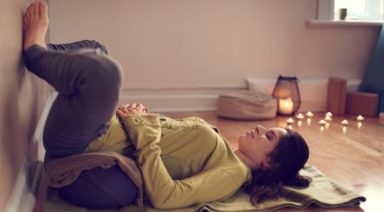
Jathara parivartanasana (ja-THAR-ah pari-var-tan-AHS-anna), also known as the two knee spinal twist pose, is restorative posture that encourages mobility and movement throughout the spine and entire back while improving digestion and stimulating self-esteem and confidence.
Physical Benefits:
- Encourages movement in the spine.
- Stretches the chest and shoulders.
- Thought to improve digestion.
Preparatory Poses:
- Bridge pose | Setu bandhasana
- Wind releasing pose | Pavana muktasana
Sequential Poses:
- Reclining bound angle pose | Supta baddha konasana
- Shoulderstand | Sarvangasana
Counter Poses:
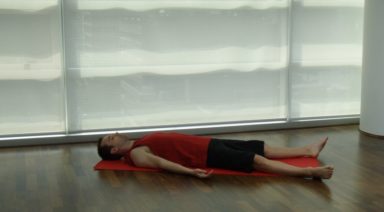
- Savasana
Adjustments/Modifications:
- If your knees do not rest easily on the ground, place your knees and feet on a large pillow.
- If the twist feels too strong in your lower back, first try placing a pillow between your knees or move your knees further away from your head.
- To deepen your twist, place your right hand on your left knee (closest hand) and gently encourage your knees down.
Step-By-Step:
- Begin by lying on your back, feet on the ground.
- Lift your feet off the floor, knees together and feet together and open your arms out to the sides.
- Exhale to slowly lower both legs to the left. Keep your knees at about hip level and at a 90-degree angle.
- Open your arms out to the sides and encourage your right shoulder to soften toward the ground.
- Hold for at least three rounds of breath.
- To exit, press both hands into the floor at shoulder level and contract your abdominal muscles. As you inhale lift your knees and feet up over your chest. Hold onto your knees with both hands.
- As you exhale, draw your thighs down into your chest as you lift your head and chest into the thighs and knees. Avoid lifting your shoulders as the head rises to the knees.
- Lower your head and shoulders to the floor and repeat on the other side.
###Legal Disclaimer Before participating in any exercise program or using any fitness products or services that may be described and/or made accessible in or through the Gaia Website and/or the Services, you should consult with a physician or other healthcare provider. Read more about Gaia’s Terms Of Use.
About the Author

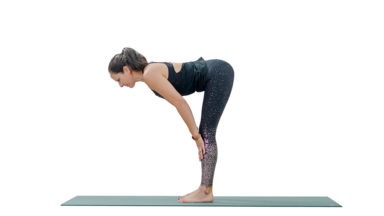
Ardha Uttanasana: Half Standing Forward Bend
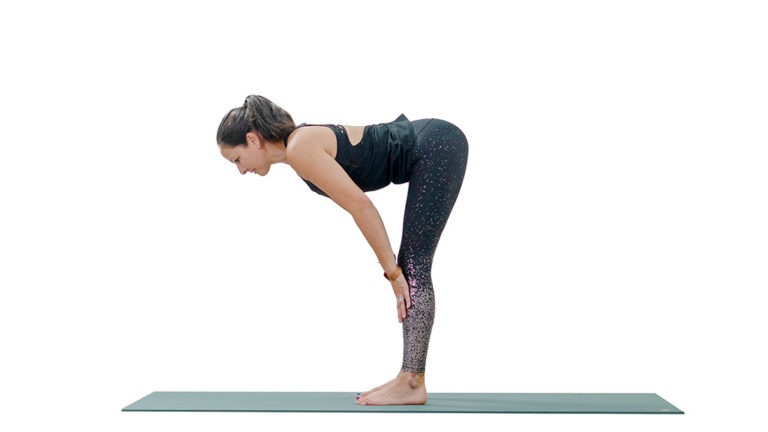
ADJUSTMENTS | BENEFITS | SEQUENCING | SANSKRIT | STEPS
An effective stretch for your hamstrings and calves ardha uttanasana (ARE-dah OOT-tan-AHS-anna), is often used during vinyasa sequences to connect the breath as you flow from one posture to the next.
Philosophy + Origin
One of the reasons ardha uttanasana is used so much in vinyasa yoga classes is that it positions the body for chaturanga dandasana. Because it engages the navel and core, it’s a powerful pose for warming up the body, which is why it’s included in warm-up sequences. Despite its sometimes transitory nature, the pose also engages the navel chakra (manipura), which can bring the practitioner increased confidence and willpower.