8 Ways to Maintain Your Spirituality in Times of Stress
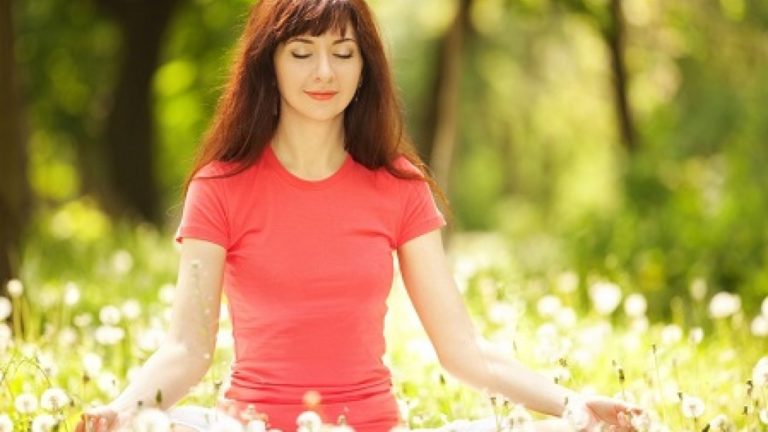
Being spiritual around the clock isn’t easy.
In between time commitments, children, making dinner and hustling in and out of the house, it can be easy to lose your spiritually cultivated mindset at the exact moment when you need it most. Not to mention the stress from whatever’s going on in the world. Stress can cause anyone to lose their balance – spiritually, emotionally and mentally. But you don’t have to.
Here are eight tips to keep you centered even during the most stressful times.
- Ground out with nature
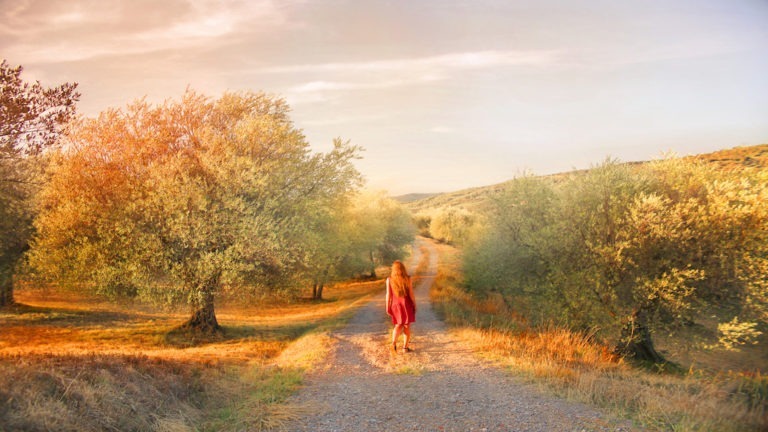
Take your shoes off in some grass, walk outside and stare into a patch of forest for a few minutes. Even better, take some time to yourself and go on a 10-day nature retreat. Any amount of connection to nature – large or small – can provide you with a much-needed check into what is really important.
Just five minutes under a tree with your phone turned off can work like a miracle. And often, this is all it takes to bring you back into the moment.
- Get a higher perspective
One of the best things you can do in a time of stress is to give yourself the opportunity to see the bigger picture. To do this, find the highest natural point nearest you and go there. Stand over the vista and look out on the landscape before you — and just breathe. See, you feel better already.
- Connect with your higher self
Each and every one of us has a physical body that houses our soul. It is within your soul where there is a wellspring of higher, inner wisdom. You can tap into this wellspring of wisdom for guidance at any time.
The easiest way to access your soul’s highest wisdom is to separate yourself from modern society —temporarily. Get some alone time. Meditate. Go for a hike. Be you with just you and ask yourself the important questions.
- Quality time with animals
Animals always seem to know what is important. They are never stressing over deadlines, conflicting schedules or wondering what some dog three houses down thinks of them. To reconnect with what is truly important, head to the pet store, a local zoo, hang out with your own pets or go out into nature. Birds, squirrels and small animals often abound, and simply by observing them you can reunite with some of the most basic, yet essential, truths.
- Unplug it all for an hour
Stressful situations often don’t originate from within. Their origins are usually found on all the external pressures that are placed upon us. Disconnect the cause of the stress. Turn off the computer, shut down your phone and unplug the television for at least one hour before you go to bed. In doing so, you’ll calm your nerves, disconnect from other people’s stress and have an easier time falling asleep. Doing this will make it easier for you to face the next day with a present state of mind.
- Grab a book
Books can be incredibly relaxing and grounding, especially books of a spiritual nature. To reconnect with your spiritual nature in times of stress, re-read through the spiritual virtues you follow and refresh yourself. Simply revisiting what you value most can have a profound effect on your ability to cultivate resilience through the storm.
Rumi, Khalil Gibran, and Rainer Maria Rilke are excellent go-to authors for revisiting and reconnecting with your own ancient and timeless spiritual wisdom.
- Walk it out
There is nothing like going for a long walk, run or bike ride to soothe your soul. Moving your body can help you mentally move and process the emotions and thoughts you have that are ready to be released.
As you move, you’ll naturally give movement to your mind for welcoming new concepts, ideas and ways of being. Creating a space of active movement will cultivate new thoughts that will both empower and motivate you through stressful times.
- Lie Down
And finally, there is nothing better you can do in a time of stress than to simply relax. Give yourself a five minute time out and find a place to lie completely on your back. Whether it is on a bed, on the ground outside or on your living room floor, lie down. Stretch, look up at the ceiling and breathe. You’re alive. Everything is going to be OK.
What Does Gaia Mean?
Although the name Gaia has various meanings and interpretations, it is most commonly associated with the Greek goddess who personified Earth in its primordial form. Quite simply, the definition of Gaia is life. She is all, the very personification of the earth. She is the mother goddess, inhabiting the planet, and offering life and nourishment to all her children. In ancient civilizations, she was revered as the mother, nurturer, and giver of life. She goes by many names, including Gaea, Ge, Mother Earth, Terra Mater to the Romans, Magna Mater, and more recently, Mother Nature. Each of these names is a testament to her enduring presence as the life-giver, the ultimate nurturer, and the architect of existence.
Gaia, often pronounced “GUY-uh,” holds the essence of existence within its syllables. This name, steeped in the rich tapestry of ancient Greek mythology, serves as a bridge to the Earth itself, embodying the very spirit of the planet. The etymology of Gaia, or Γαῖα in the original Greek, translates to ‘earth’ or ‘land,’ a fitting homage to her role as the primal Earth Mother. The term has since transcended its mythological roots, evolving into a symbol for the interconnectedness of all life on Earth, particularly within environmental and ecological contexts.
As we delve into the myriad ways she manifests across cultures and epochs, we embark on a journey to deepen our connection with the world around us, exploring the profound legacy of Gaia’s nurturing embrace.
Gaia: The Goddess of Ancient Greek Mythology
Within the pantheon of ancient deities, Gaia’s presence was unparalleled, embodying the very essence of primordial creation and maternal might. Her name, evoking the boundless strength and nurturing spirit of the Earth, was revered across the ancient world. To the Greeks, Gaia was the ultimate goddess of raw, maternal power. In the beginning, there was chaos, nebulous ethers waiting to take form. This primordial landscape awaited direction; it was then that the spirit of Gaia arrived to give structure to the formless and the Earth was conceived.
The Mother of Life and the Divine Heavens
In Greek mythology, Gaia stands as the quintessential embodiment of the Earth itself, revered as the primal Mother Earth goddess. From her fertile womb sprung the very fabric of the cosmos: she gave birth to Uranus, the sky, who would become both her husband and her equal; Pontus, the ancient, unfathomable sea; and the towering Titans, precursors to the Olympians. Among her offspring were the Titans – Cronus and Oceanus, the Cyclops with their single, piercing gaze, and the hundred-handed giants, each embodying forces of nature and the universe’s nascent power.
Her influence extended beyond mere creation. Gaia’s union with Uranus spawned the first pantheon of Greek deities, setting the stage for the saga of the gods and goddesses that would dominate Greek myth. Yet, it was through her guidance that Zeus, her grandson, ascended to become the chief among the Olympian gods. Her wisdom and might were echoed in the tales of her descendants, including Athena, the Greek goddess of wisdom, born of Zeus’s head, further cementing her legacy within the mythological hierarchy. Gaia’s story, interwoven with the elements of creation, celestial phenomena, and divine lineage, marks her as a central figure in the tapestry of Greek mythology and the subsequent origin of Olympus, embodying the Earth’s life-giving force and maternal strength.
The Paleolithic Venus: Rediscovering the Earth Mother
The Paleolithic Venus figurines, scattered across Europe, are emblematic of ancient societies’ reverence for the feminine Earth Mother—a veneration somewhat obscured by the passage of time. These figurines, often robust and gravid, symbolize fertility, motherhood, and the generative powers of nature itself. They serve as silent yet eloquent testimonials to a time when the worship of the Earth’s nurturing essence was widespread, deeply ingrained in the fabric of everyday life.
Modern excavations and scholarly endeavors have begun to peel back the layers of history, revealing a complex tapestry of belief systems that placed the Earth Mother at their core. Through the meticulous study of these artifacts, historians, archaeologists, and artists are gradually reconstructing the narratives of these ancient peoples. This resurgence of interest not only honors the goddess’s legacy but also rekindles a connection to our collective past, where the Earth was revered as the ultimate source of all life and sustenance.
A Return to Divine Feminine: Gaia’s Resurgence in Modern Consciousness
As the prevalence of gods and goddesses in the 19th and 20th centuries faded away, so did history books’ tales of female pharaohs, women scientists, and Amazon warriors. History is kept by the victors—and the victors are most often men. This left a void in the collective consciousness and Gaia was relegated to mythology alone. With the convergence of feminism in the 1970s, all that changed when a groundbreaking pro-female establishment was founded, providing a new understanding of how our planet operates.
In the wake of the 20th century, Gaia’s image was revitalized by the fusion of feminism and environmentalism. This revival spotlighted the divine feminine, with Gaia symbolizing strength, nurturing, and interconnectivity. Feminism’s quest to amplify silenced voices paralleled environmentalism’s rise, especially after “Silent Spring,” casting Gaia as an emblem of ecological awareness and unity. This modern embrace of Gaia has galvanized a collective push towards environmental respect and sustainability, intertwining spiritual reverence with activism for a balanced, thriving planet.
The Gaia Hypothesis: Earth as a Self-Regulating Living System
In 1970, chemist James Lovelock and his research partner, biologist Lynn Margulis introduced the Gaia Hypothesis, positing Earth as a self-regulating, living being capable of maintaining the conditions necessary for life. Initially met with skepticism, the hypothesis challenged the prevailing view of Earth as a passive backdrop to life, proposing instead that life actively participates in shaping the planet’s environment. This idea of Earth as a cohesive system, where biological processes interact with physical and chemical ones to maintain life-sustaining conditions, was revolutionary. The scientific community’s initial resistance stemmed from the hypothesis’s implication that Earth’s biosphere functions almost like a single organism, a concept that seemed to blur the lines between life and non-life.
Gaia Theory: Understanding Earth’s Intelligent Systems
Building on their hypothesis, Lovelock and Margulis’s work revealed how Earth’s myriad components—its atmosphere, biosphere, geology, and oceans—integrate to form a complex, self-regulating system. This system, guided by the interactions between living organisms and their environment, adjusts and responds to changes in a way that sustains life. For example, the regulation of Earth’s atmosphere by photosynthetic organisms, which convert carbon dioxide into oxygen, demonstrates this symbiotic relationship. Such mechanisms underscore the planet’s capacity for self-regulation and balance, evidencing a level of systemic intelligence previously underestimated.
Gaia theory has since evolved from a controversial hypothesis to a foundational concept in Earth system science, inspiring further research into how Earth’s life-supporting systems operate. It has underscored the importance of viewing the planet as an integrated whole, where each component plays a critical role in maintaining the conditions for life. This holistic perspective has significant implications for environmental conservation, highlighting the delicate interdependencies that sustain the Earth and the impact of human activities on its ability to regulate itself.
The Spiritual Meaning of Gaia in Practice
Far beyond the mythological Gaia, the name has come to represent an all-loving, nurturing, and intelligent cosmic force that oversees life on Earth. The revival of goddess traditions has been instrumental in reintroducing the ancient wisdom of the Great Mother, affirming her role as a beacon of love and sustenance. Yet, engaging with Gaia’s legacy demands more than occasional environmental activism or annual Earth Day observances. It calls for a daily commitment to living in harmony with our planet, treating each interaction as a sacred opportunity to honor and preserve the intricate web of life Gaia sustains.
To foster a truly connected relationship with Gaia means to actively participate in the stewardship of Earth, recognizing and respecting the bounty she provides. This involves making conscious choices that reflect our understanding of the interconnectedness of all life forms and the impact of our actions on the planet’s health. By adopting sustainable practices, advocating for environmental protection, and cultivating a sense of reverence for the natural world, we can contribute to a future where both humanity and the Earth flourish. In doing so, we not only pay homage to Gaia’s enduring spirit but also embrace our role as caretakers of the beautiful, dynamic planet she embodies.