How Your Soul Experiences Taste

This article is part of the Are You Coming to Your Senses? series.
Welcome to the third installment of our five-part series on how your soul perceives your physical senses. We have previously discussed the senses of sight and sound, and in this article we explore the sense of taste that resides within your human embodiment.
Taste is so important to us that we have come to sensationalize the eating experience. There are currently numerous cooking shows and competitions where contestants compete for who can prepare the best meal. Someone then passes judgment on what is the best food based solely on personal taste preference.
Source Has No Limit
Think of all the spices and food additives that have been created for the enjoyment of the human experience. Isn’t it interesting how people can react so differently to the same spice, or have such opposing reactions to the same food? Even people sharing the same meal at a table together can have entirely different taste reactions. Humans also have completely different reactions when biting into, swallowing, or ingesting the same foods as others. This could be due to food allergies, how the food is grown, and what chemicals or fertilizers were used in production. In short, there are endless variables when it comes to taste.
We declare that no two humans taste anything exactly the same! How something tastes is based solely upon YOUR taste buds, circulatory, and sensory systems — not anyone else’s. And no two people are the same.
From a spiritual (soul’s) perspective, why would Source need to taste something the same way every time? That would mean that Source would have a limitation to it, and Source has no limit.
The Soul’s Perspective on Taste
Let’s talk about the Soul’s perspective on taste. There is taste from within! Have you ever had a stressful or traumatic experience and gotten a sour taste in your mouth? Or perhaps a metallic taste in the back of your throat? What is that? If there is no food or something physical that you are ingesting in that moment, what is it that you are tasting?
It’s a taste sensation that is in alignment with an emotion. That is your soul’s inner taste experience! Yet humans are constantly explaining it away as a bad meal they ate earlier in the day, or some food that didn’t sit well in their stomach.
Physical taste is in alignment with the contact of your tongue and taste buds with a substance. The physical response to something is in reference to whether you thought what was being tasted was sweet, sour, salty, savory or bitter, or pleasant or unpleasant to you.
Emotional Experience First
Your inner soul’s taste works differently. It is ignited by the emotional experience first. This emotion can actually cause you to taste something in your mouth. Think of the phrase “the sweet taste of success.” What does success or joy taste like? It must taste sweet because so many humans have made that declaration.
What about the traumatic experiences that so many of you go through when you experience dry mouth or a sour taste? What is that? It is when your soul is having a traumatic soul sensation! A traumatic soul taste sensation based upon your emotions being stirred.
Physical vs Soul Taste
How can you tell when you’re experiencing a taste whether it’s physical or your soul’s taste sensation? Is your tongue touching something physical, which then allows an emotional response? Then that is taste based upon the physical. If you are getting the emotion first, and then a type of sensation through your embodiment or your taste sensory system, that is your soul connection!
You are the master of your physical embodiment and the energy flow in your physical body. You have the ability to experience your soul’s sensation through your senses.
As you refine your awareness process and your awareness state is heightened, you will more readily experience being in alignment with your soul through any or all of your senses.
When you are working on aligning with your soul and you’re practicing the art of conjuring the emotion of your soul, you can be experiencing this through sight, sound, and even the tasting of your emotions.
Did you realize your emotions had a taste to them? We hope that with this new awareness you will start experiencing taste from your soul’s perspective.
Soul Retrieval on Gaia
Just like the traumatic experiences Brad mentions above that can give you a bad taste, trauma also can fragment your soul. The good news? You can reclaim your power and once again become the master of your soul. Get started with Jill Kuykendall on Soul Retrieval on Talks with Regina Meredith.
About the Author

Who is Archangel Metatron and How Does He Manifest?
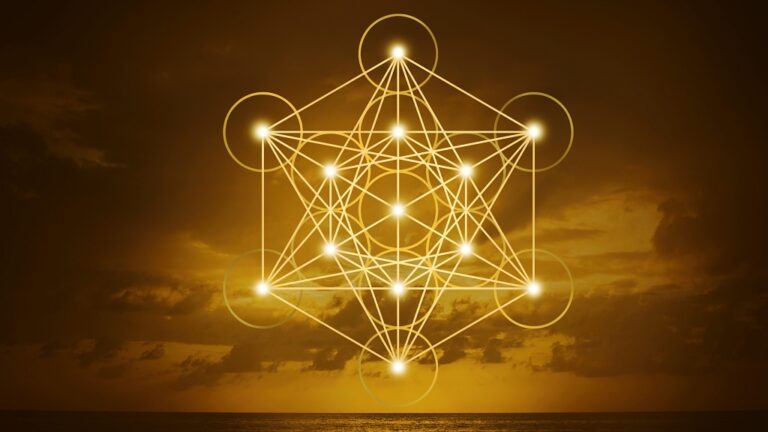
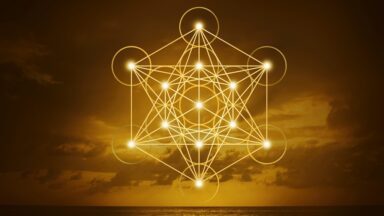
Archangel Metatron is known as one of the most powerful and closest archangels to humanity. His role includes overseeing the Akashic Records and assisting in the process of spiritual ascension. In this article, we explore who Metatron is, his significance, and how he manifests in our lives.
Table of Contents
- Archangel Metatron: Who He Is and What He Represents
- Channeled Message from Archangel Metatron
- How Metatron Manifests
- Metatron and Sacred Geometry
- How to Invoke and Work with Archangel Metatron
Archangel Metatron: Who He Is and What He Represents
Metatron is considered one of the only two archangels who were once human, having been the prophet Enoch before his ascension. His transformation into a celestial being grants him a special connection with humanity, serving as a bridge between heaven and earth. Metatron is often described as the scribe of God, tasked with documenting every event in the universe and guiding souls through their spiritual evolution.
He represents divine wisdom and pure light, helping individuals release negative patterns and raise their vibration. Metatron is also known for his association with sacred geometry, which he uses to bring order to chaos and manifest balance in all things. His energy is powerful and transformative, inviting those who invoke him to align with their true purpose and advance on their spiritual path.
-
The Meaning of His Name
The name “Metatron” has various interpretations in spiritual traditions. It is commonly translated as “the one who occupies the throne next to God’s throne” or “the angel of presence”. These definitions highlight his elevated status and closeness to the divine, emphasizing his crucial role as an intermediary between God and humanity.
-
Archangel Metatron and the Akashic Records
Metatron is known as the guardian of the Akashic Records, a vast collection of information about all souls and their experiences throughout time. These records are essential for understanding life purpose and spiritual lessons. Metatron facilitates access to these records, providing guidance and clarity to those seeking to understand their spiritual path and resolve pending karma.
Channeled Message from Archangel Metatron
In Open Minds, hosted by Regina Meredith, Joan Walker channels a live message from Archangel Metatron. During the interview, Metatron offers profound insights into the spiritual evolution of humanity, emphasizing the importance of releasing old patterns and raising our consciousness. This message is a vital guide for those seeking to understand their role in the process of ascension and personal transformation.
How Metatron Manifests
Archangel Metatron manifests in various ways to guide and assist humanity on their spiritual journey. These manifestations can be subtle or powerful, but they are always intended to provide clarity and spiritual elevation.
- Guidance in Meditation: During meditation, Metatron manifests as an enveloping and protective energy. This contact facilitates a deeper connection with your spiritual purpose.
- Activation of Sacred Geometry: Feeling drawn to sacred geometry, especially the Metatron’s Cube, is a sign of his influence. This symbol appears in meditations or visualizations, helping to balance and harmonize your energy.
- Messages in Dreams: Vivid dreams with clear messages can be a form of communication from Metatron. These dreams often contain symbols or guidance that direct your spiritual path.
- Lights or Flashes of Color: Metatron can manifest visually through lights or flashes of color, particularly in golden or violet tones. These appearances are indications of his guidance and protective energy.
- Energy: You may perceive Metatron’s energy through an intense vibration in your body. Sensations like tingling in the extremities, slight disorientation, or dizziness indicate his presence and encourage you to make positive changes in your life.
- Synchronicities: The appearance of synchronized events, such as mirror numbers, can be a sign from Metatron. These synchronicities indicate that you are aligned with divine purpose and that the universe supports you.
- Feeling of Peace: Experiencing a deep inner peace, even in moments of chaos, can be a sign of Metatron’s presence. This state of calm helps you center yourself and connect with your higher self.
Metatron and Sacred Geometry
Archangel Metatron is widely recognized for his connection to sacred geometry, especially through the Metatron's Cube. This cube is a three-dimensional figure that contains all the fundamental geometric shapes representing the basic structure of the universe. Meditating on the Metatron’s Cube facilitates the harmonization and balancing of internal energies, helping individuals connect with their higher self and manifest their highest intentions.
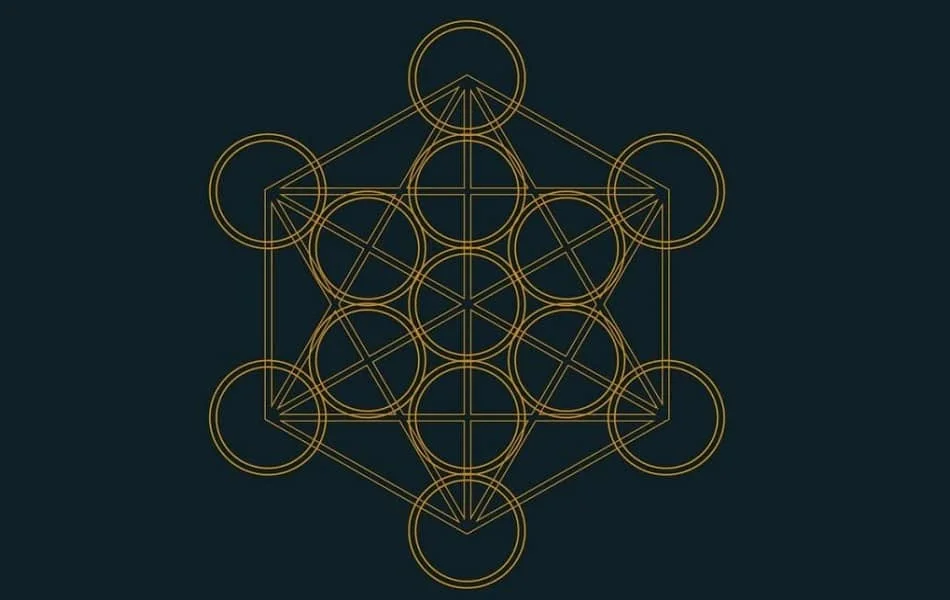
Sacred Geometry, which includes patterns like the Flower of Life and the Platonic Solids, is a powerful tool for spiritual transformation. Metatron uses these symbols to bring order to chaos, helping to align personal energies with those of the universe. Through meditation and visualization of these geometric forms, practitioners can access a higher state of consciousness and understand the cosmic laws that govern creation.
Working with sacred geometry under Metatron’s guidance not only promotes personal healing but also facilitates the expansion of collective consciousness. By integrating these patterns into daily life, one can create an environment of harmony and peace that resonates with the highest frequencies of love and light. This practice is an invitation to explore the depths of the universe and discover the limitless potential of our spiritual existence.
How to Invoke and Work with Archangel Metatron
To invoke and work with Archangel Metatron, it is essential to set a clear intention and create a sacred space. This can be achieved through meditation, prayer, or specific rituals that facilitate connection with his powerful energy. By doing so, Metatron can provide guidance, protection, and wisdom, helping to manifest a life aligned with divine purpose.
-
Prayer
An effective way to connect with Metatron is through prayer, requesting his presence and guidance in times of need. A simple prayer can be: “Archangel Metatron, I invoke you at this moment. Please surround my being with your divine light and guide me on my spiritual path. Help me release any negative energy and raise my vibration towards love and light.”
-
Meditation
Meditation is another powerful tool for connecting with Metatron. Visualize the Metatron’s Cube surrounding you as you breathe deeply and focus on your intention. Allow the energy of the cube to harmonize your being and connect you with the highest frequencies of the universe. This practice can help you gain clarity, peace, and a deeper connection with your spiritual purpose.
-
Rituals and Other Spiritual Practices
Rituals are an effective way to invoke Metatron’s presence and work with his energy. A simple ritual can include lighting a white candle, burning incense, and placing a sacred geometry symbol on your altar. As you perform this ritual, you can recite a prayer or mantra that connects you with Metatron’s energy and requests his guidance and protection.
Another spiritual practice is creating a mandala using sacred geometry patterns, such as the Metatron’s Cube. Drawing or coloring this mandala can be an active meditation that allows you to tune into Metatron’s energies. This process not only connects you with his energy but can also bring balance and harmony to your daily life.