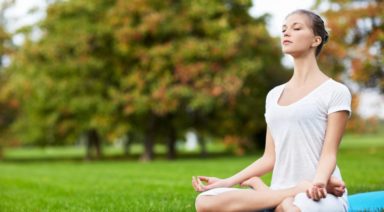
6 Ways to Become Fully Present With Suffering

Life is about learning balance and how we interact with the world around us. It is a constant learning experience, to which we will become familiar with all of the emotions that a human being has, some of which are more pleasant than others.
Suffering on Earth is derived from the collective emotion held within humanity, which is why it is so important to learn to heal yourself first to help heal the planet.
As many great teachers of the past and present have taught us, often times it is not the experience itself that is the problem, it is how our human conditioning has taught us how to react. We’ve all experienced suffering in various ways.
Though it is uncomfortable and ugly, it is also very important to love each part of ourselves as human beings; to do that we have to understand the full spectrum of the human experience…the yin and the yang, the light and the dark. They co-exist together for a reason.
Aim to Be Like a Child
If you have children or have been around a small child, you will know that their experience of life is very different than yours. Their reactions are very in the moment. When they are upset, uncomfortable, or hungry they cry. There is no holding back, and no misunderstanding how they truly feel.
As we get older we learn what is considered an “acceptable” way to act in society. We learn that we can’t just have a meltdown anywhere when we are feeling upset. There are very specific circumstances that allow us to cry or feel angry, and some of us even go as far as to completely shut down our ability to feel our true emotions. I call this being “emotionally constipated!”
Babies’ ability to feel fully in the moment is a gift, because once they fully feel it, they release it instantaneously. There is no need to relive the experience later. It often takes very little to distract them with a new idea and change their emotion quickly. As we get older it is important to remember that innate wisdom within our bodies, because they react in direct correlation with the information we give them.
Fully Experience Your Emotions in the Moment
When your life is turned upside down and emotions are all over the place, take yourself into the moment and simply feel whatever disturbance is going on without resisting it. Take a chance and look silly in public if you need to.
When you can fully experience your emotions in the moment{.inline-media .inline-video} and let them wash over you, that turmoil will not collect in your body in a negative way. It is only when you deny and resist it that it collects and becomes unhealthy.
When you begin to feel imbalance in your life, the most effective way to take care of yourself is to honor where you are without judging the experience. Don’t compare yourself to others, because you are a unique individual!
Your experience is your experience, and there is no right or wrong or normal and abnormal. You are creating your body and life experience every day, and it’s unlike anyone else’s body or life experience.
6 Ways to Be Present with Suffering
Here are some steps you can take in a moment of distress and suffering to relieve yourself:
1. Stop whatever you are doing, and go inward. Listen to your body and become fully present.
Don’t try to change the way you feel in this moment. Instead, feel it for what it is without resisting it.
Say in your mind, “I honor this feeling of ______, even though it makes me uncomfortable or scared in this moment.”
Focus on the sensation, and surround yourself in a beautiful picture that feels comfortable, loving, and safe to you. I like to picture myself in a field of flowers with a soft breeze blowing through me, washing away anything that no longer serves my highest good.
2. Let the emotions fly
Let yourself go! Experience the anger, frustration, sadness, joy, excitement, fear, surprise, disgust, disapproval, remorse, and all the in-betweens. The goal is to express it.
However, it is also important to remember to make sure you are not putting anyone in danger while you are doing this. Whatever you are feeling in this moment is perfect; there is nothing wrong with it!
3. Trust any messages that come through your body as divine guidance
You might notice some sensations, ideas, or thoughts through your body as you become fully present in your experience.
When we become still, we are more receptive to receiving divine guidance from our higher selves.
Trust this loving guidance, or simply soak in this beautiful light that is holding you. We all have access to it when we call upon it.
4. Stay Present
Stay with the feeling until you feel it has fully washed over you and can be released. Take your time and don’t be tempted to rush through it.
Remember your well-being is the most important thing right now. You cannot be present with others until you are fully present with yourself.
5. Wait for Release
Just like with a baby, sometimes it takes five minutes, and sometimes two hours before we reach a point of release, but it eventually always comes.
Most of us force ourselves to get up and “shake it off” before we’re really ready. All that leftover emotion builds up and is stored within the body, despite our belief that it is gone once we choose to think it’s gone. Once the release happens, the weight falls off and you can now resume your day with your full presence.
6. Remember That You’re Not Alone
When you’re feeling suffering of any kind in life (and there are many!), remember you’re not alone. Remember to claim your strength and ask for help when you need it. You can’t do it all on your own.
The 7 Most Well-Known and Practiced Types of Meditation
Meditation is an ancient practice that helps calm the mind, connect with the present, and cultivate a state of greater clarity and well-being. Over time, different cultures and traditions have developed various meditative styles, each with particular approaches and techniques.
In this article, we explore what meditation is, why there are so many types, and how to identify which one may be the most suitable according to each person’s needs.
Table of Contents
- What Is Meditation and Why Are There So Many Types?
- How to Know Which Type of Meditation Is Most Suitable
- The 7 Most Popular Types Of Meditation: Discover Their Characteristics
- Types Of Meditation Recommended For Beginners
- Can Different Types Of Meditation Be Combined?
- Tips To Start Your Meditation Practice Without Frustration
What Is Meditation and Why Are There So Many Types?
Meditation is a mental and emotional training technique that seeks to bring attention to the present moment, observing thoughts without judging them. Although many people associate it with emptying the mind, it actually involves developing greater awareness of what is happening internally. It is a tool that can adapt to different goals: from reducing stress to cultivating compassion, improving focus, or exploring spiritual dimensions.
Throughout history, different traditions have developed their own forms of meditation, according to their worldviews and needs. Some focus on breathing or on the repetition of sounds (mantras), while others propose a deep observation of the body or the mind. There are also more contemporary versions, such as guided meditation, which combine traditional techniques with accessible language for those who are just beginning.
That is why there is no single way to meditate or a “correct” form. There are so many variations because each person is different and resonates with different practices. The richness of meditation lies in its diversity: it allows everyone to find a path of connection and calm, in harmony with their life moment and personal style.
How to Know Which Type of Meditation Is Most Suitable
Choosing a type of meditation should not create pressure or confusion, but rather awaken curiosity and openness. The best way to discover which one suits you best is to explore different practices, notice how each one feels, and continue with the one that feels most natural. It is not about following a technique out of obligation, but about finding the one that authentically supports your personal process.
It is also important to consider the needs of the moment. Those who are looking to calm anxiety may benefit from guided practices or those centered on breathing. On the other hand, if the goal is to deepen self-knowledge or move through a stage of introspection, a technique such as zazen or vipassana may be more useful. Connecting with what is needed here and now allows meditation to become a meaningful and transformative space.
On Gaia, there is abundant content created especially to accompany meditation practice, whether you are just beginning or looking to deepen your inner path. One of them is Sound of Creation, a series of sound meditations that combine harmonic frequencies and binaural rhythms to facilitate deep relaxation and connection with your inner energy.
The 7 Most Popular Types Of Meditation: Discover Their Characteristics
Each type of meditation has a particular intention and methodology. Some focus on breathing, others on the use of mantras, and others invite practitioners to observe with mindful attention what is happening in the present. Knowing the basic characteristics of each style can help you choose the most appropriate one according to your personal moment or level of experience.
-
Meditation Mindfulness Or Attention To The Present Moment
It is one of the most widespread forms today. It consists of observing what happens in the present moment—thoughts, sensations, and emotions—without judging or trying to change anything. It promotes mental calm and greater awareness of the here and now.
-
Transcendental Meditation
It is based on the silent repetition of a personal mantra, assigned by a certified instructor. This practice seeks to bring the mind to a deep state of rest beyond thought and is known for its simple yet highly effective structure.
-
Guided Meditation
Uses the voice of a person—live or recorded—to accompany the meditative process. It often includes visualizations, breathing exercises, or positive affirmations, making it an excellent option for those who are just starting out.
-
Movement Meditation
It is a practice that combines mindfulness with physical movement, such as mindful walking, gentle yoga, or qi gong. It helps connect mind and body while cultivating presence in every gesture and breath.
-
Vipassana Meditation
It is a technique of Buddhist origin based on the deep observation of bodily sensations and mental processes. It aims to develop equanimity and a direct understanding of the impermanence of everything that arises and disappears in consciousness.
-
Zen Meditation (Zazen)
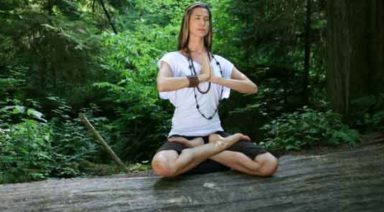
Characteristic of Japanese Buddhism, it is practiced sitting in silence, with the back straight and attention placed on the breath or on mental emptiness. It is a form of meditation that is both rigorous and simple, cultivating presence and detachment.
-
Metta Or Loving-Kindness Meditation
Its objective is to generate feelings of compassion, kindness, and connection toward oneself and toward others. Phrases expressing good wishes are repeated, beginning with oneself and expanding toward other people, even those who may be difficult.

Types Of Meditation Recommended For Beginners
For those who are beginning in the world of meditation, the ideal approach is to start with practices that are accessible, guided, and with a clear structure. Guided meditation is often an excellent option, as it allows you to follow step-by-step instructions, which helps maintain focus and avoid the frustration of not knowing “if you are doing it correctly.”
Another recommended technique is mindfulness or present-moment awareness. This practice can be easily incorporated into everyday life by observing the breath, the body, or thoughts, without needing any previous experience. Its flexibility makes it a friendly and effective gateway for developing habits of conscious attention.
It can also be helpful to begin with meditations centered on breathing or the body, such as body scans. These practices help establish contact with the present moment and relax the nervous system without requiring major mental effort. The most important thing at the beginning is to create a positive experience that motivates you to continue exploring.
Can Different Types Of Meditation Be Combined?
Yes, combining different styles of meditation is possible and, in many cases, recommended. Over time, personal needs may change, and using different techniques makes it possible to adapt more flexibly to each stage of the inner process. What matters most is maintaining a consistent practice without losing sight of the purpose of cultivating presence and awareness.
Some people, for example, combine guided meditation at night with mindfulness during the day, or practice metta to work with specific emotions alongside silent meditation to deepen observation. There is no single formula: the right combination is the one that supports each person’s path with coherence and respect.
Tips To Start Your Meditation Practice Without Frustration
Starting to meditate can seem challenging, especially if there are unrealistic expectations or a rigid idea of how the experience should be. Incorporating meditation as a gentle and progressive habit is key to sustaining it over time without frustration or pressure.
- Start with a few minutes: It is not necessary to begin with long sessions. Even five minutes a day can make a difference if practiced consistently.
- Choose a quiet environment: Looking for a place without interruptions makes concentration easier. It does not have to be perfect, just functional and comfortable.
- Observe without judging: The mind will wander, and that is part of the process. Instead of becoming frustrated, the idea is to notice that movement and gently return to the practice.
- Try different styles: Not all techniques work the same for everyone. Exploring different options helps you find the one that best suits each moment.
- Be patient with the process: The benefits of meditation are built over time. Trusting the practice, even if results are not immediate, is part of the journey.