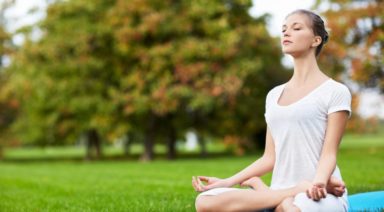
5 Ways to Cultivate the Silence Within

Many of us spend our lives searching for inner peace. We look for it in our thoughts, our surroundings, perhaps in the food that we eat, the people who we choose to be with; however, we can’t look for peace outside and assimilate it within us at the same time. We have to create a silence within us for peace to reside, and we have to look at life from the vantage point of this silence. Only then can we be in a state of bliss.
So here are five ways to cultivate the silence within:
1. Spend five minutes every day observing your thoughts. Make an effort during these five minutes to sit in non-judgment. Let your thoughts pass through your mind. Also, make an effort to avoid reliving the emotions brought about by these thoughts, be they positive or negative.
2. Start your day before those in your house do. Even if it’s just fifteen minutes early, spend those first fifteen minutes of the day with yourself. Water your plants. Drink lukewarm lemon and honey water. Stretch. Smile. Read. Making this daily commitment will help you to nurture a more fulfilling relationship with yourself, and this will ensure a better quality day and life.
3. Pursue an extra-curricular activity with passion. If you’ve always wanted to learn photography, do so now. If you’ve always wanted to learn krav maga, do so now. If you’ve always wanted to start a yoga practice, start now. Making time and putting in the effort to pursue something you’ve been putting off creates a behavioral pattern which tells you that what you want to do can be fulfilling, and enables you to put yourself first.
4. Accept the situation and work around it. You might not like your job, or your neighbor or your current haircut, but until you can change it, your only choice is to deal with it. So deal with it.
5. Breathe deeply. Breathe whether you are stressed, overwhelmed, happy, annoyed, joyful, irritated, elated, blissful, worried, tired, energetic, optimistic, pessimistic, disappointed, fascinated or delighted. Always breathe.
About the Author

Harvard Meditation Study: Resilience, Tummo, and Inner Peace

Long before Harvard’s recent studies on meditation and mindfulness, the science around the subject has been disputed. Regardless, meditation lovers, mindfulness experts, monks and prayerful people of all types regularly report a variety of benefits resulting from these practices.
Whether avid meditators or not, most of us have reported positive experiences when meditating. Benefits include stress reduction, feeling more peaceful, feeling better about ourselves, feeling less judgmental, and improved relationships and creativity.
Many couples who meditate together report feelings of deepening and connectedness that were not present before meditation. Teachers who introduce meditation to their students find that everyone has better attention spans and the majority tend to get along better.
Many doctors report that mindfulness techniques and positive visualizations help to calm their patients. Some doctors have said that regimens of meditation have improved conditions associated with irritable bowel syndrome, fibromyalgia, psoriasis, anxiety, depression, and post-traumatic stress disorder.
Meditation and mindfulness are taught and practiced by prisons, sports teams and even the U.S. military to improve resilience, clarity, presence of mind, and feelings of connectedness.
Also, the vast majority of meditation studies have shown that meditators tend to experience regular states of selflessness and emotional clarity.
“The real meditation is how you live your life.”
— Jon Kabat-Zinn