Seven Spiritual Supermoon Rituals
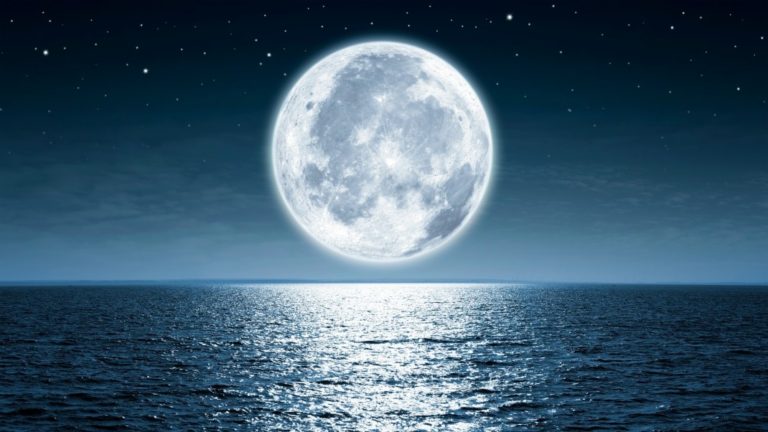
The widely-used term supermoon came from astrologist, Richard Noelle, over 30 years ago. In the scientific community, it’s also called a perigee moon. What this means is that the distance in the moon’s orbit when it passes to Earth is at its closest point, bringing the moon about 50,000 km closer than at apogee, when the moon passes furthest from Earth. Visually, the moon looks approximately 20 percent larger and will have a strong effect on tides.
On the spiritual side, a full moon is held to be a powerful time for meditation, energy healing and recharging human energy field and chakras. Rituals and ceremonies taking place during full moons are a time-honored tradition, tracing back to many ancient cultures. It’s thought that the full moon shines down so much pure energy, anything it touches is imbued with incredible radiance and love. Thereby, it stands to reason that the supermoon effect amplifies that power and makes it even stronger.
Energy healing during this potent time can bring about mind-blowing results. The unbeatable illumination the supermoon provides is not only physical, but on the soul level as well. Lighting up corners of the subconscious and giving those who access it insights into their emotions, their souls and their paths, insures you’ll
definitely want to take advantage of the last supermoon of the year by trying these seven rituals:
1. Write Down Your Dreams
According to astrology, this full moon is highly associated with Pisces, a very dreamy sign. Therefore, you might have an increased amount or more vivid dreams than usual, and they might be important visions, prophecies or revelations of goals to chase. Jot them down as soon as you wake up in order to preserve them, as they will be significant to you later even if they aren’t now.
You don’t even have to be asleep for them to be significant. Also write your daydreams down and notice how they make you feel. You may discover a newly-inspired desire, or you may finally discover your soul’s mission.
2. Try a Manifesting Ritual
According to many spiritual leaders, this is the greatest use of the supermoon because of the great abundance it signifies, whether it’s love, wisdom, luck, happiness, or whatever else you’re seeking. To access the abundance, you’ll need to clear out what isn’t serving you right now, which is where this small ritual comes in handy.
Try doing this tonight: write down everything that you are ready to release. Hold the paper up in the air and say a little prayer to whomever it is that you speak to—the Divine, the Universe, a spirit guide: whatever higher powers you decide to address. Ask for assistance in releasing these things that no longer serve you. Be thankful for the lessons and gifts that these experiences brought about, then release and burn the paper.
Next, write down everything it is that you want to call info your life. Hold it close to your heart and envision this as if it has already happened. Again, say a little prayer to whichever higher power you choose, asking them to assist you. Store the paper in a safe, sacred place, and revisit it every couple of weeks to be amazed by the things that come in.
3. Charging Your Crystals
Charging crystals is easy. Simply, gather up your crystals and gemstones; the power of the supermoon light is something you don’t want them to miss! All you need to do is place your stone collection outside or in the moonlight inside overnight after telling them that they will absorb the energy of the supermoon. Bring them back inside or out of the lighted area just before dawn.
4. Moonbathing
The supermoon light is cleansing to your mind, body, and spirit so spending time under its vibrant white glow is like a soothing bath sans water.
All you need to do is take a walk under the moon (though yes, preferably with some of your skin bared to the light). It is also suggested to gaze up at the brilliance of the moon for as long as you can, basking in its energy and love. Consider what you feel in your body and in your chakras and what messages the moon might be lighting up inside of you. This moon bath, steeping your body and spirit in purifying light, should wash away the negativity and leaving you fresh and renewed.
You can also take your moon bathing to the next level by making it an all-night event. If it’s warm enough, take a sleeping bag or blanket and set it up under the canopy of sparkling stars and the glowing full moon. Take time to just bask in the light; you can meditate or pray, but just be sure to let the peace and beauty of the moon soak into your body and soul while you sleep. You’ll wake up refreshed and rejuvenated.
5. Bless Others with Healing White Light
What color is the moonlight? White, of course, and without cover it will be bathing everything tonight!
White light is spiritual energy that’s usable by anyone, not just psychics, mediums, and so on. It’s yours, just for asking, and you can use it in your loved ones’ lives in powerful ways. If you have friends or family members that are hurting, ask for them to be surrounded them in white light that brings healing energy. You can also ask for white light to surround those who we may not obviously know are struggling, carrying secret and quiet pain.
6. Connect with Your Spirit Guides
You can commune with your guides whenever you want, of course, but there’s something extra special about the supermoon that seems to open our hearts and minds up a little bit more. Maybe it’s just the general aura of awe and wonder at the beauty of the moon! It’s the spiritual process that counts, so why not use this time to ask for help and guidance along the way?
7. Heal Your Emotions
In this time of the lunar transit moving through Pisces, emotions are a big deal, as astrology tells us the sign of the fish is known for its sensitivity, compassion and fluid emotions. Just like the ebb and flow of the tides that are so closely associated with the moon (and even more strongly, the supermoon), this water sign experiences a wide range of feelings—both in depth and frequency.
Since emotions are so easily accessible during this time, it’s a perfect opportunity to acknowledge and release them. This will help clear your chakras and allow for the healing energy of the full moon to work its magic. You can do this by journaling, which is powerful in being able to express your inner truths and feelings.
This is also a good time to sweep out negative emotions. The supermoon light can be so strong, it is hard for darkness to stand up in the face of its glory. The moon illuminates any negative emotions stored in your chakras or your body and reflects that knowledge back to you, so that you can begin the process of clearing those blockages through meditation, healing courses, or other means. Write all of these things down, and hold them for future practice.
About the Author

The 24 Nordic Runes and Their Meanings
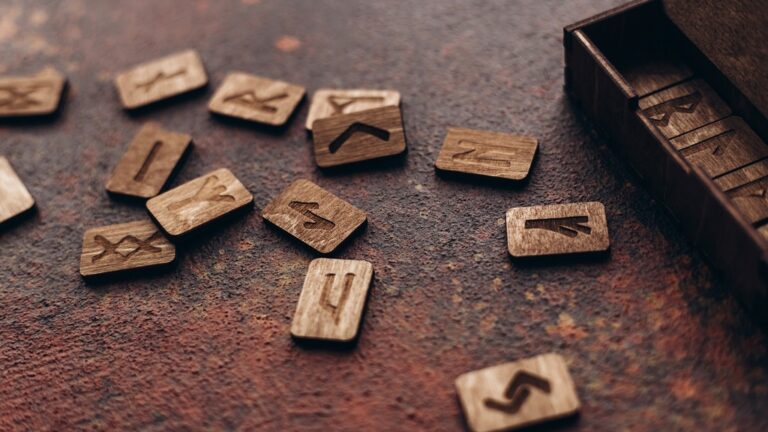
Norse runes are an ancient writing system used by the Germanic and Scandinavian peoples, which also serves a spiritual and symbolic function. This alphabet, known as Futhark, is composed of 24 runes, each with a unique meaning that connects to aspects of life, nature and spirituality. In this article we explore the origin of the Norse runes, their purpose and the meaning behind each of these fascinating symbols.
Table of Contents
- What Are the Nordic Runes?
- Exploring the 24 Norse Runes and Their Meanings
- History and Origin of the Nordic Runes
What Are the Nordic Runes?
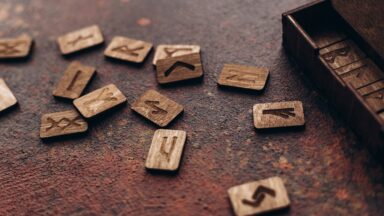
Norse runes represent an ancient writing system dating back to the time of the Germanic and Viking peoples. Beyond their practical use as an alphabet, each rune possessed a deep meaning linked to ideas such as protection, wisdom or the cycles of life. These runes were not only engraved on stones and wood, but also on talismans and ritual objects, reflecting their connection to the mystical.
The best known runic system is the ancient Futhark, composed of 24 symbols, organized into three groups or aettir. These runes were used both as a tool of communication and divination, allowing the ancient Scandinavians to interpret messages of destiny and guide important decisions. This dualism between the practical and the spiritual makes the runes a bridge between the earthly and the divine.
Exploring the 24 Norse Runes and Their Meanings
The ancient Futhark, the runic alphabet composed of 24 symbols, is divided into three groups called aettir. Each group covers essential themes of life and reflects aspects related to human existence, from beginnings and prosperity to challenges and transformation.
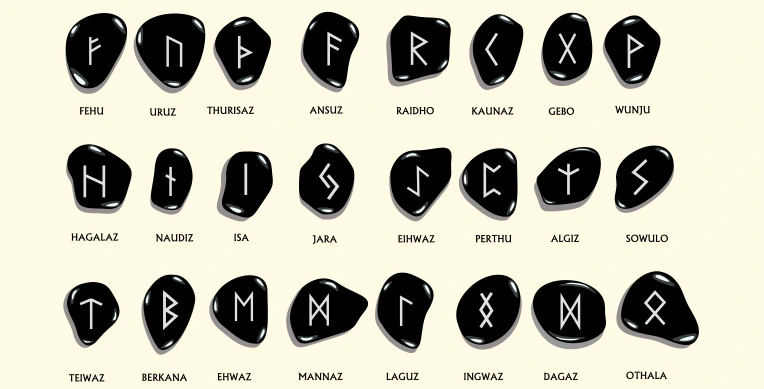
Runes of the Fehu Group: Beginning and Prosperity
This group brings together symbols that represent the flow of creative energy, wealth and balance at the beginning of a cycle. The runes that compose it stand out for their connection with the materialization of ideas, stability and harmony. Here is a breakdown of their meaning:
- Fehu (wealth): Symbolizes prosperity, abundance and success in projects. It represents the energy of resources in motion, reminding us that sharing and managing well what we have is key to maintaining balance.
- Uruz (strength): Represents vitality and inner power to overcome challenges. This rune is also associated with renewal and personal transformation.
- Thurisaz (the giant): It is a rune of protection and defense against adversity. It also invites us to reflect before making important decisions, helping us to act wisely.
- Ansuz (communication): Related to divine knowledge and clear expression, this rune symbolizes the importance of listening and sharing ideas. It also favors the reception of intuitive and spiritual messages.
- Raidho (the journey): Represents movement, both physical and spiritual, and progress on our life path. It reminds us that each experience is part of a larger journey towards personal growth.
- Kenaz (the torch): Symbolizes enlightenment, creativity and knowledge. It is a rune that guides us in the search for hidden truths and the expression of our passion.
- Gebo (the gift): Associated with generosity and balance in relationships, this rune represents reciprocity and fair exchange. It teaches us the importance of maintaining a harmonious relationship between giving and receiving.
- Wunjo (joy): Represents satisfaction, happiness and harmony. This rune indicates that, after the challenges, comes a period of success and well-being.
Hagalaz Group Runes: Transformation and Challenges
The runes of this group are associated with overcoming trials, profound change and cycles of destruction and renewal. They represent uncontrollable forces of nature and life that push us to adapt and grow. These runes remind us that, although the road may be difficult, challenges prepare us for a stronger rebirth.
- Hagalaz (the hailstorm): Symbolizes the destruction that gives way to renewal. It teaches us that difficulties, although painful, are necessary to eliminate the old and make room for the new.
- Nauthiz (the need): Represents perseverance in the face of obstacles and the importance of facing limitations with patience. It reminds us that, even in times of scarcity, overcoming is possible if we work hard.
- Isa (ice): Symbolizes stagnation and the trials associated with immobility. It invites us to reflect and avoid paralysis due to fear or indecision, while waiting for the right moment to come.
- Jera (the annual cycle): Represents the fruits of our actions, which come at the right time. This rune reminds us that every effort has its reward, but only when the time is propitious.
- Eihwaz (endurance): Symbolizes strength in the face of adversity and the ability to transform fears into personal growth. It is a rune that inspires us to resist even in the most difficult moments.
- Perthro (destiny): Represents the unknown, the mysteries and the acceptance of what we cannot control. It teaches us to adapt to the unexpected and to trust the flow of life.
- Algiz (protection): This is a rune of defense and protection against negative forces. It reminds us that the connection with our intuition and spiritual guidance can protect us in difficult times.
- Sowilo (the sun): Symbolizes the clarity and success that comes after overcoming the shadows. It is a rune that encourages us to seek the light and inner strength to move forward with confidence.
Runes of the Tiwaz Group: Honor and Strength
This group is associated with sacrifice, justice and the courage needed to stand up for what is right. Tiwaz runes represent virtues such as integrity, leadership and determination, reminding us that success often requires perseverance and a deep commitment to our values.
- Tiwaz (justice): Associated with the god Tyr, it symbolizes sacrifice for the common good and the search for truth. It inspires us to act with honor and courage, even in the face of difficult challenges.
- Berkano (rebirth): Represents new beginnings, fertility and personal growth. This rune teaches us that change and regeneration are essential for progress.
- Ehwaz (the horse): Symbolizes mutual trust and collaboration in relationships or projects. It reminds us of the importance of moving forward as a team towards a common goal.
- Mannaz (humanity): Represents connection with others, cooperation and mutual support. This rune reminds us that our strength lies in our relationships and community.
- Laguz (water): Symbolizes intuition, emotions and the power of the unconscious. It teaches us to flow with circumstances and to trust our inner wisdom.
- Ingwaz (fertility): Represents the latent potential and the development of new ideas or projects. It is a rune of incubation that invites us to wait for the right moment to act.
- Dagaz (dawn): Symbolizes enlightenment and transformation that leads to new beginnings. It reminds us that after darkness always comes light.
- Othala (heritage): Represents roots, family and ancestral legacy. It teaches us to honor our traditions while using that knowledge to build our future.
History and Origin of the Nordic Runes
Norse runes emerged in ancient Germanic and Scandinavian cultures around the 2nd century AD. This writing system, known as ancient Futhark, was engraved on stones, weapons and tools, serving both practical and ceremonial functions. Each symbol had a profound meaning and was seen as a bridge between the earthly world and spiritual forces.
The design of the runes was deeply linked to the beliefs of the time, which venerated the forces of nature and the Norse gods. According to mythology, Odin, the god of wisdom, obtained the knowledge of the runes through an extreme sacrifice, hanging himself from the World Tree, Yggdrasil, for nine days and nights. This mythological account highlights the sacredness of the runes and their connection to the divine, giving them an essential role in the spiritual life of these cultures.
-
Runes as a Divination Tool
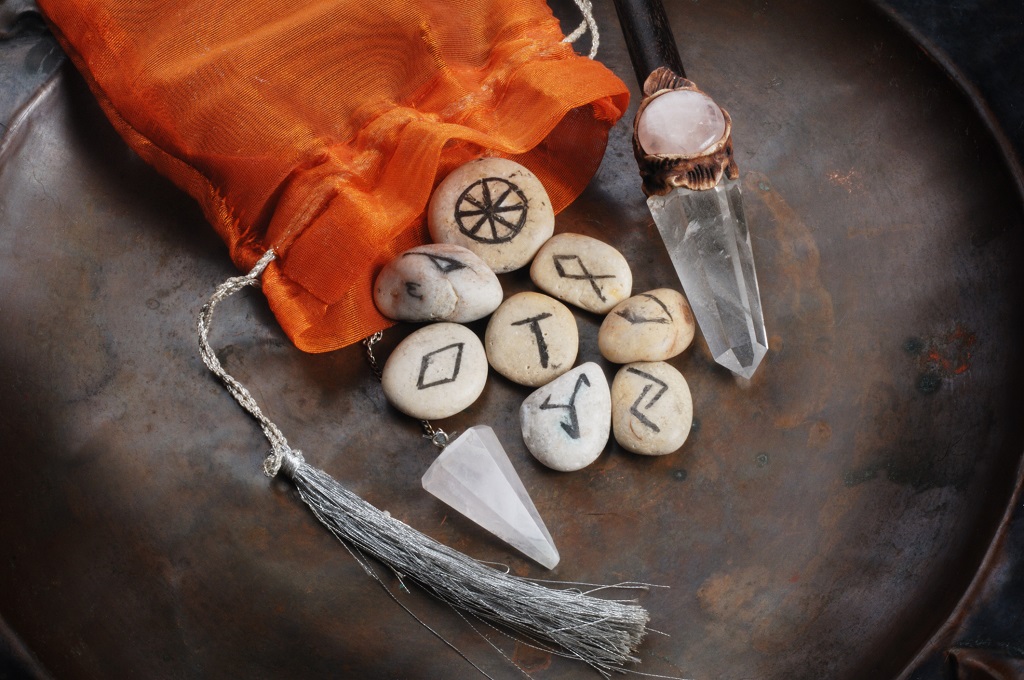
In ancient times, runes were used to interpret destiny and receive guidance in times of uncertainty. Practitioners would cast them on a surface and analyze their disposition to decipher messages about the present and possible futures. This method was based on the belief that runes could connect those who used them with higher energies, offering clarity and wisdom.
Today, runes continue to be a spiritual resource for many people. They are used in both personal readings and group ceremonies, where the meaning of each rune is interpreted according to the overall context. Their purpose is not limited to foreseeing the future, but also helps to explore inner issues and make decisions in harmony with one’s life purpose.
-
Runes in Rituals and Spiritual Practices
In addition to their divinatory use, runes have a prominent place in spiritual rituals. Each symbol is considered to carry a specific energy, and is used in talismans, amulets or even meditations to channel its strength. These practices seek to harmonize people with the energies represented by the runes, allowing a deeper connection with nature and the cosmos.
Sacred chants, known as Galdr, are also part of runic practices. By chanting specific sounds associated with each rune, practitioners empower their intention and activate the energies they represent. These ceremonies combine tradition and spirituality, inviting you to explore the transformative power of runes and their ability to guide you towards personal balance.
-
The Legacy of the Norse Runes
Over time, the spread of Christianity in Europe displaced the use of runes, which were replaced by Latin alphabets. However, their symbolism and mysticism have endured over the centuries. Today, runes are recognized as a powerful bridge between ancient traditions and modern spiritual practices. Inspiring generations of seekers, these ancient inscriptions continue to be a source of wisdom, spiritual connection and self-discovery, keeping their legacy alive.