Meditation for Connecting with the Goddess
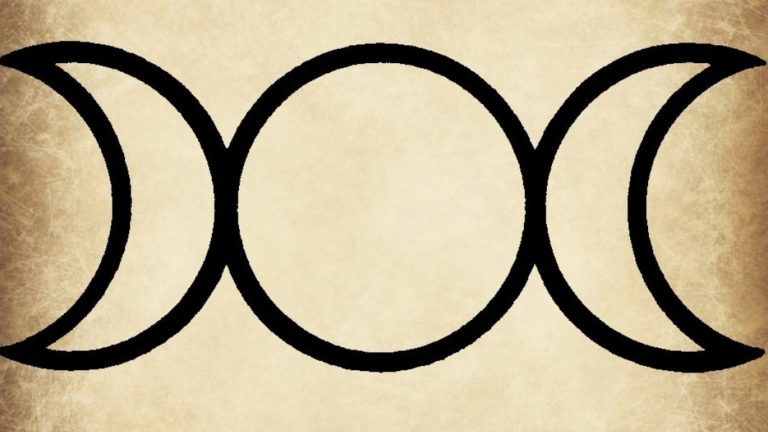
From Bastet to Artemis, throughout history, the presence of goddesses have been written into human lore and mythology. But what does a modern goddess mean for us today?
The modern Goddess is often connected with Wicca, or paganism, but it’s important to hold to her image very broadly. All goddesses are considered different reflections of the one Divine Mother. Pinning the Goddess down is a challenge, as believers state she expresses herself in many different ways in the physical, mental and spiritual planes.
According to Wikipedia, some people in the Goddess movement recognize multiple goddesses. Some also include gods. While others honor what they refer to as “the Goddess”, which is not necessarily seen as monotheistic, but is often understood to be an inclusive, encompassing term incorporating many goddesses in many different cultures. The term “the Goddess” may also be understood to include a multiplicity of ways to view deity personified as female, or as a metaphor, or as a process. Other names she has include the One Goddess, Divine Mother , the Great Mother, the Divine Feminine, and the One (or Source) Energy. As other believers put it, “She is the embodiment of the divine feminine. She is Mother Nature, the Earth– Gaia; she is fertility and the turning of the seasons. She is the cycle of birth, life, death, and regeneration– or rebirth; she is the Creatrix of all that is, was, and will be. Where the God is hard and unyielding, the Goddess is soft and pliant, embracing the individual and human diversity, allowing for growth and expansion.”
The concept of a goddess can sound very abstract, which is why using a guided meditation can be of such importance. BeliefNet has a great one that is very visualization-heavy, and yet offers excellent guidance. Find out for yourself what this deity means to you:
Goddess Meditation
1. Begin your meditation by sitting in a quiet place. Mentally surround yourself with a zone of silence as if you have drawn a veil between yourself and the world. Gradually, begin to slow the rhythm of your breath. As you inhale, then exhale, let your breath carry you deeper and deeper within. As the distractions of everyday life fall away, let your awareness drop down into the inner chamber of your heart.
2. Next, imagine that you find yourself walking along a pathway that leads you further and further away from civilization, and deep into the heart of a primeval forest. As you follow this trail, imagine that you are winding around and among trees that are hundreds of years old. Flowers carpet the ground and birds sing. In the distance you hear the muffled roar of the ocean waves, rising and falling, rising and falling, like music. Your heartbeat, your breath, and the ocean waves keep time with the rhythm of nature.
3. Soon the path you are on brings you to a tiny, crumbling, stone sanctuary, a place so old and hidden it had been forgotten by time. Thickly covered with vines and gnarled branches, it is clear that no one entered this chapel in centuries, perhaps even thousands of years. Intuitively you sense that something mysterious yet deeply familiar lies within this ruin of a forgotten shrine. Slowly you push open the door and enter. As you open the door, something old and timeless opens within your soul as well.
4. Once across the threshold, you find yourself immersed in an atmosphere that is sacred and holy. Vaulted ceilings arch over a rough, stone altar at the front. Candles are burning, there is a smell of fragrant incense. On an altar stands a statue of the female deity, the Goddess. Her face is so old and dark with time, the lines on her body so worn from the touch of praying hands that you cannot even tell what religion she belongs to. She is simply the Mother, god as a woman, the one to whom the world turns in all its grief and suffering. She is Sofia, Kwan Yin, Mary, Sarah, Fatima, White Buffalo Woman, Isis, Sita, Innanna, and Demeter. She is all the feminine faces of God, but she is more than that. She is the mother of life itself.
5. Kneeling before her in reverence, you bow your head in prayer. Immediately you are embraced by her being, and the cares and worries of the world fall away, soothed in her loving acceptance of all your human faults and frailties. Entering even more deeply into your meditation the statue you are praying before suddenly comes alive as a real being and now you find yourself before the mystery of the living mother of all creation.
6. As she comes to life, the chapel fills with a warm and golden light. Now the face of the ancient mother becomes animated with feeling. Seated before her you gaze into each other’s eyes. She penetrates your soul with a glance that loves you to the core of your very being. Emotions of sweetness, mercy, and loving forgiveness emanate from her, sweeping over you in waves of bliss, healing all the parts of your that are hurt, broken, and wounded. Held within her arms, taken onto her lap, you become like a little child with its mother. You touch her hair, her face in loving affection, and feel her loving affection for you in return.
7. Going more deeply into this experience you begin to feel as if the body of the ancient mother is the gateway to the body of creation itself. Going beyond her form, you enter into communion with the body of the earth — all her creatures, trees, oceans, rivers, mountains, cities, and people. Going even beyond the earth, feel the body of the ancient mother expand into space, becoming the bodies of the stars and the planets and the whirling galaxies that are spread over the universe like a mantle of bright jewels.
8. Held in the womb of this mystery you feel a powerful force, holy energy, and the breath of life, the soul of the cosmos. Feel your heartbeat in rhythm with the rhythm of life itself. Slowly begin to return your awareness to your body, still seated before the ancient mother in prayer. Inhale deeply, taking into every cell of your body, every thought in your mind her cherishing nourishing life-sustaining love. Exhale, letting this energy flow out of you like a river of grace watering your life and all those you know and care for, with a stream of blessings, happiness, and well-being.
9. Now close your meditation bowing once more before the ancient mother. Rise and exit from her humble little sanctuary, closing the door behind you. As you make your way along the path back to the life you left behind, remember that you carry within your heart a precious secret: faith in the goodness of life, the gift of love of the Divine Mother of the world.
About the Author

10 Fun Facts About Breathing & the Respiratory System
Our ability to breathe is fascinating, as it’s one of the only systems in our body that can be controlled both voluntarily, through the central nervous system, and more often involuntarily, through the autonomic nervous system. This overlap between the two systems is the reason why focused, intentional breathing methods through yoga and meditation are able to affect other involuntary muscles like the heart.
Our breath is what gives us life and without it, the human body cannot exist. But is it possible to better your life by paying more attention to how you breathe?
While breathing is so commonplace to our existence, proper breathing techniques and awareness of breath can have dramatic implications on our health. Having knowledge of specific breathing techniques can lower stress, help you sleep, help your mind function more acutely, and even curb food cravings.
When we breathe, the average adult draws in about 13 pints of air into the lungs every minute. From the lungs, that oxygen is then transferred from the air sacs in our lungs throughout the body via red blood cells to the blood vessels that distribute it to nearly every system. Meanwhile, waste gases, like CO2, are exchanged and filtered out.
For the average person with good lung health, the amount of oxygen in the blood, or the arterial blood gas (ABG) oxygen level, should be somewhere between 95-100 percent oxygen.