How Rose Quartz Can Help Your Meditation Practice
Crystals are among our most abundant gifts from Earth. Yet choosing which one to use can often be a daunting undertaking. Rose quartz is a perfect ally for novices and seasoned gem-lovers alike, as it can be a gateway to greater self-love, compassion, and gentle harmony with the universe.
The vibration of rose quartz is soothing yet highly effective as a powerful transformer! This makes it one of the best meditation crystals, subtly lifting your heart to higher frequencies and reminding us of the importance of self-care. Rose quartz is a must-have for every crystal enthusiast and a great ally for supporting the energetic shifts on our planet.
How to Use Rose Quartz
Spiritual Wellbeing
Rose quartz neutralizes negative emotions, clears toxic attachments, grants clarity on truth and purpose, aids spiritual evolution, and dissipates fear. As we become more aware of the radiance within by knowing the illuminated heart, we can more easily manifest and fulfill life’s purpose. Rose quartz also cultivates unconditional love free of drama and expectations a doorway to inner peace and satisfaction expand as we become aware of the directives of the true heart.
Emotional Health
Rose quartz balances the heart chakra, releases issues of abandonment, depression, jealousy, and low self-esteem. It creates a connection to the highest essence of god within, granting serenity and peace to become who we are. It brings issues to the surface that which needs to be addressed and released, it demands attention be paid to the heart, which brings inner confidence and calm, and it helps us radiate with compassion and sincere love for those we encounter.
How to Use Crystals for Meditation
Meditation is one of the surest ways to inner states of knowingness and bliss. Stepping outside of ordinary reality and feeding the stillness within should be a cornerstone of all spiritual development.
When we add the blessings of crystals to our meditation, we can amplify our experiences, accelerate our growth, and gain an even greater connection to the natural world around us.
Crystals are a living frequency and will naturally help to deeply and honestly heal the spaces we may have been avoiding. As the addition of a crystal can give us perspective, we can learn not to take things so seriously and effectively heal our hearts.
When we bring crystals to our meditative practice, our spaces expand to include the natural elements. Rose quartz meditation crystals can remind us of the love all around us and bring us into more sincere love toward ourselves and others.
Using rose quartz to meditate can help ease emotional disharmony as it reminds us of the gentle love offered to us daily. It further soothes emotional trauma which may keep our hearts closed and can be a blessed ally for calling in greater personal and romantic love.
Implementing Rose Quartz Meditation Crystals
When you need a love refresher or are in deep turmoil and craving ways to feel the abundance of love, this meditation can guide you back to your own inner wisdom. While you can quickly use this as a pep-me-up, you can also deepen your practice by lengthening your meditation to gain even greater blessings.
- Clear your crystal by running it under clean water.
- Introduce yourself to your crystal.
- Lie down in a quiet space, free of distractions. Lying on the floor with a mat is suggested to keep you present during the mediation.
- State aloud your intentions for connection and healing, so the frequency of the crystal can support you there. Speaking out loud also invokes your larger guides and angel to offer their support of your space.
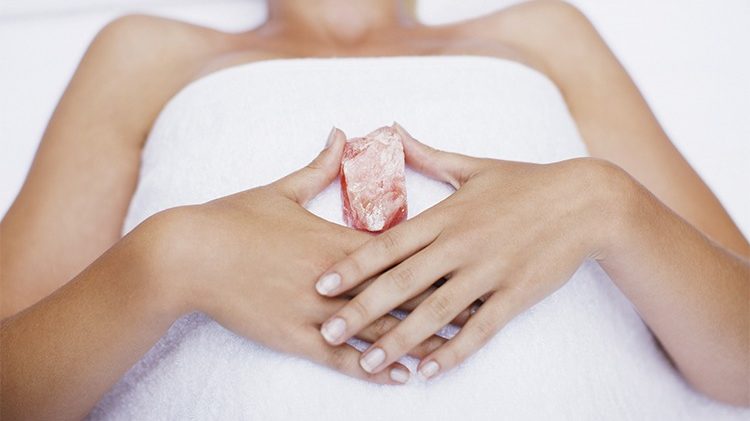
- Rest the rose quartz on your heart. Place it securely for you may be mighty distracted if it slides off when you are deep within.
- Allow yourself to feel the unique energy of the rose quartz. What frequency is it emitting? How does it feel?
- Visualize the soft pink color expanding from your heart, filling up each space with a more resounding sense of peace and love. Let this color and vibration move until it fills all of your body.
- Bathe in the compassion and bliss for several minutes allowing this frequency to re-program your heart, mind, and body.
- When you’ve soaked up all the love vibes, place both of your hands over the stone — this posture is frequent in both kundalini and the Egyptian mystery teachings.
- With your hands on your heart over the rose quartz, allow your breath to be your guide. Breathe in more love, compassion, and peace and breathe out anything that hinders your access to your true heart field. You should begin to feel at one with the frequency of the rose quartz allowing yourself to slip deeper into her generous blessings.
- Say aloud several times: “I am loved. I am love. I am the embodiment of the light within.” Repeat this mantra until you feel electric with its truth.
- When you are complete, gently wiggle yourself back into your body and open your eyes. Thank the rose quartz for her teachings and remind your heart that this is now your highest frequency. Acknowledging this shift will train your brain to lock in this vibration as a constant state of being.
As you practice meditating with crystals, you will discover new pathways and eased access to pure fields of energy. Though this specific rose quartz mediation is for the heart, you may use other crystal allies as they come into your awareness working with other chakra centers and topics as you are guided. The meditation is universal and will help you expand your light, walk your truth, and fuel a world of greater conscious love.
Your Heart Chakra
As we embark in greater spaces of self-love, keeping the chakras balanced is an essential piece of energetic hygiene. Yet it is the myriad gifts of the heart chakra which are most crucial to personal growth. The heart chakra is located in the center of the heart (the physical heart is on the left and etheric heart on the right) smack dab in the middle of your chest.
Known as the fourth chakra, it often resonates with a green vibration and is the pulsating center of the entire chakra system. The Heart Math Institute has been a pioneer in identifying how the energetic field of the heart affects our expanding consciousness. It is the most powerful electromagnetic field in the body and as we radiate our deeper states of love, we are able to quite literally affect greater joy and love throughout the planet.
The heart chakra is the gateway to the God that lives within. When we can become one with its teachings, we embody the light and become living ambassadors of the New Earth.
Drunvalo Melchizedek has spent much of his teaching guiding us back to the ways of the heart to connect with the infinite presence that resides within.
In my own experience during the Flower of Life Workshop I found a past life memory (and teacher!) waiting to be discovered in my heart. It filled me with such awe and profound reminders of my purpose. I was and still am deeply and forever changed by the ways I learned to meditate within my own heart center and it has irrevocably directed my life’s path.
While we can honor the heart as the center of our personal universe, so too are there consequences if we fall out of harmony with the frequencies of the heart. To fall out of balance in the heart will adversely affect everything in the body and can be the cause of stress, sickness, and disease. Much of the disconnection we feel in this modern world can be attributed to closed heart chakras as we imagine ourselves to be alone and isolated from the people around us.
Picture instead a space where we feel the presence of love in everything from the birds to the trees and everyone we meet! This is the blessing of the Rose Quartz crystal meditation for it can easily move us into greater fields of unified love.
Maintaining vigilant awareness of the heart center is a building block of all spiritual practices. Every spiritual teaching throughout the world honors that the heart is a potent space of transformation and it is in getting to know our hearts which can best support our evolution
About the Author

How to Create a Meditation Altar
In The Miracle of Mindfulness, Zen Master Thich Nhat Hanh says that we should meditate because “each of us needs to realize total rest…mindfulness is the miracle by which we master and restore ourselves.” Sometimes, even a full night’s sleep doesn’t help you achieve total rest. How can the restless truly rest in modern society? Mindfulness, or the art of living in the present moment, is an important state of being to achieve in such a busy world. It’s not only good for your overall well-being, but it’s also an excellent way to practice self-love. Discover how to make a meditation altar designed for your specific spiritual practice.
1. Develop a Daily Meditation Practice
As we rush through life, many of us feel like we’re not quite present in every moment. According to Karen Kissel Wegela, Ph.D., to counter this feeling, practice mindfulness meditation. Meditation allows you to let go when stressed and accept yourself just as you are – your thoughts, feelings, and emotions as they arise from moment to moment.
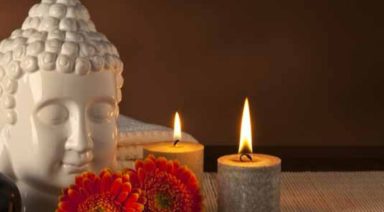
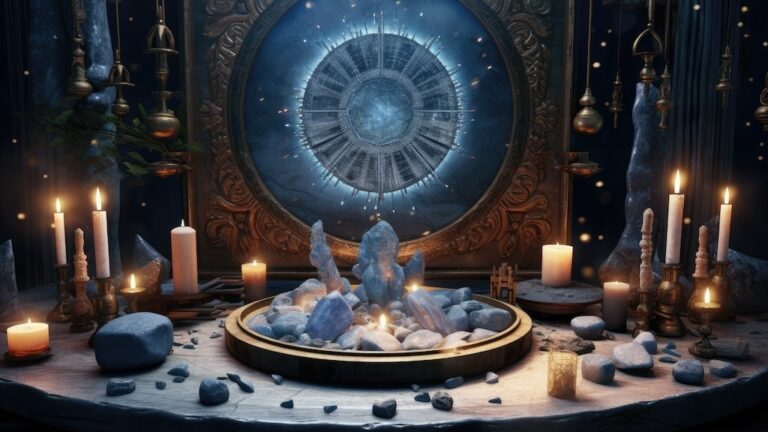
It is important to have a meditation practice that grounds and centers you daily. Such a practice will allow you to feel strongly connected to and centered with yourself. Sometimes, breathing exercises aren’t enough. You need a physical place to go to and rest. While mindfulness meditation can be practiced anywhere, having a sacred space to call your own is important. An altar is a beautiful space full of sacred energy that you can tap into when you need it. Anyone can create an inspirational altar with just a few items and pure intention.