Stanislav Grof And His Famous Holotropic Breathwork
If you’ve ever stared into the backs of your eyelids and breathed white light into your navel, you’ve done breathwork. Breathwork is a new-age term that refers to rejuvenating breathing techniques aimed at awakening the body’s life force. In many circles, breathwork is a key modality utilized to inspire peacefulness, healing, and the embodiment of the divine. Stan Grof, MD, Ph.D., a clinical psychiatrist from Czechoslovakia and one the founding forefathers of research in transpersonal psychology for non-ordinary states of consciousness and the therapeutic potential of LSD, has turned breathwork into a psychedelic, and the benefits are profound.
Dr. Grof says his “holotropic” technique, i.e., turning or directing inwardly or healing toward wholeness, helps practitioners expand their consciousness through rapid, repetitive breathing.
Naysayers regard this activity as potentially dangerous, noting that it resembles hyperventilation. Regardless, thousands of people throughout the world claim Grof’s technique has reduced their stress- and mind-related ailments, and helps them access the inner wisdom of their bodies and core Self.
“Meditation is to understand that one breath connects all beings.”
― Amit Ray
What Is The Holotropic Mind?
Stanislav Grof’s “holotropic mind” refers to the concept that from any fragment of any aspect of the universe, the whole can be reconstructed. Given that the fabric of the universe and all its attributes are continuously expanding and birthing, the holotropic mind might also be referred to as the “eternal mind” or “one mind.”
David Bohm, a theoretical physicist, and partner of Einstein’s explored the complexities and paradoxes of this concept. Grof writes of Bohm, he “describes reality as an unbroken, coherent whole that is involved in an unending process of change, called “holomovement.” He continues with Bohm’s ideas, stating, “matter and life are both abstractions that have been extracted from the holomovement,” and “matter and consciousness are both aspects of the same undivided whole.”
This brings to mind the ancient Sanskrit prayer:
Om Puurnnam-Adah Puurnnam-Idam Puurnnaat-Puurnnam-Udacyate
Puurnnasya Puurnnam-Aadaaya Puurnnam-Eva-Avashissyate
Om Shaantih Shaantih Shaantih
This translates roughly to:
“That is the whole, this is the whole; from the whole, the whole becomes manifest; taking away the whole from the whole, the whole remains, Om peace, peace, peace,” as noted in the prayerbook from Amma “The Hugging Saint.”
Who Is Stan Grof?
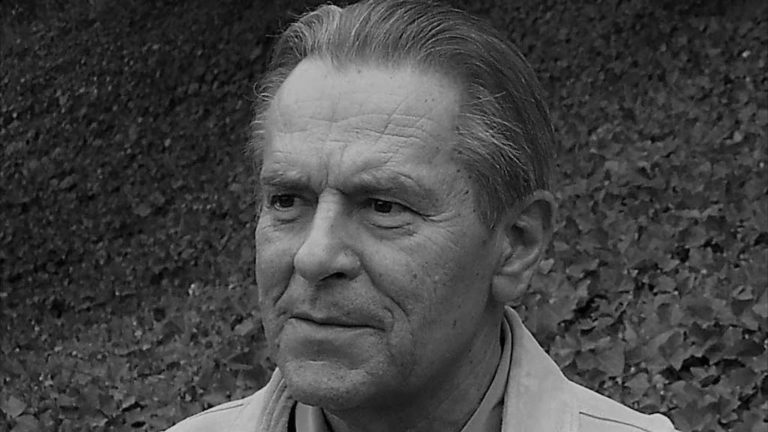
Stanislav Grof grew up in Czechoslovakia and received his M.D. from Charles University in Prague in 1957, before later completing a Ph.D. in medicine at the Czechoslovakian Academy of Sciences eight years later, while studying Freudian psychoanalysis.
Grof held the positions of Chief of Psychiatric Research at the Maryland Psychiatric Research Center, Clinical and Research Fellow at the Henry Phipps Clinic, and Assistant Professor of Psychiatry at Johns Hopkins University School of Medicine in Baltimore. He teaches as a professor of psychology at the California Institute of Integral Studies (CIIS) and his Grof Transpersonal Training (GTT). Dr. Grof has authored several books, including “Psychology of the Future,” “LSD Psychotherapy,” “Beyond the Brain,” “The Cosmic Game,” and “When the Impossible Happens.”
Stanislov Grof
Transpersonal Psychology
Grof is one of the chief theoreticians of transpersonal psychology, a method that incorporates spirituality and unorthodox elements of the human experience into more traditional psychology. In the early 19070s, Grof’s work was recognized by other academics working in the field of alternative branches of psychology, including Michael Murphy and Dick Price who founded the Esalen Institute in Big Sur, an alternative psychological research institution inspired by psychedelic research, Eastern philosophy and the ideas of famous minds, such as Aldous Huxley and Alan Watts. It was there that Grof would live for several years doing his early research and living as scholar-in-residence.
In the late 1970s, Grof furthered the development of the field of transpersonal psychology and became the founding president of the International Transpersonal Association, or ITA, in San Francisco as international attention grew for his pioneering work. He and his wife Christina Grof devoted their lives to modern consciousness research, where they made major contributions to this alternative field of psychology, most notably their concepts and works titled “The Stormy Search for the Self,” “The Ultimate Journey,” “Healing Our Deepest Wounds,” “Realms of the Human Unconscious,” and the “Spiritual Emergency.”
In addition to holotropic breathwork, Grof’s work incorporates psychedelic experiences from guided sessions involving psychedelic substances such as LSD. In fact, Grof has guided over 4,500 therapeutic LSD sessions with his patients.
The 16 Benefits Of Holotropic Breathing
It’s no secret that through the breath, we can access the all-pervasive consciousness and heal ourselves. With consistent effort, we can release anger, anxiety, grief, depression, and chronic pain. With pranayama (breath control), we might also deepen our connection to the eternal I Am.
Here are some of the benefits of Holotropic Breathwork:
- Release stored tension
- Access and release old and chronic emotions
- Dissolve energy blocks
- Awaken your core Self-identity and pure nature
- Bring past traumas into the light for recognition, healing, and emotional release
- Invigorate your body and clear your mind
- Break-free of mental chatter
- Break your patterns around preservation
- Improve your attitude and intentions
- Set yourself on a more proactive life course
- Clarify and improve your self-worth so that you can set better boundaries
- Learn to love yourself and others without codependence or subservience
- Move past your ego for more enlightened interactions and pursuits
- Enrich your creativity
- Invite greater positivity
- Improve your chances of overcoming addiction
If you’re ready to experience your prenatal universe (your core Self before this birth), you’re ready for Holotropic Breathwork. This type of self-exploration is the crux of Grof’s philosophy.
How To Do Holotropic Breathing
While there is no definitive way to practice this technique, and the ancient masters have provided several ways to achieve the same results, here is a set of suggestions that you may find helpful:
- Lay on your back, with your head slightly elevated with a thin pillow.
- Relax and empty your mind of thoughts.
- Take a few deep breaths through your nose and allow the air to fill all areas of your lungs. Slowly and peacefully exhale through your nose.
- Here forward, breathe solely through your mouth. Begin gently with several inhales of fresh air. Allow the air to activate your diaphragm and fill your belly. When your lungs and belly are full, slowly and peacefully exhale. Allow any emotions to arise and release.
- Once you’re comfortable breathing in and out, increase your breathing rate. While some might feel inspired to breathe as fast as they can, the idea here is to remain peaceful. It might be best to slowly accelerate your breathing so that you give rise to a stress-free pace.
- After 3 to 5 minutes, you’ll naturally find your rhythm and style of breathing. If you haven’t pushed yourself too hard, you’ll find that your body will enjoy the rapidity of your breathing. Throughout the process, be careful to remain conscious and attend to your breath.
- If possible, maintain your deep, speedy breathing for up to 20 minutes. If this is your first time, it might be best to stop at 5 to 10 minutes, or less. If you have found comfort in your pace and are feeling safe and fully conscious, consider extending this ritual for up to 2 hours.
“When the breath is unsteady, all is unsteady; when the breath is still, all is still. Control the breath carefully. Inhalation gives strength and a controlled body; retention gives steadiness of mind and longevity; exhalation purifies body and spirit.”– Goraksasathakam
Powerful Breathwork Techniques
Whether you’re a hippie on a beach breathing ocean air to open your mind’s eye, a Hesychastic Christian on Mt. Athos breathing the eternal Christ into your Earth-nature, or a Kundalini ashram-yogi doing “Breath of Fire” to awaken into the eternal Self, you’re experiencing the purest modality for self- and divine-connection: inhaling and exhaling to deepen your connection to the one boundless, non-dual reality.
Here are a few of the most wonderful breathing techniques to inspire your awareness and awakening:
- Breath of Fire: Seated in lotus pose, relax into measured breathing. When you’re ready, begin increasing your inhalations and exhalations to reach over 60 breaths per minute. As you grow into this experience, you might build toward 120 breaths per minute.
- Sama Vritti: Sit in lotus pose, gently breathe inward and outward in equal durations, and focus on stillness.
- Nadi Shodhana (nostril breathing): A pranayama breathing technique that uses alternate nostrils. This is helpful when preparing for meditation as it stimulates the third eye, crown chakra, and root chakra while balancing the mind and heart.
- Wim Hof Method: A robust process whereby you aggressively inhale through your nose or mouth and then exhale through your mouth. These short, powerful bursts are followed by brief periods of holding one’s breath. The total length of a sitting might be around 15 minutes.
- Abdominal Breathing: This is an essential and effective breathing technique that awakens the body and mind. Sit comfortably and use your diaphragm for breathing inward and outward. Focus on the expansion of the belly, rather than on the rise of the chest.
- Gentle Breathing: Sit or stand in a comfortable position and allow a relaxed breath to fill your lower lungs and belly.
While there are many forms of breathwork and many styles of concentrated breathing, the above list will get you started.
“Without full awareness of breathing, there can be no development of meditative stability and understanding.”
The Breathing Bottom Line
The key to awakening your peacefulness and awareness is breath. If you can spend 5 minutes per day solely focused on your breathing, you will be doing more for your soul’s expansion than 99.9% of the planet’s population.
Breathwork is also the perfect precursor to meditation. It gets your blood flowing, initiates the release of the mind, and creates space for your unfoldment. Since you are continuously unfolding back into your pre-birth nature and the eternal consciousness, the more space you can create for yourself, the better.
Breathe in light, exhale tension and toxins.
Breathe into love and know yourself.
Breathe and expand.
I am wishing you the most delicious breathing and meditation for all time!
About the Author

The 7 Most Well-Known and Practiced Types of Meditation

Meditation is an ancient practice that helps calm the mind, connect with the present, and cultivate a state of greater clarity and well-being. Over time, different cultures and traditions have developed various meditative styles, each with particular approaches and techniques.
In this article, we explore what meditation is, why there are so many types, and how to identify which one may be the most suitable according to each person’s needs.
Table of Contents
- What Is Meditation and Why Are There So Many Types?
- How to Know Which Type of Meditation Is Most Suitable
- The 7 Most Popular Types Of Meditation: Discover Their Characteristics
- Types Of Meditation Recommended For Beginners
- Can Different Types Of Meditation Be Combined?
- Tips To Start Your Meditation Practice Without Frustration
What Is Meditation and Why Are There So Many Types?
Meditation is a mental and emotional training technique that seeks to bring attention to the present moment, observing thoughts without judging them. Although many people associate it with emptying the mind, it actually involves developing greater awareness of what is happening internally. It is a tool that can adapt to different goals: from reducing stress to cultivating compassion, improving focus, or exploring spiritual dimensions.
Throughout history, different traditions have developed their own forms of meditation, according to their worldviews and needs. Some focus on breathing or on the repetition of sounds (mantras), while others propose a deep observation of the body or the mind. There are also more contemporary versions, such as guided meditation, which combine traditional techniques with accessible language for those who are just beginning.
That is why there is no single way to meditate or a “correct” form. There are so many variations because each person is different and resonates with different practices. The richness of meditation lies in its diversity: it allows everyone to find a path of connection and calm, in harmony with their life moment and personal style.
How to Know Which Type of Meditation Is Most Suitable
Choosing a type of meditation should not create pressure or confusion, but rather awaken curiosity and openness. The best way to discover which one suits you best is to explore different practices, notice how each one feels, and continue with the one that feels most natural. It is not about following a technique out of obligation, but about finding the one that authentically supports your personal process.
It is also important to consider the needs of the moment. Those who are looking to calm anxiety may benefit from guided practices or those centered on breathing. On the other hand, if the goal is to deepen self-knowledge or move through a stage of introspection, a technique such as zazen or vipassana may be more useful. Connecting with what is needed here and now allows meditation to become a meaningful and transformative space.
On Gaia, there is abundant content created especially to accompany meditation practice, whether you are just beginning or looking to deepen your inner path. One of them is Sound of Creation, a series of sound meditations that combine harmonic frequencies and binaural rhythms to facilitate deep relaxation and connection with your inner energy.
The 7 Most Popular Types Of Meditation: Discover Their Characteristics
Each type of meditation has a particular intention and methodology. Some focus on breathing, others on the use of mantras, and others invite practitioners to observe with mindful attention what is happening in the present. Knowing the basic characteristics of each style can help you choose the most appropriate one according to your personal moment or level of experience.
-
Meditation Mindfulness Or Attention To The Present Moment
It is one of the most widespread forms today. It consists of observing what happens in the present moment—thoughts, sensations, and emotions—without judging or trying to change anything. It promotes mental calm and greater awareness of the here and now.
-
Transcendental Meditation
It is based on the silent repetition of a personal mantra, assigned by a certified instructor. This practice seeks to bring the mind to a deep state of rest beyond thought and is known for its simple yet highly effective structure.
-
Guided Meditation
Uses the voice of a person—live or recorded—to accompany the meditative process. It often includes visualizations, breathing exercises, or positive affirmations, making it an excellent option for those who are just starting out.
-
Movement Meditation
It is a practice that combines mindfulness with physical movement, such as mindful walking, gentle yoga, or qi gong. It helps connect mind and body while cultivating presence in every gesture and breath.
-
Vipassana Meditation
It is a technique of Buddhist origin based on the deep observation of bodily sensations and mental processes. It aims to develop equanimity and a direct understanding of the impermanence of everything that arises and disappears in consciousness.
-
Zen Meditation (Zazen)
Characteristic of Japanese Buddhism, it is practiced sitting in silence, with the back straight and attention placed on the breath or on mental emptiness. It is a form of meditation that is both rigorous and simple, cultivating presence and detachment.
-
Metta Or Loving-Kindness Meditation
Its objective is to generate feelings of compassion, kindness, and connection toward oneself and toward others. Phrases expressing good wishes are repeated, beginning with oneself and expanding toward other people, even those who may be difficult.
Types Of Meditation Recommended For Beginners
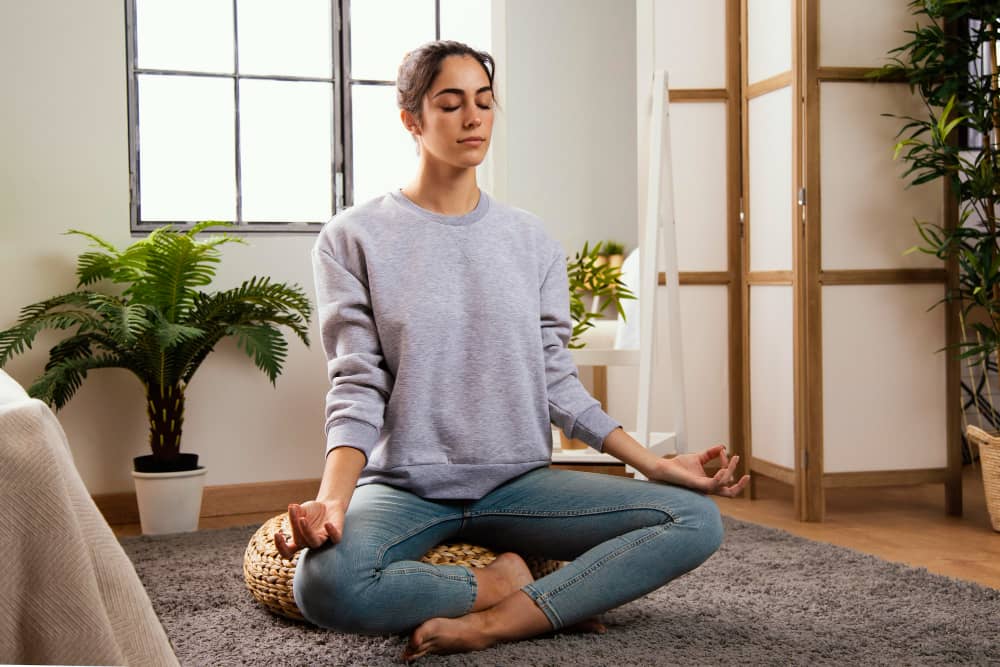
For those who are beginning in the world of meditation, the ideal approach is to start with practices that are accessible, guided, and with a clear structure. Guided meditation is often an excellent option, as it allows you to follow step-by-step instructions, which helps maintain focus and avoid the frustration of not knowing “if you are doing it correctly.”
Another recommended technique is mindfulness or present-moment awareness. This practice can be easily incorporated into everyday life by observing the breath, the body, or thoughts, without needing any previous experience. Its flexibility makes it a friendly and effective gateway for developing habits of conscious attention.
It can also be helpful to begin with meditations centered on breathing or the body, such as body scans. These practices help establish contact with the present moment and relax the nervous system without requiring major mental effort. The most important thing at the beginning is to create a positive experience that motivates you to continue exploring.
Can Different Types Of Meditation Be Combined?
Yes, combining different styles of meditation is possible and, in many cases, recommended. Over time, personal needs may change, and using different techniques makes it possible to adapt more flexibly to each stage of the inner process. What matters most is maintaining a consistent practice without losing sight of the purpose of cultivating presence and awareness.
Some people, for example, combine guided meditation at night with mindfulness during the day, or practice metta to work with specific emotions alongside silent meditation to deepen observation. There is no single formula: the right combination is the one that supports each person’s path with coherence and respect.
Tips To Start Your Meditation Practice Without Frustration
Starting to meditate can seem challenging, especially if there are unrealistic expectations or a rigid idea of how the experience should be. Incorporating meditation as a gentle and progressive habit is key to sustaining it over time without frustration or pressure.
- Start with a few minutes: It is not necessary to begin with long sessions. Even five minutes a day can make a difference if practiced consistently.
- Choose a quiet environment: Looking for a place without interruptions makes concentration easier. It does not have to be perfect, just functional and comfortable.
- Observe without judging: The mind will wander, and that is part of the process. Instead of becoming frustrated, the idea is to notice that movement and gently return to the practice.
- Try different styles: Not all techniques work the same for everyone. Exploring different options helps you find the one that best suits each moment.
- Be patient with the process: The benefits of meditation are built over time. Trusting the practice, even if results are not immediate, is part of the journey.