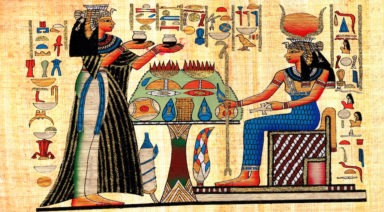
Were the Gods of the Sumerian Kings List Real?
Our history books are continually being tested and challenged, but few discoveries have thrown a wrench into the officially accepted narrative of man’s origin like the DNA of Alfred Perry. Thanks to a chance submission of this one man’s blood to a genealogy laboratory, scientific theories of our species’ origin have been turned upside-down.
The story began in 2013, when a female relative of Alfred Perry, a South Carolina man, submitted a sample of his DNA to trace the family’s genetic roots. It turned out Perry’s DNA was not only rare, but it reset the entire timeline for human existence on this planet. Perry’s Y chromosome contained a signature unlike any other.
Y chromosomes represent the genetic factor that determines the male gender, and from Perry’s DNA, scientists were forced to admit that the common ancestor for his lineage was roaming the earth some 340,000 years ago. Previous to Perry’s DNA sample, scientists believed the origins of humankind traced to an original “Adam” somewhere around 140,000 years ago.
Perry’s DNA may support the theory that this planet has been home to earlier human civilizations that somehow became extinct—or nearly extinct—and that humanity may have been involved in a reboot, so to speak. This theory is supported by an ancient artifact known as The Sumerian Kings List—a written history of kingship in ancient Mesopotamia discovered in Sumerian cuneiforms.
The King’s List Is Rediscovered
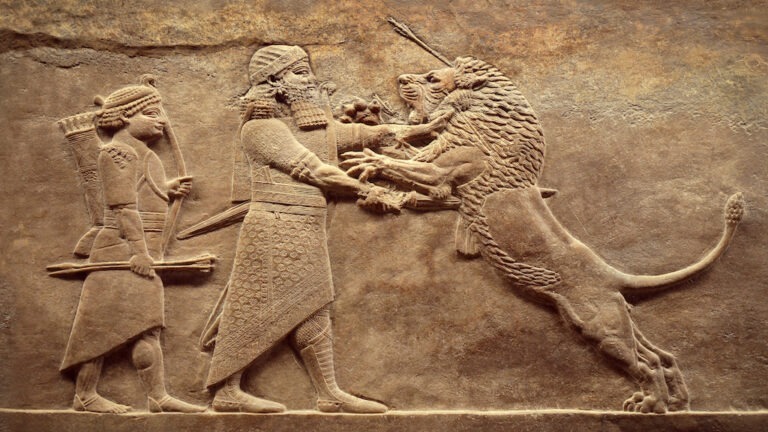
The first fragment of this cuneiform tablet, dated around 4,000 years old, was discovered in the early 1900s by German-American scholar Hermann Hilprecht. Since Hilprecht first set eyes upon The Kings List, at least 18 other examples of documents have been found, and most seem to have been chiseled into stone between 2017-1794 B.C.
The land that was once called Sumer has been replaced by modern-day Iraq and was home to the people of southern Mesopotamia. It flourished between 4100-1750 BCE as a region of city-states, each with its own king.
The King’s List is a record of the history of kingship in Babylonia, from the beginning of human existence to the early centuries of the second millennium BCE
More importantly, all the rulers who allegedly held sovereignty over the whole of Babylonia are listed one after the other without interruption, except for one break—a time of political confusion and anarchy, during which it was unclear who the king was.
Some of the kings are said to have ruled for hundreds, or even thousands, of years. Many academics say they believe this segment of the King’s List is mostly mythological, but now we may have to question this appraisal.
The Human Species as a Slave Race
While mainstream archaeologists and historians generally agree that, even though our species began around 200,000 years ago, civilization is a more recent advent—beginning about 7,000 years ago. However, historian Anton Parks surmises that humanity was originally ruled by gods who may actually have been superior beings and placed humans in the role of laborers and slaves.
Humans were specially created to work, Parks says, and their overlords concealed from them a reality behind this world we’ve all accepted as the only plane of existence. People are still ruled by fear, according to Parks, and we are all somehow tied to an ancient oath of loyalty and subservience, forced upon us by beings known as the Anunnaki, who keep us all in physical and spiritual servitude.
The Anunnaki Live on as Blue Bloods
According to alternative theorists, such as Parks, the Anunnaki were deities of Sumerian lore who enslaved the human race for their own personal benefit. Parks says he believes the DNA of these gods of the old world has survived through the ages and that their descendants may still be engaged in manipulating humankind.
Linda Moulton Howe agrees and connects the gods of old to the blue bloods, or what today we might call royalty or the ruling elite. Howe’s conclusion is that this moniker comes from the copper-infused blood of a reptilian race (as opposed to the iron-infused blood of human beings that makes it red). The blue bloods, says Howe, can be traced to European royalty—right down to certain individuals who still wield power and seem to be above the law.
And now, the question is whether we, as the human race, can liberate ourselves from the chains of an ancient oath between godlike rulers and lowly human beings. Can our human race wake up to its original spiritual source, or will we continue to be enslaved and manipulated by these beings and their methodologies that exist beyond our awareness?
About the Author

Ancient Footprints Evidence of 'Ant People' of Hopi Indian Lore
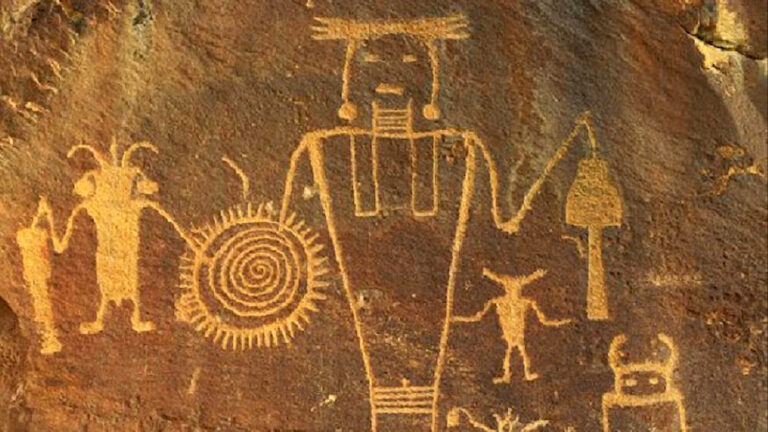
Ancient footprints buried for thousands of years are revealing their true date of creation thousands of years earlier than we thought and shaking up the conventional timeline. Could this validate Hopi stories of ancient Ant Men?
White Sands National Park in New Mexico today, is mostly chalky white desert and sand dunes, but thousands of years ago this was a temperate zone centered around the massive Lake Otero filled with flourishing plants, wildlife, and now we can confirm, humans. Ancient footprints originally discovered in 2009 have been radiocarbon dated to be from 21,000-23,000 years ago. Previous estimates of human habitation in this area were 13,000-16,000 years ago.
Ancient stone tools, footprints, and rock layers are difficult, if not impossible, to date. But scientists have found seeds from ancient spiral seed grass, mingled with some footprints. Those seeds were able to be carbon dated, proving humans were in the area and thriving thousands of years earlier than previously thought.
Jack Cary, researcher and author of “Paranormal Planet” commented on the significance of this discovery. “This is a huge point to shove back human migration. That means that you’re going to have to rewrite everything that’s associated in our science related to human migration. That is a huge problem for our anthropologists and for accepted science as a whole,” Cary said. “As investigators into ancient mysteries, this is one of the biggest things that we could ever discover because now we have absolute, inarguable proof that humans were there at this exact period of time.”
Why are investigators of ancient mysteries so excited about this find?
“This is the same area, the same place, and the same time that the Hopi Indians claimed that the so-called Ant People took them underground during a massive global cataclysm because the world basically caught fire according to their ancient, historical oral traditions. And this same event, strangely enough, can be found in the Book of Enoch when he describes a cometary impact. All of this would date back to around the same time period,” Cary said.
“And we have to remember that in Hopi language ‘Anu’ means ‘Ant’ and ‘Naki’ means ‘Friend,’ so the word Annunaki to the Hopi means ‘Ant Friends.’ And it was these ‘Ant Friends’ who twice took them underground, the second being when the last Ice Age actually melted creating a global flood that has been recorded in ancient histories worldwide. Now we have radiocarbon dated proof that there was in fact, human habitation in the right place, at the right time to make those oral histories viable.”