Possible Million-Year-Old Tools Unearthed in Sudan Could Change Human History
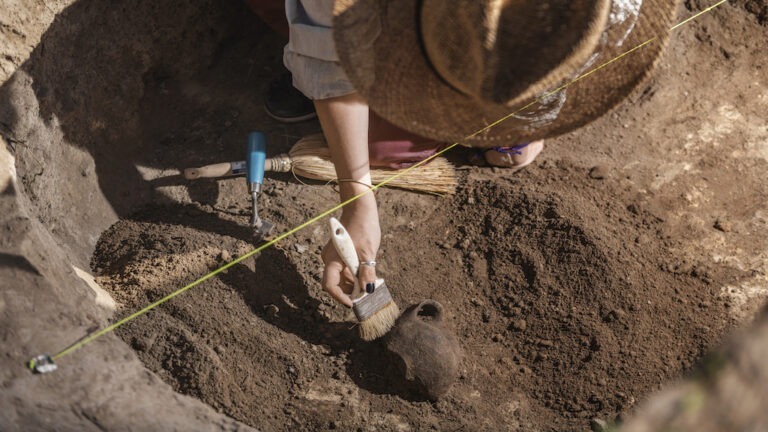
Ancient tools have been discovered in eastern Africa that are possibly a million years old. What can this discovery teach us about our ancient history?
A recent gold rush in eastern Africa has led to open-pit mines where gold hunters have stumbled upon a different kind of fortune: hundreds of stone tools, including Acheulean hand axes, cleavers, and other tools. The head of the study, Professor Mirosław Masojć from the Institue of Archaeology at the University of Wraclaw, Poland said, “[t]he layers of soil around the tools were at least seven-hundred-thousand years old.”
But some have speculated that the tools could be up to one million years old. This discovery puts our ancient ancestor Homo erectus in this area twice as far back as previously thought.
Watch more:
About the Author

Did Giant Exist? The Real History of Giants Living on Earth
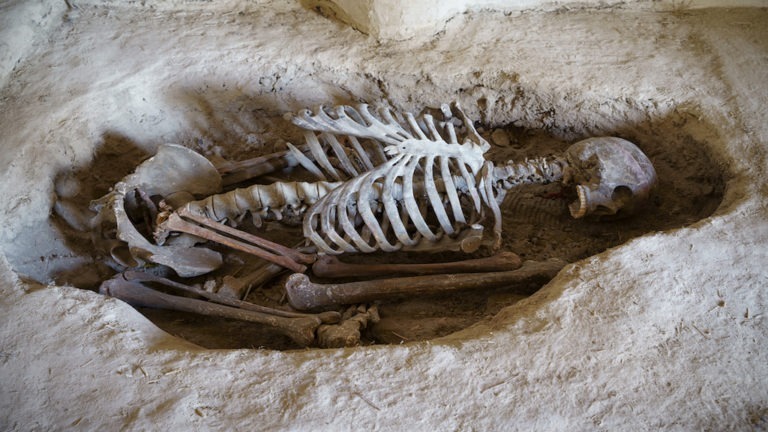
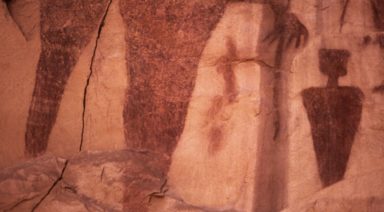
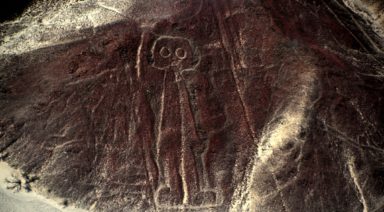
Humans have long expressed a fascination and fear around the question, “Were there giants on Earth?” Whether in legends or life, giants have been worshipped, reviled, ostracized, and celebrated. Stories of towering beings appear in cultures around the world — from mythology to religious texts — and continue to capture our collective imagination.
While the existence of dinosaurs is backed by extensive scientific evidence, and millions journey to witness massive ancient monuments, the idea that actual human giants — beings over 20 feet tall — once roamed the earth is not supported by any credible scientific evidence. Despite popular claims and persistent folklore, no verified remains, fossils, or historical records confirm the existence of such beings.
That said, the enduring belief in giants raises a compelling question: What were people seeing — or experiencing — that led to these widespread legends? Though giants may not have existed in the literal sense, their presence in stories, symbols, and artifacts points to deeper cultural, psychological, and perhaps even natural explanations worth exploring.
Proof of Giants Throughout History
The concept of giants has been a part of human folklore and mythological narratives for millennia, resonating through various cultures and continents, from the Americas to Africa and from ancient Israel to the Norse. In the Americas, both North and South have indigenous legends speaking of giant beings, some even overlapping with interpretations of megafauna like mastodons that once roamed the land. The Native American tales often include references to a race of giants, which could be considered a cultural memory of these large prehistoric animals.
In Biblical Text
The biblical references, such as those found in the Book of Genesis, speak of the Nephilim, who are often portrayed as giants or mighty warriors and described as the offspring of the “sons of God” and the “daughters of men”. Nephilim have been subject to much interpretation, with some considering them metaphorical giants while others believe in their literal existence. David’s battle against Goliath is one of the most iconic stories of a human overcoming a giant from the Bible.
Around the World
From Africa to Germany, as well as in the Norse traditions of Europe, tales of giants are common, often tied to the creation myths and early histories of peoples. Native American folklore across various tribes frequently speaks of giants, who are depicted as powerful spirits or ancestors that roamed the land, some of whom interacted with the people, teaching or challenging them. In Egyptian mythology, the giant Geb, the god of the Earth, was often depicted as a colossal figure whose laughter was believed to cause earthquakes and whose body formed the hills and valleys of ancient Egypt. Perhaps no culture is more richly intertwined with tales of giants than that of the Greeks, from the gods of Olympus to their offspring, such as the Cyclops.
Giant Skeletal Remains
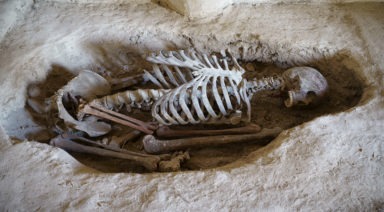
The Smithsonian Institution in the United States, along with other scientific bodies, has been involved in the study of large humanoid bones that have been discovered, often shrouded in mystery and sometimes labeled as hoaxes. Newspaper articles from the 19th and early 20th centuries in New York and California frequently featured stories of giant skeletons unearthed, fueling speculation about ancient giants on Earth.
Extraterrestrial Theories
Theories about ancient aliens, as seen in various full episodes of Beyond Belief or popular documentaries, sometimes suggest that these giants were extraterrestrial visitors, while others propose that they were simply larger human beings that lived in ancient times.
Skepticism remains high, with many of these stories considered hoaxes or misinterpretations of archaeological findings. The search for evidence continues, with enthusiasts combing through books, historical newspaper articles, and religious texts like the Christian Bible and the Book of Enoch for clues.
Scientific Constraints: The Square-Cube Law
Despite the richness of folklore and speculation, biology and physics place hard limits on the plausibility of giants as described in myths. One critical constraint is the square-cube law — a principle in biomechanics that explains why extremely large human-like beings could not physically exist. As a creature’s size increases, its volume (and therefore its mass) grows faster than its surface area. For humans, this means that as height increases, the weight increases exponentially — but the strength of bones and muscles, which depends on cross-sectional area, does not scale at the same rate.
In practical terms, a human scaled up to 20 feet tall would weigh many times more than their skeleton and muscles could support. The heart and circulatory system would also be unable to efficiently deliver oxygen through such a large body. This fundamental law of nature makes the existence of towering humanoid giants biologically unfeasible — regardless of stories or legends to the contrary.
Modern Giants, A Brief Look at Gigantism
Merriam-Webster defines a giant as being a “legendary humanlike being of great stature and strength,” as well as “a living being of great size.” In physical terms, a giant is a person over seven feet tall with a condition known as “gigantism.” The tallest person documented in modern history was Robert Wadlow (1918-1940), known as the “Alton Giant,” or the “Giant of Illinois,” who stood 8 feet 11 inches tall.
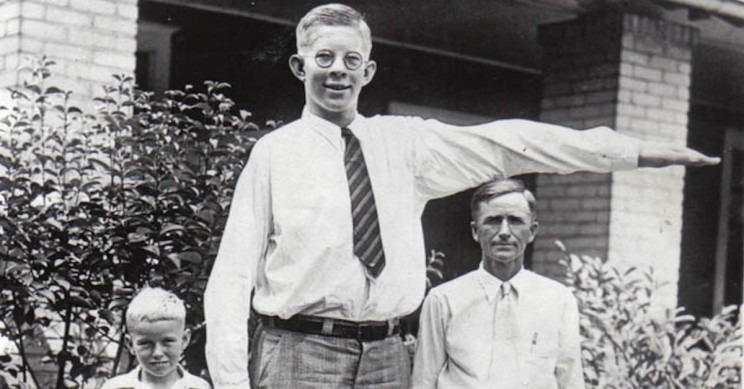
Robert Wadlow, the Alton Giant
Wadlow intended to study law but lived as a celebrity after traveling with the Ringling Brothers Circus and as a spokesman for giant-sized shoes. He died at a young age, an all too common end for those with gigantism — their weight and size put constant strain on the heart and skeletal system.
Today, genetic giants are gaining acceptance because, overall, humans have evolved into a taller species. According to Max Roser, an economist studying global standards of living conditions, between 1810 and 1980, European male height grew from an average of 160 centimeters to 185 centimeters. But despite this acceptance, giants can still find life in a normal-sized world stressful and lonely and, like Wadlow, are treated as an oddity. This contradiction doesn’t exactly mirror how giant races have been regarded throughout history.
Were there Giants on Earth?
In the realm of archaeology and anthropology, there is no credible evidence to suggest that a race of giants once roamed the Earth. Large bones often claimed to be from giant humans are usually identified as remains of prehistoric animals such as dinosaurs or mammoths.
However, tales of giant humans across the earth, whether rooted in mythology, religion, or speculative history, continue to intrigue us. From America to Africa, and from the annals of the Smithsonian to the pages of the Christian Bible, the concept of giants weaves a complex tapestry of intrigue, belief, and scholarly curiosity. Whether these stories emerge from real giants or are simply metaphors within cultural histories, they remain a compelling part of our collective narrative.