The Pre-Adamites: Did Humans Inhabit Earth Before Adam and Eve?
The timeline of human existence has captured the attention of philosophers, scientists, and ordinary, curious people throughout the ages. Of course, there is the famous tale of Adam and Eve, but were they truly the first humans to walk the Earth? There is a growing body of research that suggests modern humans were not the first intelligent beings to live on our planet.
Did Pre-Adamites Exist?
There are groups from all belief systems — Christians, conspiracy theorists, alien researchers, evolutionists, and more — who believe pre-Adamites (humans or intelligent beings that walked the Earth before Adam) actually existed.
The idea of the possibility of a pre-Adamite civilization and discussion about the origin of the human race is not a new one. Debates on the topic have been taking place since 170 AD. Over the years, many theories swirled about, enticing logical and romantic thinkers alike to explore further, look deeper, and question what they had been taught.
The Christian Debate
A growing number of Christians and people of other faiths believe modern-day humans were not the first — and possibly are not the last.
The Bible has clear passages about events that have taken place and that will take place at some point, stating human existence operates on a 7,000-year cycle. Based on scripture now, the Earth is only a little over 6,000 years old. However, a great deal of scientific evidence indicates it is much, much older.
The Bible does not specifically state Adam was the first man ever to walk the Earth. There are too many gaps in the information contained in that chapter to get a clear picture.
Consider the account of Noah and the Great Flood. All humans were wiped out, except for Noah and his family. It’s quite possible a new Adam and Eve were born out of this catastrophe, starting the cycle anew. Therefore, it’s not entirely irrational to have doubts over whether or not Adam and Eve were truly the first humans on Earth.
In the book of Genesis, we read the Earth was without form and void — as if it had experienced a great catastrophe. We know from scripture that water already covered the Earth, and scientists are now finding, under the great bodies of water of the world, evidence of entire civilizations. These findings raise more questions than answers. How do we mesh science with scripture? Is it possible?
Many events documented in the biblical texts seem to be supported by science. Can these two seemingly oppositional systems coexist and come together to give us a more complete picture of where we came from?
Consider that the original biblical texts have been translated repeatedly. The version we use today has only been around since the 1600s, and the Catholic church uses a heavy hand in changing the scripture and the structure of the book itself. If you stop and think about it, perhaps we’ve lost something in all the edits and translations. Maybe we don’t have the whole story.
Keep in mind, there is nothing new under the sun (Ecclesiastes 1:9).
The Scientific Debate
Traditionally, science and religion are diametrically opposed, with religion calling for faith and science calling for fact. However, scientific findings in recent years seem to be closing that gap.
Scientists present evidence that dinosaurs once roamed the Earth. Christians open their Bibles to the book of Job to read about what appears to be dinosaurs coexisting with humans. More recently found civilizations and objects defy all scientific and biblical teaching.
Throughout the world, ancient cities are being discovered; not on mountaintops or in forests, but under the ocean. These include:
- Port Royal, Jamaica
- Lion City of Quiandao Lake, China
- Nero’s sunken city
- Cleopatra’s Palace in Alexandria, Egypt, and Thonis-Heracleion in Egypt
- Sunken city of Cuba
- Dwarka, India
- Yonaguni Monument, Japan
What are these ancient underwater cities? Are they evidence of a pre-Adamite civilization? Many of them have elaborate structures and display a level of technology scientists say was not possible at the time they would have been in use. Could carbon dating and other methods scientists use to date materials really be that far off? That’s not just a decade or two but a multi-billion-year error. Scientists believe they have definitive evidence or are at least very close, to support their timelines.
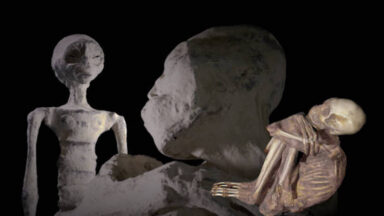
Some scientists believe they have found evidence of the inhabitants of some of these civilizations. A flash frozen civilization in Antarctica is of particular interest. The skeletons looked vaguely human except for the elongated skulls. Who were they? What were they? Scientists speculate an ancient race that has long since died out.
Conspiracy theorists, on the other hand, believe they are an alien race that came here to escape their dying planet. They set up their civilizations and “seeded” the Earth. That is what we humans are.
Everyone has a story, a theory about what took place. The truth is, there are very strange things on this planet that cannot be explained by our current understanding of history, science, technology, and culture. What do we do? We press on. We continue to explore. We keep our minds open and keep searching for the truth.
Regardless of our belief systems, nothing can be learned by blindly walking through life ignoring what does not fit in the history books. Skeptics must acknowledge these ancient civilizations are real, and they were left here for a reason. Why weren’t they destroyed? Is this part of an elaborate puzzle, a higher test to separate the wheat from the chaff?
As for the scientists, are they doing all they can? Is science truly utilizing all available resources to explore these civilizations and search for clues that would change the way we view society and the world? The fact that these structures and entire cities were left behind and buried, only for us to find them so many years later, suggests intent.
When you are deciding what to believe, the greatest tool that can be sharpened and utilized is your critical thinking.
Want more like this article?
Don’t miss Ancient Civilizations on Gaia. Inside we take you on a journey through humanity’s suppressed origins to reveal the secret code left behind by our ancestors.
About the Author

The History of the Anunnaki and Their Connection to Humanity
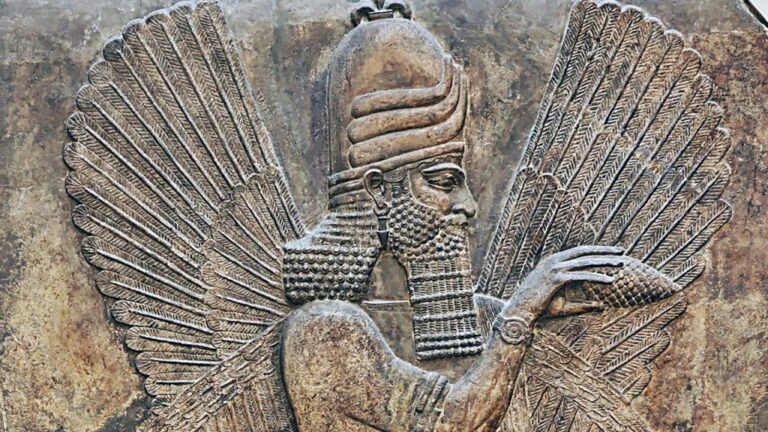
The Anunnaki are mentioned in ancient Sumerian texts as powerful deities who descended from the sky to influence human civilization. These beings not only guided the Sumerians in the development of their culture, but also participated in the creation and evolution of mankind. In this article we explore who the Anunnaki were, their characteristics, and how their presence has been interpreted in different historical and cultural contexts.
Table of Contents
- Who Are the Anunnaki?
- Characteristics of the Anunnaki According to Ancient Texts
- Origin and Meaning of the Term Anunnaki
- The Anunnaki and the Creation of the Human Being
- The Anunnaki in the Bible and Other Sacred Texts
- The Connection Between the Anunnaki and Atlantis
- Are the Anunnaki Still on Earth Today?
Who Are the Anunnaki?
The Anunnaki are a race of deities mentioned in Sumerian mythology, considered to be the sons of Anu, the sky god. These deities were revered for their power and wisdom, and were believed to rule the Earth and the underworld. The Sumerians recorded on their cuneiform tablets the existence of the Anunnaki and their intervention in human affairs, attributing to them the creation of civilization through the transmission of advanced knowledge in astronomy, agriculture, architecture and medicine.
The writer and researcher Zecharia Sitchin popularized the idea that the Anunnaki were extraterrestrial beings from the planet Nibiru. According to Sitchin, these gods arrived on Earth some 450,000 years ago and, through genetic engineering, created Homo sapiens by mixing their DNA with that of terrestrial primates. The main purpose of this intervention was to use humans as labor to extract gold and other natural resources.
In the series Ancient Civilizations, available on Gaia, these theories are explored through various archaeological evidence and ancient texts, offering fascinating insights into the influence of the Anunnaki on human history.
Characteristics of the Anunnaki According to Ancient Texts
Sumerian texts and other ancient traditions attribute to the Anunnaki a number of extraordinary characteristics that distinguish them from other mythological or historical beings. These descriptions allow us to better understand why they were considered figures of superior power and wisdom.
- Celestial origin: They were said to have descended from the sky, specifically from the planet Nibiru, whose elliptical orbit periodically connected them with the Earth.
- Advanced technology: They possessed superior technical knowledge in fields such as astronomy, medicine, engineering and architecture.
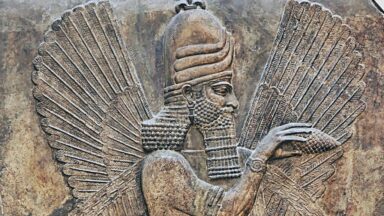
- Imposing appearance: They were described as tall beings, with defined features, long hair and beard, conveying authority and divinity.
- Extreme longevity: It was believed that they could live for thousands of years, which is reflected in the long reigns recorded in the Sumerian King List.
- Genetic capabilities: According to Sitchin, they mastered DNA manipulation and created human hybrids for specific tasks, such as mining.
- Role of rulers: They ruled cities and regions, establishing laws and rules that structured Sumerian social and political life.
- Lasting cultural influence: His teachings left deep traces in Mesopotamian culture, in religious practices, symbols and architectural structures.
Origin and Meaning of the Term “Anunnaki”
The term “Anunnaki” comes from Akkadian and translates as “those who descended from heaven”. In turn, it derives from the Sumerian Anunna, which means “the sons of Anu”, the supreme god of the sky in Mesopotamian cosmology. This name reflects the divine and celestial character of these beings, who were seen as intermediaries between the world of the gods and that of humans.
In Sumerian cuneiform tablets, the Anunnaki appear as figures with authority to establish order on Earth and in the underworld. Their constant presence in mythical accounts suggests that they were not simply local deities, but entities with a fundamental role in the creation, destiny and governance of the human and spiritual world.
The Anunnaki and the Creation of the Human Being
One of the most debated aspects of the Anunnaki is their participation in the creation of human beings. According to the theories proposed by Zecharia Sitchin, the Anunnaki would have arrived on Earth some 450,000 years ago with the objective of extracting gold to restore the atmosphere of their planet, Nibiru. To facilitate this task, they found it necessary to create a workforce adapted to the conditions of the planet.
According to this view, the Anunnaki used their knowledge of genetics to manipulate the DNA of primitive hominids and combine it with their own. The result would have been a new species: Homo sapiens. This hybrid being was not only capable of following orders and performing physical tasks, but also inherited some of the intelligence and technical skills of its creators.
In addition to creating a new life form, the Anunnaki would have guided its cultural development. They did not limit themselves to giving biological origin to human beings, but also sowed the first notions of social organization, spirituality and technology. This would explain, for some researchers, the rapid evolutionary and civilizational leap observed in the archaeological records of Mesopotamia.
-
Genetic Manipulation and Origin of Homo Sapiens
Genetic manipulation appears to be central to the theory of human creation by the Anunnaki. Sitchin posits that these beings had the ability to alter the genetic code with precision, a knowledge far beyond what ancient civilizations could have developed on their own. This act of biological engineering would have given rise to a species capable of reasoning, communicating and collaborating in complex activities.
This new being, the product of a fusion between extraterrestrial and terrestrial DNA, was designed with a functional purpose: to serve the Anunnaki in mining and other tasks. However, over time, this hybrid would have acquired self-awareness and developed capabilities beyond the control of its creators. This would have led to internal tensions among the Anunnaki themselves regarding the future of humanity.
-
Knowledge Transmitted to Ancient Civilizations
In addition to their biological intervention, Sumerian accounts indicate that the Anunnaki shared a wealth of knowledge with humans. This knowledge included astronomy, mathematics, architecture and agricultural practices that fueled the rise of the Mesopotamian civilization. Sumerian temples, ziggurats and irrigation systems are seen as evidence of this advanced legacy.
This transmission of knowledge was not random. The Anunnaki would have chosen specific human lineages to continue their teaching, giving rise to priestly castes and kings who ruled with “divine” authority. Through these intermediaries, the teachings of the Anunnaki were integrated into the social and spiritual structure of early human cultures, many of which continued to worship them as gods for centuries.
The Anunnaki in the Bible and Other Sacred Texts
Some researchers claim that the Anunnaki appear in the Bible under the name of the Nephilim. Genesis 6:4 describes these beings as the “sons of God” who united with the “daughters of men,” giving rise to a race of giants. This narrative bears similarities to Sumerian stories, where celestial gods interact and interbreed with humans, generating special lineages.
Other religious traditions also contain references to superior beings descending from heaven to guide or intervene in human affairs. Apocryphal texts such as the Book of Enoch expand on these descriptions, mentioning the “Watchers,” entities that taught mankind advanced knowledge. These coincidences have led some authors to propose that sacred figures in different cultures may have a common origin in the stories of the Anunnaki.
The Connection Between the Anunnaki and Atlantis
The alleged relationship between the Anunnaki and Atlantis stems from the idea that both represent highly advanced civilizations that existed in antiquity. Some theorists claim that the Anunnaki could have been the true founders of Atlantis, transmitting their technology and knowledge to the first Atlanteans. This hypothesis would explain the level of sophistication attributed to this mythical civilization.
When Atlantis was destroyed, according to Plato’s accounts, some survivors would have taken this knowledge with them to other parts of the world. This would have given rise to new cultures such as the Egyptian, Mesopotamian and Andean civilizations. From this perspective, the legacy of the Anunnaki did not end with Atlantis, but was dispersed throughout the planet through these migrations.
Are the Anunnaki Still on Earth Today?
The possibility that the Anunnaki are still present on Earth is an idea that has gained momentum among certain groups of researchers and enthusiasts. According to this theory, these beings never completely left the planet, but continued to operate from hidden planes or through human elites with whom they would be linked. Some even suggest that they influence global politics, economics and technological development.
However, there is no evidence to support these claims. Most scholars consider these ideas to be speculative. Even so, interest in the figure of the Anunnaki continues to grow, fueled by ancient texts, archaeological finds and the increasing exploration of alternative narratives about the origin of humanity.