NASA Preparing to Deflect Massive Asteroid From Earth Collision
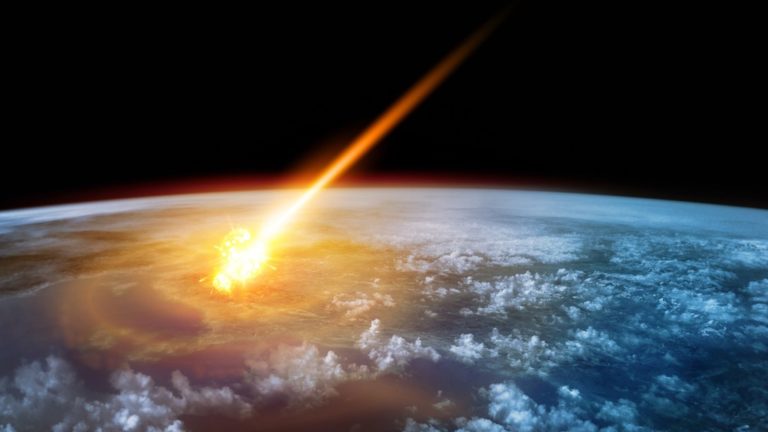
NASA is preparing to deflect the massive asteroid, Bennu, currently set on an Earthbound trajectory for the year 2135. This potential Earth impactor is about 1,600 feet long and may require a nuclear blast to disrupt its course.
The likelihood of Bennu hitting our planet is a 1-in-2700 chance, but when it comes to an asteroid that size, those odds are a bit too close for comfort. In the event of an impact, Bennu, would slam into the planet with 80,000 times the force of the nuclear bomb dropped on Hiroshima.
Depending on where it strikes, Bennu would blow a crater over a mile into the Earth’s crust, causing mega-tsunamis, fires, and likely a nuclear winter. The chances of our species surviving would be slim.
NASA is working proactively to nudge Bennu on a different course, as it gets more difficult to do so, the longer we wait. In conjunction with the National Nuclear Security Administration, NASA is working on a project proposal called HAMMER, the Hypervelocity Asteroid Mitigation Mission, to prevent humanity from sharing the same demise as the dinosaurs.
HAMMER is ideal for knocking large asteroids off course, especially those with a short timeframe for impacting Earth. Sound like the premise of the 1998 Michael Bay blockbuster, Armageddon?
But HAMMER is still just a hypothetical mission, funding for it hasn’t been approved and the use of nuclear weapons is rightfully a sensitive proposition. Scientists must exercise caution when employing nuclear weapons to break up asteroids, as blasting the rock into a multitude of smaller, radioactive meteorites might pose a greater risk.
The alternative to a nuclear armed probe is an “impactor,” like the one NASA used in its 2005 Deep Impact mission that successfully collided with the Tempel 1 comet. An impactor would push the asteroid off course, but this solution is only feasible for smaller asteroids.
In Sept. 2016, NASA deployed the probe, OSIRIS-Rex, to land on the surface of Bennu to collect and return samples to Earth for further study. The probe is scheduled to reach Bennu in August of this year and return to Earth in 2023.
Though Bennu may not hit us for another century or more, planning to mitigate its impact now could save future generations from having to deal with a potential catastrophe at the last minute. Though astrophysicists warn that we face a greater threat from impact by unseen objects.
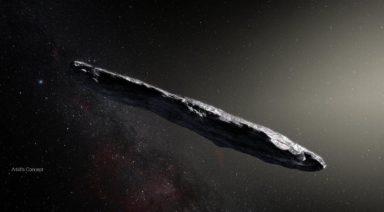
The interstellar asteroid, Oumuamua, had a similar width as Bennu and wasn’t picked up on our radar until it was already on its way out of the solar system. The Chelyabinsk meteor also snuck under the radar, exploding in Earth’s lower atmosphere in 2013. The meteor exploded before it hit the ground and still injured 1,500 people.
About the Author

Do These 7 Strange Features Show Life on Mars?
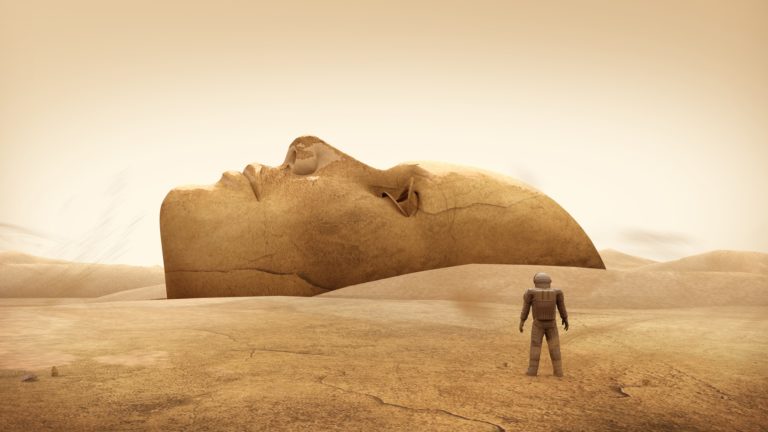
Over the past several decades, there have been numerous features uncovered that seem to show evidence of intelligent life that either inhabited or visited other planets in our solar system. This plethora of evidence has been a point of contention between ufologists and NASA, most notably the face on Mars’ Cydonia region.
Some of it can be easily brushed off as simply the product of shadows, lighting, or a little trick our brains play on us called pareidolia, which makes us see faces and familiar objects in the mundane. But could there actually be something behind this very convincing recurrence of inexplicable faces and structures, pointing toward an advanced civilization? With the discovery of flowing water on Mars, the answer seems like it might be yes.