Who Was The Mysterious Ed Leedskalnin, Creator of the Coral Castle?
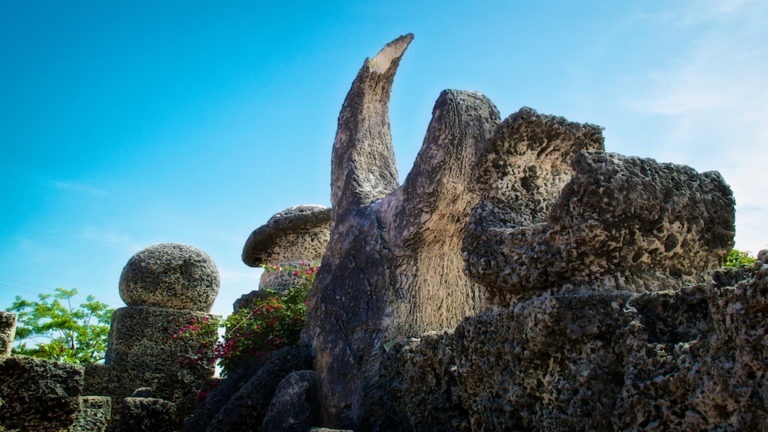
When one thinks of iconic 20th century pioneers in the fields of engineering and electromagnetism, the genius of Nikola Tesla usually comes to mind. But rarely is the name Ed Leedskalnin mentioned; a man who single-handedly constructed one of the most fascinating monoliths – the Coral Castle – claiming he implemented secrets used by the Ancient Egyptians’ to build the pyramids.
Leedskalnin’s story is a strange one, and he did his best to maintain a mysterious legacy through cryptic messages, symbols, and hints in his work. And it all began when he immigrated to the United States from Riga, Latvia at the age of 26, heartbroken his teenage bride-to-be Agnes Scuff, left him the day they were to be married.
Upon moving to the U.S., Leedskalnin suffered from tuberculosis and was told he had mere months to live, until the kindness of a local doctor led to his full recovery. Revitalized, he bought a plot of land in Florida City for $12 – a 4,000 ft.-thick bed of coral limestone under a thin layer of topsoil – and began construction on a project he called “Rock Gate Park.” It was given this name due to the 9-ton slab of stone at its gate, which was engineered so that a child could push it open.
Leedskalnin eventually moved the Coral Castle to Homestead, FL where it remains to this day. When he moved it he hired a truck and a driver, but somehow loaded the slabs onto the truckbed alone, under the cover of night, reconstructing them by himself in their current location.
Leedskalnin stood a mere five-feet-tall and weighed barely over 100 pounds.
How Was the Coral Castle Built?
Leedskalnin had a fascination with magnetism and developed an interesting worldview based around it. In addition to creating Coral Castle, he published several pamphlets outlining a universal theory of electromagnetism and how it pertained to life on Earth. He believed nearly every function of life could be reduced to the interaction between Earth’s north and south poles, and tiny magnets contained in our bodies and every organism on Earth.
This led many to speculate that Leedskalnin used some type of magnetic levitation or resonance to lift the incredibly dense coral rock while constructing his park, though the topic has been highly debated.
While many point to images showing Leedskalnin’s use of simple pulleys and levers, others remain skeptical. He maintained that he had a strong understanding of the laws of weight and leverage, though it’s difficult to imagine him – the lean specimen he was – hoisting 30-ton blocks 20 feet in the air, entirely unassisted.
“I have discovered the secrets of the pyramids, and have found out how the Egyptians and the ancient builders in Peru, Yucatan, and Asia, with only primitive tools, raised and set in place blocks of stone weighing many tons!” –Ed Leedskalnin
Long after his death, the 9-ton gate at the entrance to Coral Castle stopped rotating as easily as it once did. To fix it, a 20-ton crane was brought in to remove, inspect, and repair it to working order. It quickly became apparent that Leedskalnin had drilled a perfectly round hole through the center of the slab without the use of power tools, fixing a metal pole between two truck bearings.
Adding to the mystery are the myriad remnants of an electromagnetic device in a chamber beneath the Coral Castle. There, one finds wires wrapped around bottles and odd devices with magnets and chains, appearing to resemble a generator of some sort. Next to the generator are two long metal poles reaching down beneath the ground, similar to the anode and cathode of a battery.
In the middle of the device is a flywheel made of concrete and magnets and shaped like a four-leaf clover. Many believe this was a perpetual motion device, based on claims from Leedskalnin’s pamphlet Magnetic Currents. When one holds a compass to the device and cranks it, the compass needle spins, indicating the magnets are set opposite in polarity.
Other features of the castle show that Leedskalnin had a strong grasp on astronomy. For example, the Polaris “telescope” built of coral rock aligns itself with the eponymous star through crosshairs constructed from metal wire. Though the “telescope” is simply a hole drilled through rock, it’s alignment is precise, adding itself to sundials and other primitive forms of celestial measurement devices Leedskalnin designed with utmost precision.
Pictures of Coral Castle
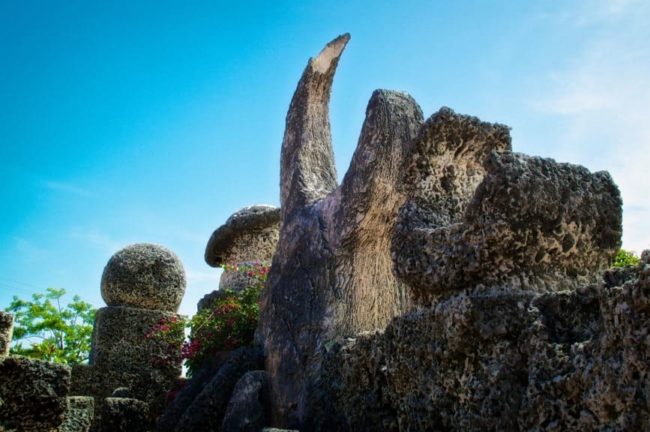
Carvings sit on top of a wall on the Coral Castle in tropical Florida
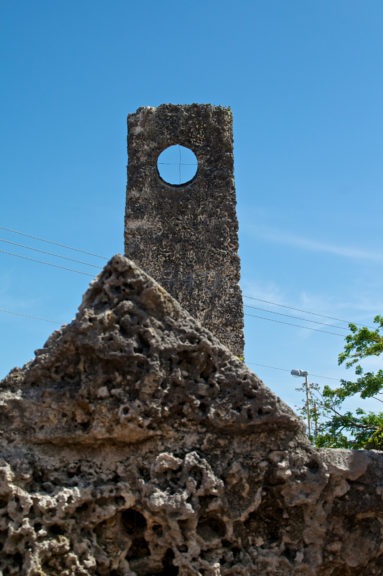
Carved rock telescope at Coral Castle in Florida
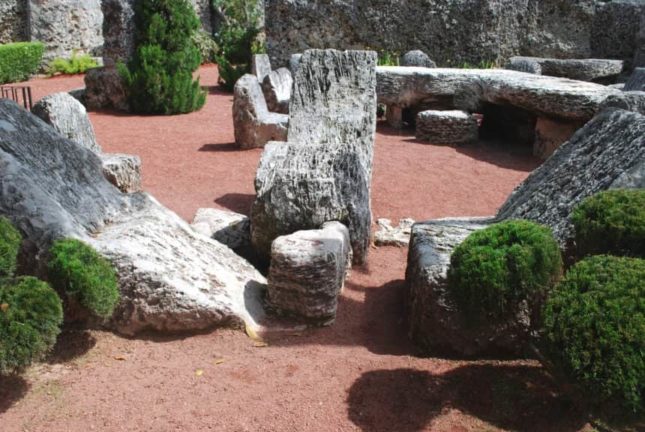
Garden landscaping at Coral Castle, Florida
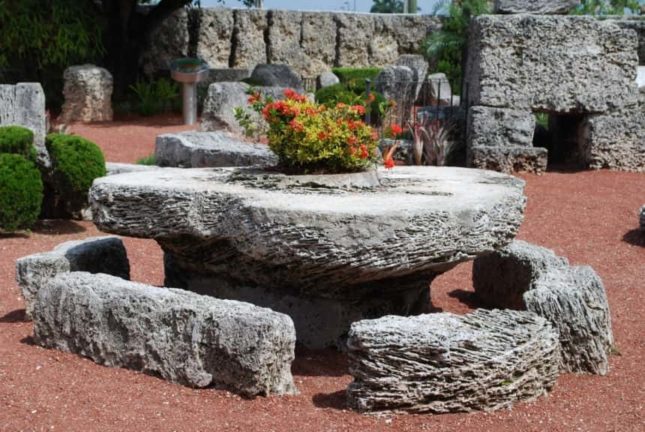
Table and chair carved out of coral
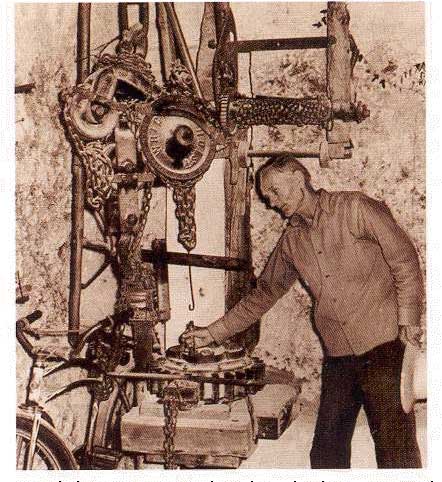
Ed Leedskalnin’s electromagnetic device
The Coral Castle has captivated the minds of many, including famous rockstar Billy Idol, whose song “Sweet Sixteen” found its muse in Leedskalnin’s story or love and heartbreak. Idol wrote the song after watching an episode of Leonard Nemoy’s series, “In Search of…” recounting the story of the man behind the Coral Castle.
Leedskalnin’s secrets in constructing the Coral Castle may forever remain a secret unless someone with enough interest and affinity for the strange world of forbidden science and electromagnetism can decode his cyphered clues. For now, the Castle remains a tourist destination in Florida, open for anyone to marvel at his wondrous creation.
When Leedskalnin spoke of tiny magnets in the human body could he have been referencing magnetite? Watch this short below:
About the Author

Did Nikola Tesla Leave Us a Key to Free Energy?
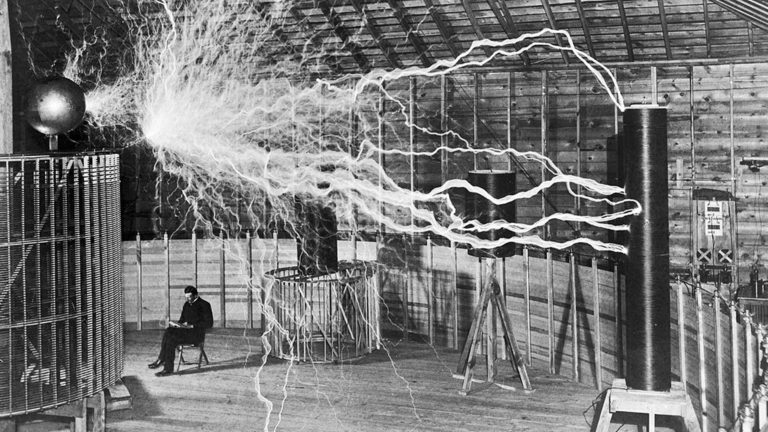
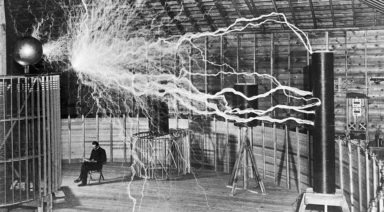
We have many reasons to thank Nikola Tesla when it comes to modern technology, but had capitalistic greed not stood in his way, Tesla’s contributions to society could have gone significantly further. Despite his mental breakdowns later in life, likely caused by detractors and capitalists who refuted his utopian visions for society, Tesla created a plethora of inventions, with the goal of transmitting energy to the world at little to no cost.
While Tesla is known for his advancements in AC power, radio transmission, and induction motors, there is one vision of his that hasn’t fully come to fruition, and that is the wireless transfer of energy en masse. While the Tesla coil is commonly recognized and found at most science museums, the basis of the technology behind it is still in its nascency for practical use.
Over the past decade, wireless technology has become a feasible technological product, but its scale has yet to reach the level at which Tesla originally envisioned. While some companies used the concept to create wireless charging devices for cell phones and small electronic devices, Tesla’s original intent was to provide a wireless network of power for anyone in the world to tap into.