Achieving Unlimited Free Energy

Free Energy
What if we could harness an energy source that provided free unlimited energy? An energy source that is pervasive throughout the universe and all around us, like a sea of energy. The answer to this might be Zero Point Energy (ZPE). ZPE is thought to be the quantum energy that exists in what we see as empty space from electromagnetic waves. To give an idea of this type of energy’s potential, one cup of ZPE would be enough to evaporate all the water in Earth’s oceans.
Originally, it was believed that at absolute zero, also known as the vacuum state, all subatomic movement stopped. However, scientists found that, in fact, there is movement and extensive amounts of energy, which is referred to as zero-point energy.
The theory of ZPE and whether it can be harnessed to produce energy has been an ongoing point of contention. But ZPE’s existence has been proven, and to hopeful scientists it has the potential to be a viable power source. Skeptics brush it off as being either non-existent or impossible to attain as an energy source. But Dr. Garret Moddel from the University of Colorado at Boulder, recently patented a prototype to harness ZPE.
Casimir Cavity
Moddel’s method relies on what is referred to as a Casimir cavity for harvesting ZPE. The ZPE field is close to an absolute minimum energy field where electromagnetic fluctuations force particles to pop in and out of existence.
The Casimir cavity, consisting of two plates held very closely together with an electromagnetic field separating them, creates an even lower field restraining the atomic particles from these electromagnetic fluctuations which subsequently release energy that can be harnessed. The atoms then travel out of the cavity and become reenergized by the universal quantum vacuum, which exists everywhere, allowing for an unlimited power source. And although this may sound fantastical, it is theoretically possible.

ZPE for Spacecraft
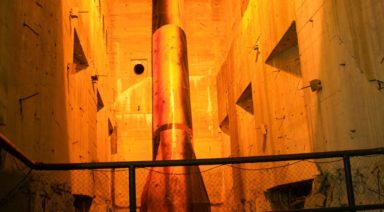
Mark McCandlish, an artist who specializes in aviation and conceptual art, describes an aircraft powered by ZPE, which was witnessed by a friend who described it to him in great detail. The aircraft, an Alien Reproduction Vehicle known as the Fluxliner, use ZPE in a central column as a power source. With the use of ZPE the craft creates such enormous amounts of energy that it could warp space-time.
According to McCandlish, this idea was described by scientists like Harold Puthoff and Miguel Alcubierre, where a polarization process compresses space-time in front of the vehicle while expansion is created behind. This creates a wavelike phenomenon called a dynamically engineered local space-time.
It allows for travel at high speeds, supposedly even faster than the speed of light. McCandless says this is possible when a bubble of space-time is created around a vehicle allowing it to move uniformly during travel. He gives the example of a fish in a fishbowl – when it is moved quickly the fish is not tossed against the walls because the water in the bowl allows it to move uniformly.

Sonoluminescence
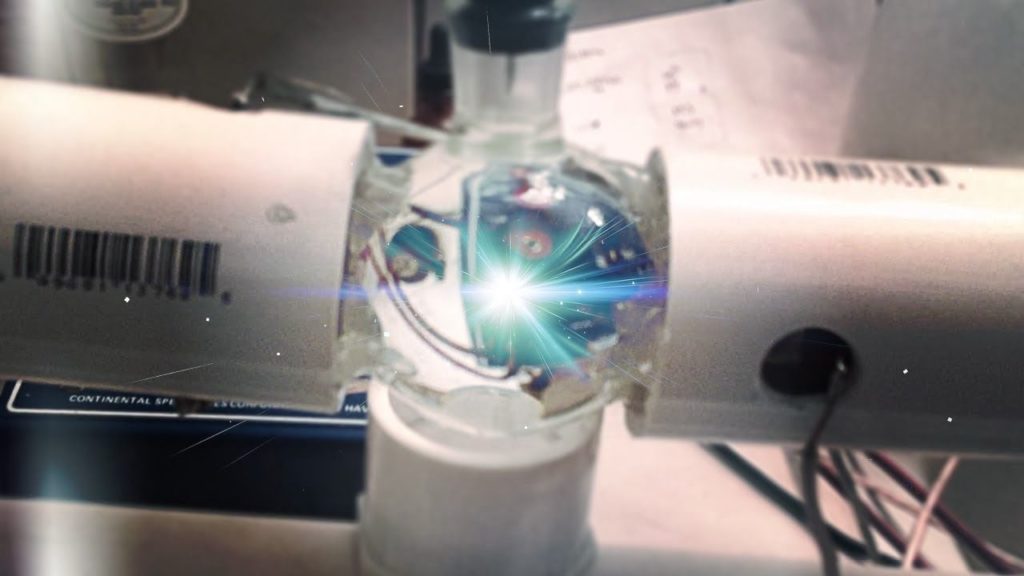
A scientific phenomenon known as sonoluminescence is thought to be further proof of ZPE at work. Sonoluminescence occurs when sound waves are resonated through water in a spherical glass, where an air bubble is blown into the center of the glass. The air bubble then collapses and emits light and energy, so much so that some scientists believe it gets hot enough to produce a micro-fusion process and that this reaction is the product of ZPE.
About the Author

We're Overdue For The 150-year Carrington Event
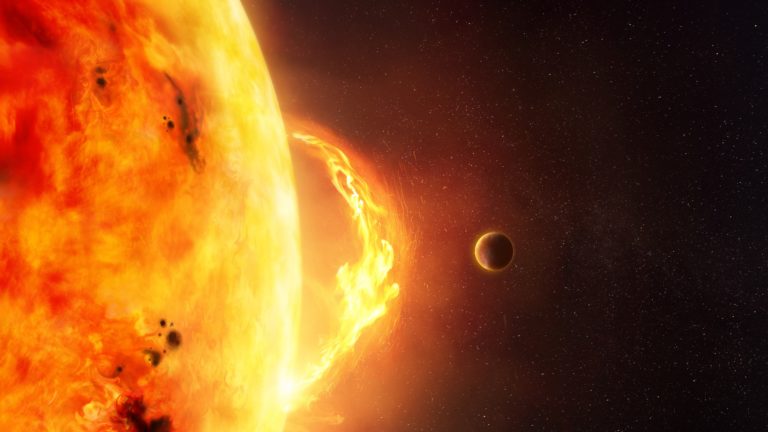
An 1859 solar storm caused the Sun’s corona to expel a massive release of magnetic energy, known as a coronal mass ejection, or CME. It lit up the night sky leading some in mountainous regions of North America to wake up and start their day, believing it was morning, when it wasn’t even midnight.
Though radio communication was in its nascent phase at the time, telegraph operators reported sparks and fire coming from their equipment, while some were even thrown across the room. A man named, Richard C. Carrington, had been recording the activity of sun spots at the time, quickly recognizing the nature of this phenomenon, and so it became known as a Carrington Event. Based on historical precedence, these massive CMEs typically happen every 150 years, leaving us overdue and more vulnerable than ever.