Parivrtta Anjaneyasana: Revolved Lunge Pose

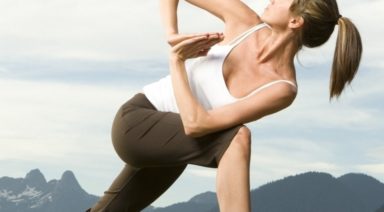
Parivrtta anjaneyasana (par-ee-VRT-tah aan-jha-nay-AHS-ah-nah) is a twisted variation of lunge pose with several options to make the pose accessible. This pose can help develop stamina while improving your balance.
Sanskrit:
- Parivrtta = to turn around, revolve
- Anjaneya = salutation
- Asana = pose
Physical Benefits:
- Strengthens the quadriceps and gluteus muscles.
- Improves digestion and elimination.
- Stretches the psoas and hips.
- Develops stamina and endurance in your thighs
Preparatory Poses:
- Supine twist | Jathara
- Lunge pose | Anjenayasana
- Revolved chair pose | Parivrtta utkatasana
Sequential Poses:
- Revolved side angle pose | Parivrtta parsvakonasana
- Revolved triangle pose | Parivrtta trikonasana
- Revolved half moon | Parivrtta ardha chandrasana
Counter Poses:
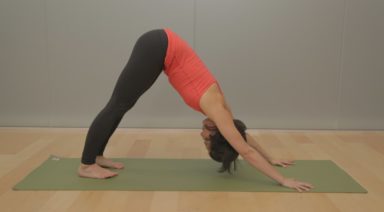
- Downward-facing dog | Adho mukha svanasana
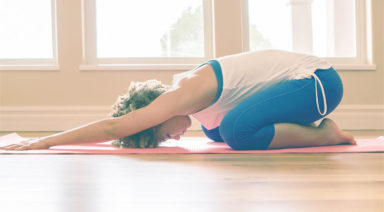
- Child’s pose | Balasana
- Standing forward fold | Uttanasana
Adjustments/Modifications:
- Keep your gaze downward or forward rather than looking up.
- Lower your back knee down to the ground rather than lifting.
- Parivrtta parsvakonasana: The opposite arm rests on the front leg or reaches to the ground, while the other arm extends overhead, creating a deeper twist.
Step-By-Step:
- Begin in a lunge with your right foot forward. Bring your palms together in front of your chest.
- Lift your left knee off the ground and push your left heel back. Reach the crown of your head forward away from your back heel to lengthen your spine and side body.
- On an exhale, twist toward your right leg and place your left tricep on your right thigh. Bring your torso as close to your leg as possible.
- Press your palms together to engage your arms. Turn your chest in the direction of the ceiling and shift your gaze upward over your right shoulder.
- Stay for up to one minute. To release the pose, unwind and place your hands down on the mat, then step back to table top or down dog. Repeat on the other side.
###Legal Disclaimer Before participating in any exercise program or using any fitness products or services that may be described and/or made accessible in or through the Gaia Website and/or the Services, you should consult with a physician or other healthcare provider. Read more about Gaia’s Terms Of Use.
About the Author

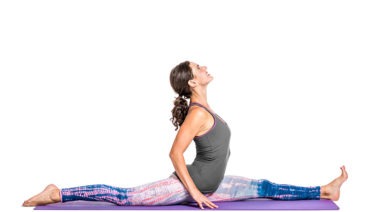
Hanumanasana: Front Splits Pose

ADJUSTMENTS | BENEFITS | SEQUENCING | SANSKRIT | STEPS
Hanumanasana (hah-new-mahn-AHS-ah-nah) honors the great leap made by Hanuman, the famous monkey god from the Ramayana, across the ocean from India to the mountains of Sri Lanka. Front splits pose demands flexibility, strength, and stability.
Philosophy + Origin
More than just an incredible leap, Hanuman is remembered, celebrated, and worshiped because of his great devotion and courage. To be devoted, one must be bold enough to stand firmly in their beliefs, selflessly serving others and putting others’ needs above their own.
Because of its physical demands, it’s easy to get caught up in “achieving” the outward appearance of the posture. As such, it’s important to keep your ego in check as you dedicate yourself to the posture. Above all, invite kindness and selflessness to flow freely from the posture. As you practice, ask yourself how you can embody Hanuman’s devotion both in your physical yoga practice and your everyday life.