Baddha Konasana: Bound Angle Pose

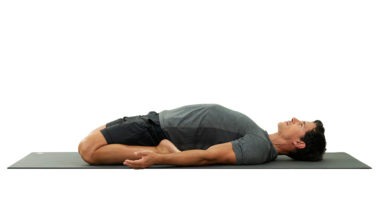
Baddha konasana (BAH-dah cone-AHS-anna) is known by many names including butterfly pose, bound angle, and cobbler’s pose. This seated pose stretches the inner hips and groins.
SANSKRIT:
- Baddha: bound
- Kona: angle
- Asana: pose
PHILOSOPHY AND ORIGIN:
This pose is believed to have origins in the typical sitting positions of the Indian cobblers, lending to one of its other names, cobbler’s pose.
PHYSICAL BENEFITS:
- Stretches the inner thighs, groins, and knees
- Can encourage lumbar curve when set up properly
- Can release low back discomfort
ENERGETIC BENEFITS:
- Stimulates the root and sacral chakras
PREPARATORY POSES:
- Head to knee pose | Janu sirsasana
- Wide-legged forward bend | Prasarita padottanasana
- Staff pose | Dandasana
SEQUENTIAL POSES:
- Seated wide-legged forward fold | Upavistha konasana
- Tree pose | Vrksasana
COUNTER POSES:
- Seated forward bend | Paschimottanasana
- Bridge pose | Setu bhandhasana
ADJUSTMENTS/MODIFICATIONS:
- For a more restorative variation, place your feet further away from your hips, forming a wider angle of your knees, then lean forward.
- If you notice your low back is rounding (or tailbone is tucked under you), sit up on blocks or blankets.
STEP-BY-STEP:
- Find a seated position with your legs out in front of you (dandasana).
- Notice if your tailbone tucks under you. If so, find a blanket, block, or pillow to sit on.
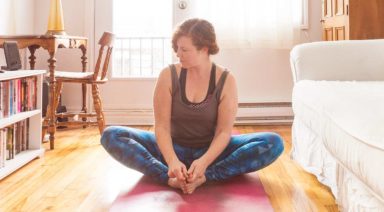
- Place the soles of your feet together, knees out to the sides.
- Option to place your hands behind you to lift the chest.
- Option to hold your ankles and with a long spine, slowly lean your chest forward.
- Hold for up to 10 breaths, then gently return to neutral. Help your knees together and stretch your legs out long.
###Legal Disclaimer Before participating in any exercise program or using any fitness products or services that may be described and/or made accessible in or through the Gaia Website and/or the Services, you should consult with a physician or other healthcare provider. Read more about Gaia’s Terms Of Use.
About the Author

Urdhva Prasarita Ekapadasana: Standing Splits Pose

ADJUSTMENTS | BENEFITS| SEQUENCING | SANSKRIT | STEPS
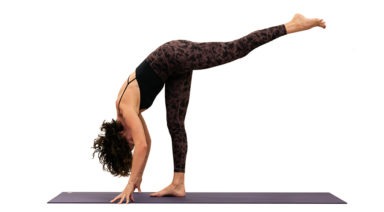
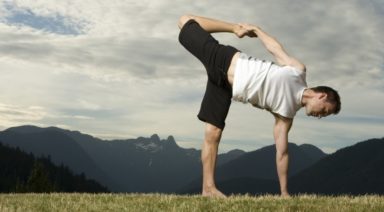
Urdhva prasarita ekapadasana (OORD-vah pra-sa-REE-tah EH-kah pahd-AS-ah-nah) is a great pose for practicing balance and increasing flexibility in the hamstrings. Standing splits also helps stabilize the hips and pelvis (with correct, closed-hip alignment), making it a great pose for building a solid foundation for your asana practice.
Philosophy + Origin
A variation of Hanumanasana (front splits pose), standing splits requires many of the same physical attributes and awareness. This version of the splits is physically challenging and asks to respect where you are today. Think of your lifted leg as an opportunity to strive and your lower leg as a reminder to be patient with your capacity at this moment.