Harvard Professor Starts Independent Investigation to Find Aliens

The search for signs of extraterrestrial life is getting a boost from scientists. Could this grassroots transparent effort answer the biggest question in the universe: are we alone?
The quest to find evidence of higher lifeforms is getting a boost from higher education. Harvard Professor of Science Avi Loeb, has just launched the Galileo Project, the goal of which is to bring the search for “Extraterrestrial Technological Civilizations (ETCs) from accidental or anecdotal observations and legends to the mainstream of transparent, validated, and systematic scientific research.”
Professor Loeb, who published his book “extraterrestrial: The First Sign of Intelligent Life Beyond Earth,” which claims Oumuamua, the first known interstellar object to pass through our solar system, could be an extraterrestrial artifact.
His research, coupled with the US government’s recent report on unidentified aerial phenomena, spurred him to action.
Watch more:
About the Author

What Are UAPs: The New Approach to the UFO Phenomenon

UAPs are at the center of the new approach to the UFO phenomenon, a paradigm shift that is redefining how governments, scientists, and military institutions investigate it. Behind this term lies a profound transformation in the institutional perspective, the declassification of documents, and the opening of public debate.
In this article, we explore what UAPs are, how they differ from UFOs, and why their emergence permanently changed the conversation surrounding unidentified aerial phenomena.
Table of Contents
- What Are UAPs and Why the Term Replaced UFOs
- Differences Between UAP and UFO
- How the Institutional View of the UAP Phenomenon Changed
- UAP Cases That Changed the Conversation
- Why UAPs Transformed Modern Ufology
- What This New Perspective Means for Humanity
What Are UAPs and Why the Term Replaced UFOs
UAP stands for Unidentified Aerial Phenomena. The term is used to describe aerial observations that, at the time they are recorded, cannot be conclusively attributed to known technologies, atmospheric phenomena, or conventional causes. Many of these cases are later given ordinary explanations, while others remain unresolved.
Unlike traditional terminology, UAP does not assume prior hypotheses about the origin of the object. It may refer to undocumented technology, unknown atmospheric phenomena, instrument errors, or, potentially, non-human presences. The breadth of the term is precisely what makes it useful for serious analysis: it leaves the door open to investigation without prejudging the conclusion.
Today, the term UAP has become the preferred language in military, scientific, and governmental circles. Its recent adoption, driven largely by institutions such as the Pentagon, marks a shift away from the term UFO, which for decades was associated with popular culture and stigma. Talking about UAPs means approaching the phenomenon from a technical and rigorous perspective, without falling into sensationalism or automatic dismissal.
Differences Between UAP and UFO
Although at first glance UAP and UFO may appear to be synonymous, the distinction between the two terms is significant. UFO (Unidentified Flying Object) focuses on the object itself, which already implies an assumption: that it is a solid entity, generally shaped like a “craft.” UAP, by contrast, focuses on the phenomenon itself, without assuming anything about its physical nature.
This conceptual difference has practical consequences. Under the term UFO, an unexplained light or a strange radar signal could be excluded from official records because it did not match the expected image. With the term UAP, every unexplained observation falls within the scope of study, regardless of whether it has a defined shape or appears only as instrument data, without any direct visual confirmation from witnesses.
Another important difference is cultural weight. The word UFO carries decades of films, novels, sensationalist television programs, and conspiracy theories, which for years made serious investigation more difficult. UAP, as a relatively new and more technical term, allows the subject to be discussed without the immediate associations attached to the older terminology. That is why many researchers prefer to use it when working with military or academic data.
How the Institutional View of the UAP Phenomenon Changed
The shift from UFO to UAP was not merely a linguistic adjustment. It was the result of a profound transformation in the way institutions relate to the phenomenon. For most of the 20th century, governments publicly denied any serious interest in these incidents while simultaneously investigating them through classified programs. That contradiction began to unravel in 2017, when declassified documents and Pentagon reports revealed that official investigations were far more extensive than previously acknowledged.
Behind this shift lies a decisive factor that often goes unnoticed: national security. A significant portion of UAP reports describes objects detected near military installations, especially nuclear-capable bases, aircraft carriers, and aerial training zones.
In several cases, these phenomena were recorded simultaneously through radar, infrared systems, and direct visual observation. Unusual maneuvers, operational interference, and appearances within restricted airspace were also reported, without any clear explanation of their origin. Faced with this type of evidence, ignoring the phenomenon was no longer a viable option for intelligence and defense agencies.
The cultural stigma surrounding the word UFO was also a major obstacle. Military and commercial pilots, scientists, and government officials often avoided reporting sightings for fear of ridicule or professional consequences. Adopting the term UAP was a deliberate way to strip the subject of its stigmatized associations and allow institutions, media outlets, and researchers to approach it without preconceived filters.
At the institutional level, the shift accelerated when the Pentagon created offices specifically dedicated to analyzing the phenomenon, such as the AARO (All-domain Anomaly Resolution Office). Congressional hearings held in the United States in 2022 and 2023 reinforced this trend: lawmakers, military personnel, and officials spoke openly about the issue, helping normalize the use of the term and bringing the debate into the public sphere.
In the series Aerial Phenomena: The History of UFOs, available on Gaia, historian Richard Dolan reviews the key events that have shaped the UAP phenomenon from the 1940s to the present day. Through declassified documents, presidential testimonies, and analyses of military archives, the series offers a rigorous look at the role governments have played in both concealing and later opening discussion around the phenomenon.
UAP Cases That Changed the Conversation
As the term UAP became more established, a series of specific cases brought it to the center of public debate. These were not isolated, unverified sightings, but incidents documented by trained military personnel, captured through professional instruments, and examined by official investigators. Each of these cases helped give the phenomenon a new level of legitimacy.
-
The “Tic Tac” Video and the Declassified Reports
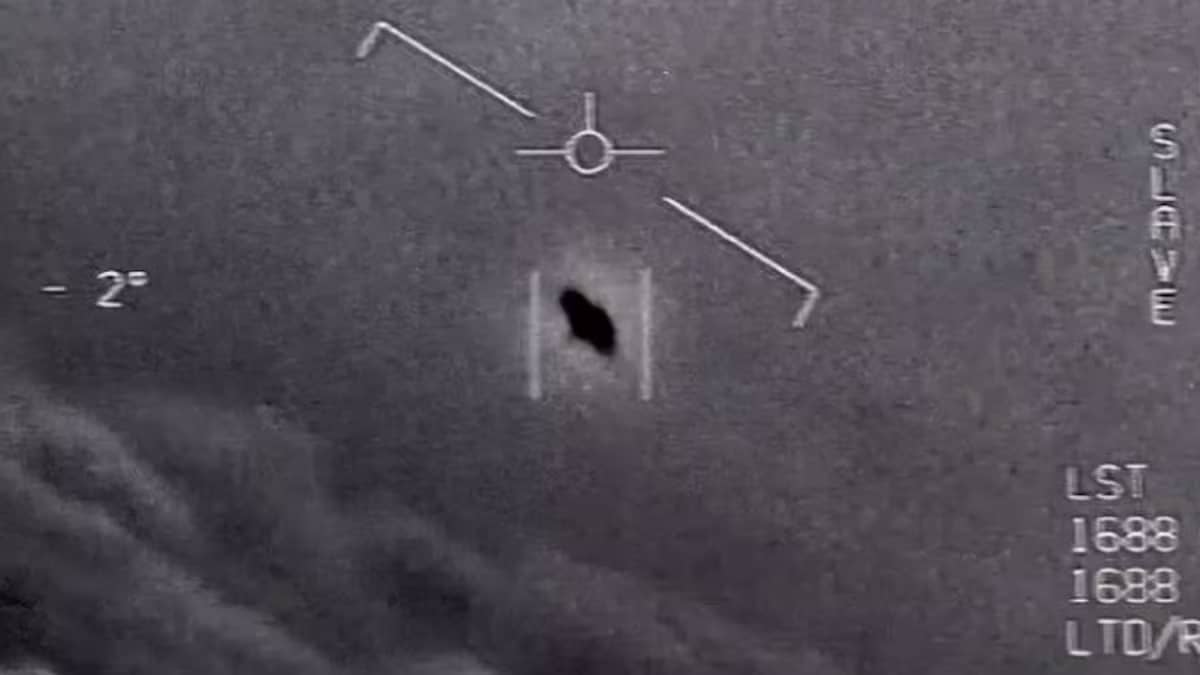
In 2004, U.S. Navy pilots reported an object that was white, elongated, and without visible wings, roughly shaped like a capsule, earning the nickname “Tic Tac” because of its resemblance to the mint candy. The object displayed aerodynamic capabilities that appeared impossible for any known technology: extreme acceleration, sudden directional changes, and no visible means of propulsion. Video footage of the incident, captured by U.S. Navy combat systems, gained widespread public attention in 2017 following an investigation published by The New York Times.
The Tic Tac case and other declassified videos marked a turning point. For the first time, official material confirmed that the armed forces had recorded genuinely inexplicable phenomena. What had long belonged to the realm of popular imagination began appearing in official reports, mainstream media coverage, and governmental commissions.
-
The United States Congressional Hearings
The public U.S. Congressional hearings on UAPs held in 2022 and 2023 represented a historic turning point. For the first time in more than fifty years, the subject was discussed in an open session at the Capitol, featuring testimony from military officers, former intelligence officials, and pilots.
What mattered most about these hearings was not any single revelation, but the fact that they took place at all. During the sessions, several former officials stated under oath that internal programs existed for the recovery of “non-human vehicles,” and also mentioned the alleged possession of “non-human biologics.”
-
Testimonies From Former Military Personnel and Commercial Pilots
Beyond the videos and hearings, a growing number of pilots and former military personnel have begun speaking openly about encounters with UAPs. Their accounts share recurring patterns: objects moving at impossible speeds, the absence of thermal signatures, the ability to operate in both air and water, and behaviors suggesting intelligence behind their movements.
These testimonies come from individuals with advanced technical training, calibrated instruments, and professional careers at stake. Their credibility has pushed many to acknowledge that the UAP phenomenon can no longer be dismissed as mere confusion. More than any isolated video, it is this accumulation of qualified testimony that has changed the weight of the phenomenon within serious public debate.
Why UAPs Transformed Modern Ufology
The adoption of the term UAP did more than change the language: it transformed ufology itself. What had functioned for decades as a marginal field, sustained by enthusiasts and filled with unverified theories, began to professionalize. Researchers with scientific backgrounds, journalists from established media outlets, and former government officials joined the study of the phenomenon, bringing methodological rigor and access to information that had previously been unimaginable.
Another major shift is the change in focus. While classical ufology centered primarily on the question, “Are they extraterrestrials?”, the UAP approach prioritizes documenting and understanding the facts first, leaving the discussion about their origin for later. This reversal of priorities allows for genuine progress without immediately falling into speculation.
Added to this is the geopolitical dimension. Today, the possibility that different governments may have recovered non-conventional technology is openly discussed, carrying implications for national security, international cooperation, and the global balance of power. The phenomenon ceased to be a matter of belief and became a strategic issue, and more than anything else, that explains why the debate can no longer be dismissed so easily.
What This New Perspective Means for Humanity
The new approach to UAPs raises questions that go far beyond simply identifying objects in the sky. If even a portion of these phenomena cannot be explained through known physics or documented human technology, we are facing one of the most significant mysteries of our time.
On an individual level, taking the phenomenon seriously invites us to question inherited assumptions about reality. Accepting the existence of the unknown and allowing that openness to change the way you see the world is, in itself, an act of inner expansion. You do not need to have all the answers in order to begin asking better questions.
On a collective level, UAPs act as a catalyst. Every documented case pushes humanity to reconsider its understanding of the cosmos, its place within it, and the limits of what is possible. The conversation surrounding UAPs is, in reality, a conversation about who we are and what surrounds us, which is precisely what makes it one of the most important questions of our time.