Want more specifics on your past lives?
Clues of your past lives…are they science or spiritual signs? Well, if you’re exploring your past lives and want more insight, these hints could answer the questions you have been seeking about who’s, what’s, where’s, and when’s. Those who believe in reincarnation suggest that there might be clues to what our past lives were in the various complex aspects that make up our current physical, emotional, intellectual, and psychological personalities. Here are just a few, thanks to About.com:
1. DÉJÀ VU
We’ve all felt it as some point: that eerie, creeping feeling that something we are going through has happened exactly this way before. Psychologist Arthur Funkhouser has broken down this phenomenon into sub-categories: déjà vécu (an event already experienced or lived through), déjà senti (already felt), perhaps triggered by a voice or music; and déjà visité (a place so familiar we feel we’ve been there before).
While scientists and psychiatrists insist there are neurological explanations for these phenomena, others consider that these strange feelings are vague, fleeting memories of past lives. You enter a house or building, for example, in a town you’ve never visited before, but somehow, every detail of this place is familiar. You know what’s in the next room and up the stairs. You have the overwhelming feeling that you’ve been there before. Have you – in a past life?
2. OUT-OF-PLACE MEMORIES
Sometimes, you may have memories that you know for a fact never happened. They might be childhood fantasy, misunderstanding, or even a dream that you now interprets as reality. Or, you might be remembering something that happened before you was born into this lifetime.
As it is, the untrained human memory is a bit faulty and inconsistent (not to mention selective), and it’s quite commonplace to have memories of things that family and friends can attest never occurred. So the question is: Is it faulty memory or a remembrance of lives past?
3. DREAMS AND NIGHTMARES
Recurring dreams and nightmares also have been suggested as being memories or at least clues of past lives. It might consist of locations with specific details that you’ve never been to. Pay attention to the level of detail you experience; are they memories of something important that happened in a past life?
In a similar vein of thought, nightmares can be reflections of past life traumas that have clung to our spirits and haunt our sleep.
4. FEARS AND PHOBIAS
Where do your fears and phobias come from? Fear of such things as spiders, snakes, and heights seem to be built into the human psyche as part of our evolved survival instinct. Many people suffer from phobias that are completely irrational, however. Fear of water, of birds, of numbers, of mirrors, of plants, of specific colors… the list goes on and on. People suffer from all kinds of bizarre phobias.
Reincarnation believers wonder if they are carried over from a previous lifetime. Does a fear of water indicate a previous death by drowning? Could a fear of the color red suggest, for example, that a person was struck or killed by a red streetcar?
5. AFFINITY FOR FOREIGN CULTURE
You probably know a person who was born and raised in the United States but is an ardent anglophile – a person who is interested to the point of obsession with British culture. You might also know someone who can think of little else but getting dressed up and acting the part for the next Renaissance Fair or Civil War reenactment. There are “philes” for virtually every culture on the planet, both modern and ancient, affecting people who seem to have no rationale for their obsessions. Why? Are they merely trying to find familiarity in a culture in which they lived 100 years ago? 1,000 years ago?
6. PASSIONS
It’s good to have things that we are passionate about, as long as they do not become obsessive and debilitating. But from where do passions arise for books, art, antiques, fashion, gardening, theater, cars, trains, aircraft, the paranormal – or any number of other subjects? Intense interest in a specific subject might be totally natural, of course, but might there be a past life connection in some cases?
7. UNCONTROLLED HABITS
How about those uncontrolled habits and obsessions that take over people’s lives and can even marginalize them in society? Obsessive-compulsives and hoarders fit into this category. A man who is obsessive compulsive about the details; a woman who hoards so much junk that she can’t get out of her house. Each of us has at least one bad habit, from fingernail biting to gossiping to procrastination. The extreme forms include addictions to everything from television to Facebook to drugs. Again, psychological explanations can be found for these uncontrolled habits, yet those who believe in reincarnation say they might have roots in past lives.
8. INEXPLICABLE PAINS
Do you have aches and pains that the doctors cannot quite pinpoint or find a medical explanation for? You might be labeled a hypochondriac – a person who imagines his or her ailments. Or, as past life proponents suggest, those mysterious pains, sores, cramps, and more could be reflections of suffering you endured in a previous existence.
9. BIRTHMARKS
Birthmarks have been touted as evidence for reincarnation. In one fascinating case, an Indian boy claimed to remember the life of a man named Maha Ram, who was killed with a shotgun fired at close range. This boy had an array of birthmarks in the center of his chest that looked like they could possibly correspond to a shotgun blast. So the story was checked out. Indeed, there was a man named Maha Ram who was killed by a shotgun blast to the chest. An autopsy report recorded the man’s chest wounds — which corresponded directly with the boy’s birthmarks. In a similar way, various other physical traits – even deformities – have been suggested as having their precedent in a person’s former life.
About the Author

5 Signs That a Deceased Loved One Is With You
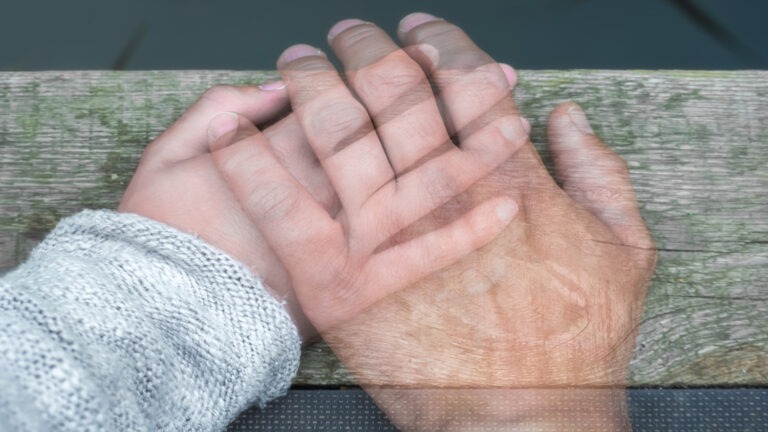
Are there times when you feel that someone who has passed away is still close to you? The presence of a deceased loved one can be felt in a real way through subtle signs, emotional sensations or physical manifestations. In this article we explore how to know if the spirit of a family member is with you, what types of signs may appear, and why you shouldn’t ignore them.
Table of Contents
- Spiritual Signs That a Deceased Loved One Is Nearby
- How to Interpret Messages From the Spiritual World?
- What to Do When You Feel the Presence of a Deceased Loved One?
- When Does a Departed Soul Want to Give You a Message?
- Is It Possible to Contact a Deceased Loved One?
- Intuition as a Channel to Receive Messages From the Beyond
Spiritual Signs That a Deceased Loved One Is Nearby
Although we can no longer see or hear them as before, the emotional links with our deceased loved ones remain active at an energetic and spiritual level. It is common that their presence is manifested through signs that, if we learn to recognize them, can bring comfort and confirm that they are still close, accompanying our processes and taking care of us from another dimension.
These signs are not always obvious. That is why it is important to pay attention to the small details of everyday life, especially if you are going through an emotionally significant stage or feel that someone who has passed away needs to give you a message. Here are some of the most frequent manifestations so you can understand how to tell if a deceased loved one is with you.
- Vivid dreams and dream messages: One of the most frequent ways deceased loved ones communicate is through the dream world. These dreams are not only intensely real, but also emotionally meaningful: you can see their faces clearly, feel their energy, and remember precisely what they conveyed to you. It is not a simple evocation of memory, but a spiritual encounter that often has a clear purpose: to comfort you, to guide you, or to convey a message you need to hear.
- Interference or electrical phenomena: Spirits have the ability to interact with energy fields, so their presence is often manifested by lights that flicker, appliances that turn on by themselves, or radios that play songs with personal meaning. If something like this happens just when you think of that person, it’s probably not a coincidence.
- Aromas that evoke specific memories: Sometimes, for no apparent reason, you may perceive a smell that immediately transports you to the presence of someone who is no longer physically present. Your mother’s distinctive perfume, the aroma of freshly brewed coffee that your grandfather used to make, or the smell of flowers given to you by a loved one may appear suddenly and without logical explanation. These sensory experiences are one of the most direct and recognizable ways in which spirits make their closeness felt.
- Presence of symbols, animals or repetitive elements: Deceased loved ones often use elements loaded with meaning to send you signals. It can be butterflies, feathers, coins, songs or numbers that are repeated frequently. If these symbols appear insistently in emotional moments or when you think of that person, it is very likely that they are trying to establish a connection from the spiritual plane.
- Subtle but obvious physical sensations: Some people report feeling a gentle caress, a sudden shiver, a light pressure on the shoulder, or the distinct sensation that someone is beside them, even though no one is present. These manifestations usually occur when someone deceased needs to give you a message or simply wants to make you feel their company.
How to Interpret Messages From the Spiritual World?
Signs from the spiritual world do not always manifest themselves in a direct or obvious way. It is not a matter of looking for a literal message, but of observing how these symbols present themselves and what connection they have with your emotional and spiritual life. Each person has a different sensitivity, so it is important to develop a more conscious perception of what you feel when these signs appear.
A good way to interpret these messages is to pay attention to what is going on inside you at the moment you perceive the sign. Does it generate peace, excitement, nostalgia or clarity? The emotional charge that accompanies a signal can be as relevant as the event itself. It’s not just about what you see or hear, but what that experience awakens internally, and how it relates to your personal process.
It is also important to note repetition. When a signal occurs more than once, in different contexts, it is probably not a coincidence. Sometimes messages are not immediately understood, but reveal themselves over time. Keeping an open attitude, without forcing interpretations, allows you to connect more authentically with what the spiritual world is trying to show you.
What to Do When You Feel the Presence of a Deceased Loved One?
Feeling the presence of a deceased loved one is a real and meaningful experience that can generate different emotions, from peace and comfort to bewilderment or uncertainty. Far from being something that should frighten you, it is a manifestation of the bond that continues to exist beyond the physical plane. Acknowledging that closeness with openness and calmness allows the experience to integrate naturally into your life, without fear or confusion.
You can speak out loud or in your mind, express what you feel, thank them for their closeness or simply send thoughts of love. You don’t need to do complex rituals: a sincere gesture of emotional connection already creates a bridge between your energy and theirs. This inner communication is as valid as any other form of spiritual contact.
It is also helpful to keep a record of these moments. Writing down what you felt, when it happened, if there were any physical or emotional signs, can help you identify patterns and better understand the purpose of the presence. Over time, these experiences can become a valuable guide for your personal and spiritual process.
When Does a Departed Soul Want to Give You a Message?
There are specific times when deceased loved ones try to communicate more clearly. This often occurs when you are going through a major change, facing a major decision or in need of emotional support. In such cases, the signals may intensify and become more obvious, as if something is insisting on getting your attention.
It can also happen that the message arrives shortly after the death, when the emotional bond is still very active. In that period, it is common to receive unexpected dreams, symbols or emotions that bring a sense of direct connection. The message is not always verbal or specific; sometimes it is simply the certainty that they are well, that they are still present or that they are accompanying you on your journey.
It is important not to force the message to be received. Although many people wonder how to know if a deceased person wants to tell you something, the answer does not always come immediately. Maintaining a receptive attitude, but without anxiety, is the best way to facilitate communication. If the message needs to get through, it will do so at the right time and in the clearest way for you.
Is It Possible to Contact a Deceased Loved One?
There are different ways to contact a deceased loved one. Some people manage to establish this type of connection spontaneously, through dreams, signs or sensations that arise at specific moments. In other cases, they resort to more structured practices such as deep meditation, intuitive writing or symbolic rituals that favor the energetic link with the spiritual plane.
One of the best known ways to contact deceased persons is mediumship. Mediums are people with the ability to perceive subtle energies and act as a channel of communication between this plane and the spiritual world. Through specific sessions, they can transmit messages, emotions or images from loved ones who are no longer physically present, providing guidance or comfort to those who consult them.
There are also other tools such as the use of oracle cards, working with pendulums or connecting with spiritual guides who act as intermediaries. Although each experience is unique, the key element is always emotional openness and the sincere intention to establish that contact. It is not about forcing communication, but allowing it to occur naturally and respectfully.
In the series Channeling: A Bridge to the Beyond, available on Gaia, various experts and channelers explore how it is possible to connect with unseen dimensions and receive messages from higher consciousness. Through real experiences, quantum theories and spiritual practices, this series offers an in-depth look at methods for contacting the beyond and better understanding the link between worlds.
Intuition as a Channel to Receive Messages From the Beyond
Intuition is one of the most powerful tools for perceiving messages from the spiritual world. It is that inner knowledge that arises without logical reasoning, but with a clear and profound certainty. Many times, when a deceased loved one tries to communicate, intuition is the first to pick up that signal: a sudden idea, a phrase that comes to mind or an unexplained physical sensation.
Learning to trust this subtle perception is fundamental to strengthen the link with the spiritual plane. Intuition does not need concrete proof to be valid, because it manifests as an inner truth that is simply known. Often, the most intuitive people perceive signs even before they materialize physically, proving that communication with the beyond is not always visible, but perceptible.
Cultivating intuition is a process that can be developed with practice and mindfulness. Meditation, inner silence, connecting with nature and recording personal experiences are effective ways to strengthen this channel. The more you learn to listen to your inner voice, the easier it will be to recognize when a message is coming from your own mind and when it is coming from another dimension.