Utthan Pristhasana: Lizard Lunge
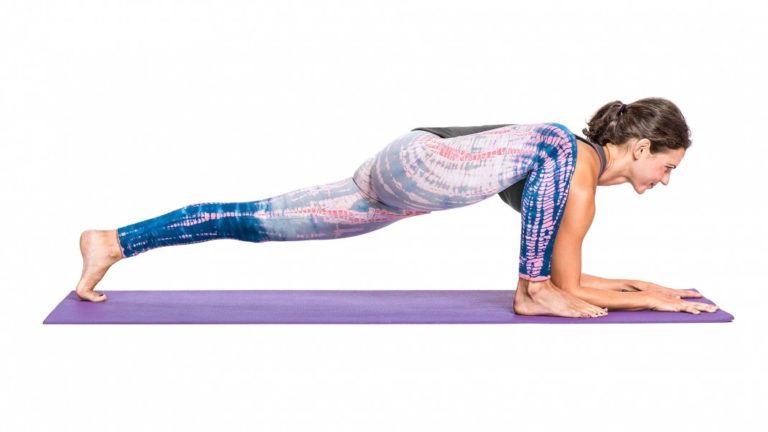
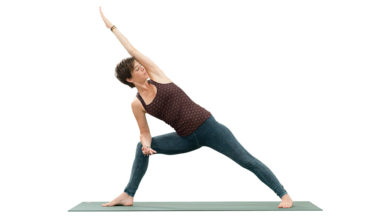
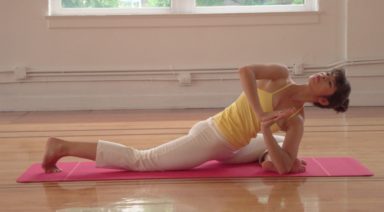
Utthan Pristhasana (OOT-ahn preesth-AHS-ah-nah) is a deep lunge that strengthens the groin and inner hamstrings while preparing the body for deeper hip openers. This shape is also called runner’s lunge in some areas.
Sanskrit:
- Utthan: stretch out
- Pristha: page of the book; back of the body
- Asana: pose
Physical Benefits:
- Opens the hips, hamstrings, groins and hip flexors.
- Strengthens the inner thigh muscles on the front leg.
Preparatory Poses:
- Crescent lunge | Anjenayasana
- Monkey lunge | Anjenayasana
- Happy baby | Ananda balasana
Sequential Poses:
- Half pigeon | Eka pada rajakapotasana
- Half splits | Ardha hanumanasana
- Flying splits | Eka pada Koundinyasana
Counter Poses:
- Head to knee pose | Janu sirsasana
- Bound angle pose | Baddha konasana
- Half lord of the fishes | Ardha matsyendrasana
Adjustments/Modifications:
- Place your hands or forearms on a block.
- Place your back knee on the ground or a blanket for a variation.
Step-By-Step:
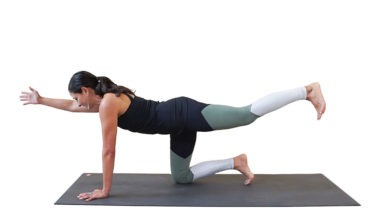
- Begin kneeling on your mat in tabletop pose.
- Step your right foot to the top of your mat outside of your right hand.
- Walk your back leg back as far as is comfortable, toes tucked under.
- Option to lift your back knee off the ground.
- Squeeze your feet toward each other to engage the hip and leg muscles.
- Reach your chest forward, keeping your spine long.
- If you have room, lower your forearms to a block or the ground. If the ground seems far away, place your hands on a block or a chair.
- Hold for five breaths, then release to tabletop. Repeat on the other side.
###Legal Disclaimer Before participating in any exercise program or using any fitness products or services that may be described and/or made accessible in or through the Gaia Website and/or the Services, you should consult with a physician or other healthcare provider. Read more about Gaia’s Terms Of Use.
About the Author

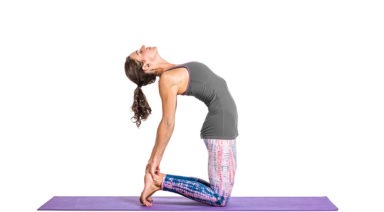
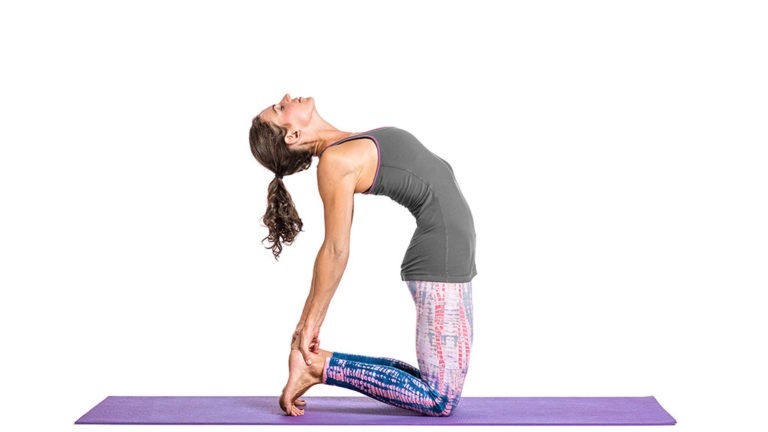
Ustrasana: Camel Pose
ADJUSTMENTS | BENEFITS | MANTRA | MUDRA | PREP POSES | SANSKRIT | STEPS
Ustrasana (oosh-TRAHS-anna), offers a long list of benefits for both the physical and subtle bodies. Thanks to its many different variations and modifications, there are plenty of ways for individuals of all levels to appreciate the chest-opening and chakra-opening effects of camel pose.
Philosophy + Origin
Camel pose is named because the shape resembles the hump on a camel’s back, however there are other ways to consider the name when approaching the posture. Camels are known for their slow, steady, almost methodical way of moving. Rather than trying to race into the posture, moving slowly and methodically will help you find its benefits safely. Camels use their humps as food reserves, like well-packed bags ready to be used when needed. This type of physical preparation, a part of the camel’s natural adaptation for survival, is essential for this pose as well. Take your time to gather and practice the skills and knowledge necessary to take a back-bending journey to ensure that you come in and out of the posture with ease and poise.