Ardha Matsyendrasana: Half Lord of the Fishes Pose
ADJUSTMENTS | BENEFITS | SEQUENCING | SANSKRIT | STEPS
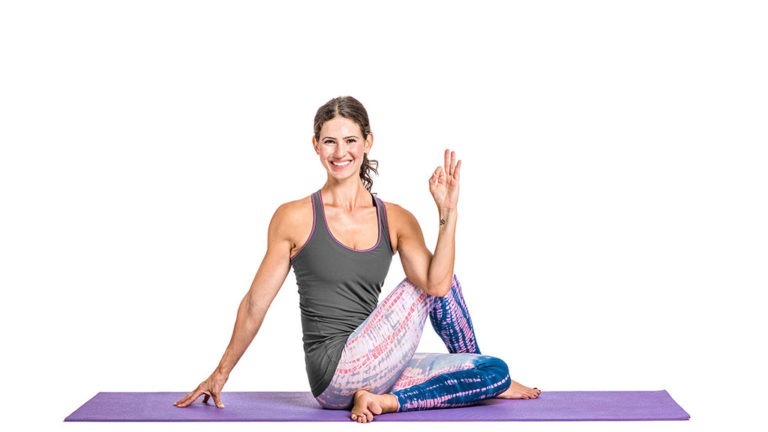
Ardha matsyendrasana (ARE-dah MOT-see-en-DRAHS-ah-nah) is an approachable twist that opens the shoulders and chest. A good antidote for too much sitting and symptoms that come with overusing technology, half lord of the fishes pose has the ability to increase energy in the body while also stoking the digestive fire in your belly.
Philosophy + Origin
Matsyendra is often recognized as one of the original founders of hatha yoga in yogic mythology. He was said to be a baby who was thrown into the ocean after his parents rejected him. The story of Matsyendra reminds us that it’s often the parts of our personal stories we don’t like or don’t want to accept that can be the most beneficial, especially on the path to becoming a yogi or yogini. Rather than conceptualizing the twist to be a purge of what is unwanted or unnecessary, think of the detoxification as a purification, an opportunity to take what was once viewed or understood as “bad” and transform it into something that is helpful on your personal journey.
ADJUSTMENTS/MODIFICATIONS:
- Place a folded blanket under your hips to create space to lengthen the spine.
- Option to extend the bottom leg forward rather than bending. This is a great variation for tender knees.
- Option to hug the bent knee rather than bringing the upper outer arm outside the opposite thigh.
- Option to bind the arms by clasping the hands behind your back.
STEP-BY-STEP:
- Begin seated on your mat with both legs extended out in front of you (dandasana). Bend your right knee and step your foot to the outside of your left leg. Stay here, or bend your left knee so your left foot is next to your opposite hip.
- Place your right hand to the ground (or a block) behind your hips. Inhale to lift your left arm high, exhale to twist to the right and hook your left elbow outside your right thigh.
- Root down through your sitting bones and lift through the crown of your head. On every exhale, invite a gentle twist to the right.
- Option to take your gaze over your right shoulder.
- Hold for 5 breaths then release back to center. Pause in a seated shape for a few breaths, then repeat on the other side.
PREPARATORY POSES:
- Two knee spinal twist | Jathara parivartanasana
- Revolved childs pose | Parsva balasana
- Head to knee pose | Janu sirsasana
SEQUENTIAL POSES:
- Baby grasshopper pose
- Cow face pose | Gomukhasana
COUNTER POSES:
- Seated forward fold | Paschimottanasana
- Bound angle pose | Baddha konasana
SANSKRIT:
- Ardha = Half
- Matsya = Fish
- Indra = Ruler
- Asana = Pose
PHYSICAL BENEFITS:
- Increases flexibility and range of motion in the spine.
- Opens chest and shoulders.
- Can relieve tension in thoracic (mid) spine.
- Stimulates agni, the digestive fire in the body.
Legal Disclaimer Before participating in any exercise program or using any fitness products or services that may be described and/or made accessible in or through the Gaia Website and/or the Services, you should consult with a physician or other healthcare provider. Read more about Gaia’s Terms Of Use.

About the Author

Parsvottanasana: Intense Side Stretch Pose
ADJUSTMENTS | BENEFITS | SEQUENCING | SANSKRIT | STEPS
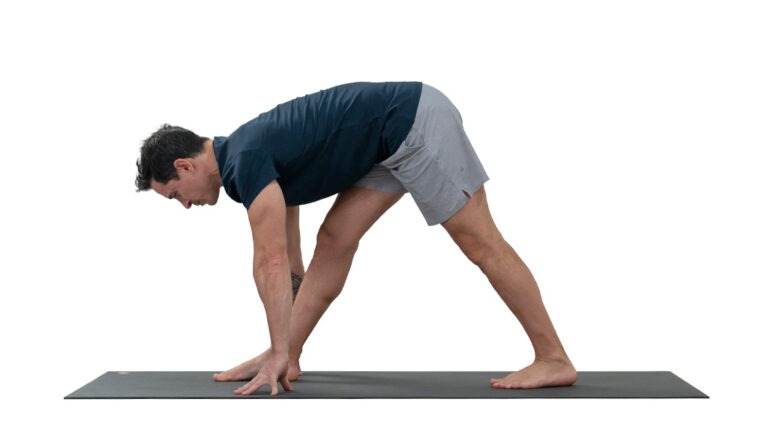
From lengthening the spine to stretching the legs to calming the mind, there’s a little bit of everything in parsvottanasana (parsh-voh-tahn-AHS-ah-nah) Also known as intense side stretch pose or pyramid pose, this shape is helpful for finding balance while stretching hamstrings.
Parsvottanasana requires a combination of flexibility, strength, and patience. With the help of props such as blocks or a wall, this pose becomes accessible for everyone.
ADJUSTMENTS/MODIFICATIONS:
- Blocks: Place hands on blocks to help keep the torso long.
- Wall: Place hands on a wall in front of you to work on strengthening the muscles of the back.
- Heart opening variation: Take the hands in reverse prayer position behind the back to stretch and open your shoulders and chest while also challenging your balance. If reverse prayer isn’t accessible, you can still bring the arms behind the back, reaching for opposite elbows instead.
- Adjust your stance: If the back heel is lifted off of the floor, shorten the stance so you can push through the heel to activate the back leg. For more stability, widen your stance.