Viracocha: The Great Creator God of the Incas
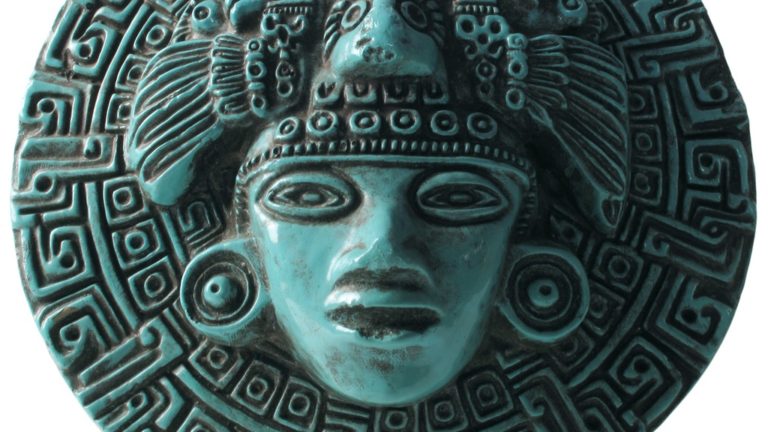
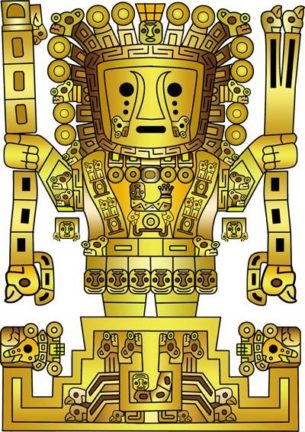
Considered the supreme creator god of the Incas, Viracocha (also known as Huiracocha, Wiraqocha, and Wiro Qocha), was revered as the patriarch god in pre-Inca Peru and Incan pantheism. His name was so sacred that it was rarely spoken aloud; instead replaced with others, including Ilya (light), Ticci (beginning) and Wiraqocha Pacayacaciq (instructor).
This reverence is similar to other religious traditions, including Judaism, in which God’s name is rarely uttered, and instead replaced with words such as Adonai, Hashem, or Yahweh. Viracocha is part of the rich multicultural and multireligious lineage and cosmology of creation myth gods, from Allah to Pangu, to Shiva. A brief sampling of creation myth texts reveal a similarity:
“In the beginning, God created the heavens and the Earth. Now the Earth was formless and empty, darkness was over the surface of the deep, and the Spirit of God was hovering over the waters.” (Genesis 1:1)
“When heaven and Earth began, three deities came into being, The Spirit Master of the Center of Heaven, The August Wondrously Producing Spirit, and the Divine Wondrously Producing Ancestor. These three were invisible. The Earth was young then, and land floated like oil, and from it, reed shoots sprouted.” (Kojiki, the Japanese “Record of Ancient Things”)
“In the beginning, there was Chaos, the abyss. Out of it first emerged Gaia, the Earth, which is the foundation of all. Next came Tartaros, the depth in the Earth where condemned dead souls to go to their punishment, and Eros, the love that overwhelms bodies and minds, and Erebos, the darkness, and Nyx, the night. Erebos and Nyx made love and from their union came Aether, the air, and Hemera, the day.” (“Gaia,” Theogony)
These texts, as well as most creation myths (regardless of origin), are centered on the common idea of a powerful deity or deities creating what we understand to be life and all its many aspects. Legendary Viracocha, the God of Creation of ancient South American cultures, and a symbol of human’s capacity to create destroy, and rebuild, and is firmly rooted in creation mythology themes.
THE LEGEND OF VIRACOCHA
Legend tells us that a primordial Viracocha emerged out Lake Titicaca, one of the most beautiful and spiritually bodies of water in the world and located next to Tiwanaku, the epicenter of ancient pre-Hispanic South American culture, believed location of spiritual secrets found in the Andes. Viracocha is intimately connected with the ocean and all water and with the creation of two races of people; a race of giants who were eventually destroyed by their creator, with some being turned into enormous stones believed to still be present at Tiwanaku.
He re-emerged from Lake Titicaca to create the race most associated with humans as we understand them today. Satisfied with his efforts, Viracocha embarked on an odyssey to spread his form of gospel — civilization, from the arts to agriculture, to language, the aspects of humanity that are shared across cultures and beliefs.
While written language was not part of the Incan culture, the rich oral and non-linguistic modes of record-keeping sustained the mythology surrounding Viracocha as the supreme creator of all things. Now much-visited ruins, the distinct structures, and monoliths, including the architecturally stunning Gateway of the Sun, are testimony to the powerful civilization that reached its peak between 500-900 AD, and which deeply influenced the Incan culture.
THE INCAS AND CIVILIZATION
The Incas were a powerful culture in South America from 1500-1550, known a the Spanish “Age of Conquest.” Rich in culture and complex in its systems, the Inca empire expanded from what is now known as modern-day Colombia to Chile.
The significance of the Viracocha creation mythology to the Inca civilization says much about the culture, which despite being engaged in conquering, was surprisingly inclusive. A rival tribe’s beliefs, upon a victorious conquest, were adopted by the Incas. As well, enemies were allowed to retain their religious traditions, in stark contrast to the period of Spanish domination, requiring conversion on pain of death.
The Incas, as deeply spiritual people, professed a religion built upon an interconnected group of deities, with Viracocha as the most revered and powerful. Stars and constellations were worshipped as celestial animals; and places and objects, or huacas, were viewed as inhabited by divinity, becoming sacred sites.
THE SIGNIFICANCE OF VIRACOCHA TODAY
Viracocha’s story begins and ends with water. He emerged from Lake Titicaca, then walked across the Pacific Ocean, vowing one day to return. The messianic promise of return, as well as a connection to tidal waters, reverberates in today’s culture. For many, Viracocha’s creation myth continues to resonate, from his loving investment in humanity, to his the promise to return, representing hope, compassion, and ultimately, the goodness and capacity of our species.
About the Author

Decoding the Actual Age of the Great Sphinx
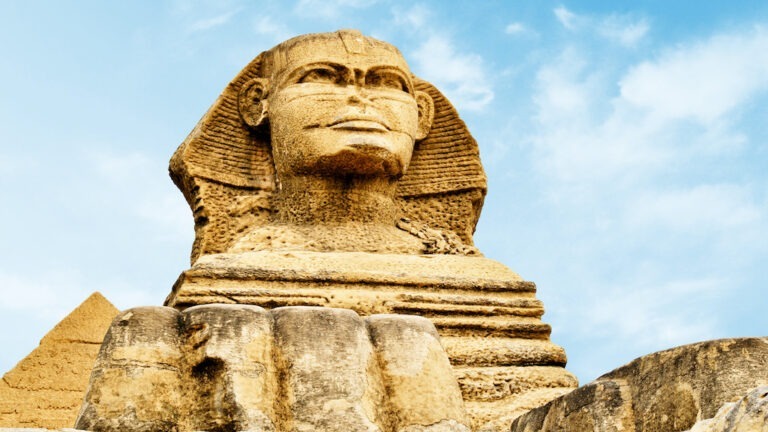
The Great Sphinx of Giza is widely believed to be around 4,500 years old, constructed during the reign of Pharaoh Khafre around 2500 BCE. But some researchers argue it could be far older, even 10,000 to 12,000 years old, based on geological signs of water erosion and other conflicting evidence. This ongoing debate challenges the accepted history of Egypt and the origins of human civilization.
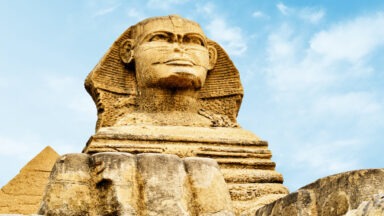
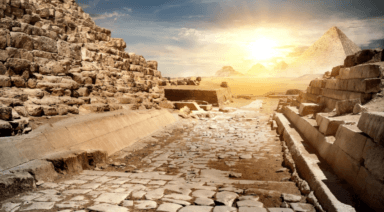
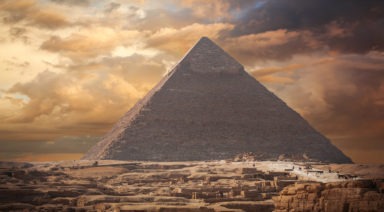
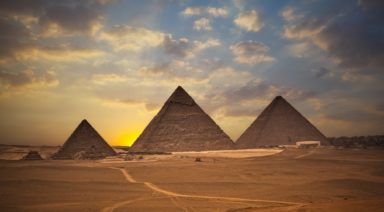
Posing as a sentinel on the Giza plateau is the weathered and colossal figure that stands 66 feet above the desert sand, the Great Sphinx, a limestone sculpture with the head of a lion and the body of a human. While we now know much about the history and mythology of the ancient Egyptians, the mystery of the Sphinx has yet to be truly unraveled.
An ongoing battle between mainstream Egyptologists and a more recent wave of independent thinkers debates the age of the Sphinx by thousands of years. The latter insists the imposing limestone statue is much older than mainstream archaeologists, and Egyptologists claim it to be.
Mainstream archaeologists determined the Sphinx to have been built between 2558 and 2532 BCE. But in 1992, John Anthony West rocked the scientific community with his claim that the Sphinx was actually carved 10,000 years earlier before Egypt was a desert. West and others argued that academia had overlooked an important detail—the body of the sculpture bore distinct markings of water erosion.
After his assessment of the Sphinx’s age, West found fellow scientists who shared his observation about uncovering an entirely different history than was commonly accepted. West’s search led him to Robert Schoch, a geology professor at Boston University, willing to pursue an open-minded, out-of-the-box investigation into the origins not only of the Sphinx but the entire region, as well as its implications for the origin of the human species.
In Gaia’s original series, Ancient Civilizations, Schoch explains his first encounter with the figure in 1990, at which time he immediately noticed there was a disconnect between the statue’s academically accepted date of origin and the truth staring him in the face. Upon careful inspection, Schoch realized the Sphinx survived intensely wet weather conditions that stand in stark contrast to the now hyper-arid conditions of the Sahara Desert.
Schoch concluded that academia had determined the Sphinx’s age by overlooking signs of erosion due to heavy rainfall. The deluge that eroded the Sphinx was uncommon to the Egyptian plateau 5,000 years ago, but very common 10,000 to 12,000 years ago. For Schoch, this was an exciting find, but for mainstream science, it was met with derision and denial.