An Update on the Nazca Mummies: There’s More to Come
Just under a year ago we released the short series, Unearthing Nazca, detailing the discovery of an anomalous mummy found in Peru. Predictably, the revelation stirred up excitement, as well as some controversy and criticism. Since then, a considerable amount of conjecture has circulated on the internet, with articles and headlines speculating as to what we found. Now, we’d like to address some of those claims and provide an update on where we stand.
Without having access to bone and tissue samples, CT scans, or laboratory test analysis, a number of publications made claims that the results were complete on the Nazca mummy, known as Maria. Headlines citing DNA evidence that conclusively showed Maria to be 100 percent human were touted, without due diligence to confirm those assertions.
Sensational Headlines
Many cited the internet’s go-to fact checking website, Snopes, as the authoritative voice to settle the case, despite the website’s lack of any substantial investigation. Snopes aimed to fact check the claim that “a corpse found in Nazca, Peru is that of an alien,” giving it a rating of “false.”
While the provenance of the mummy was part of others’ online speculation, we have made it a priority to avoid making any definitive claims, until all of the test results are in. We’ve been careful with our verbiage, knowing that sensitivity and patience are crucial to conducting an objective investigation.
Snopes goes on to compare our reporting with that of a completely unaffiliated website, Disclose.tv, and the headline it posted with our video, which read “New Alien Mummy Discovered in Peru…”
It then continues to criticize the beliefs and previous work of the scientists and journalists involved in the study, rather than focusing on the evidence they provide.
Another one of the recurring tabloid headlines we noticed made such claims as, “DNA results are in on the ‘mummified aliens’… and they are REAL beings.”
While we’ve already addressed our stance on qualifying the mummy, one thing to point out here is that there is some truth in this headline, we believe Maria was a real being. However, one should note that the author is intentionally using ambiguity to bait the reader. Yes, we believe the mummy was once a real being, but no one here is jumping to the conclusion that she was an extraterrestrial being.
Another claim cited by a number of publications was that the Paleo DNA Laboratory at Lakehead University in Ontario finished conducting its DNA sequencing and that the results were conclusive; the mummy was human.
While we are working with this laboratory, these results are not conclusive. In fact, nothing is conclusive at this moment and we are working on running DNA sequencing at a number of labs in several countries to ensure proper procedure. This is a very time-intensive process that requires a lot of resources, coordination, and expert opinion to remove unwanted variables, such as DNA contamination and inconclusive analyses. But as the results come in, we promise to give you the details as we know more.
The Difficulties of DNA Sequencing
One of the most difficult variables to control for in DNA sequencing is contamination, and it can come from a number of sources. Given the circumstances, our samples weren’t collected in the most sterile environment, therefore it can take some time to distinguish between DNA from those who came into contact with Maria, and actual DNA samples from her bone.
Once in the lab, the challenge is still not over. Aerosol contamination from solid or liquid particles can interfere, as well as improper handling, or cross contamination from previous sequencing. It’s a very delicate process, to say the least.
There are also various sequencing protocols based on different laboratories and their chosen methodologies. Before a lab begins their process, the sequencing must be based on a question, such as: “does this sample match the DNA of a primate?” or, “does this sample match the DNA of modern humans?” From there, the sample is compared to the specific DNA in question, and that one question can take months or even years to answer.
This is why we have made the costly and time-consuming decision to have multiple labs sequence Maria’s DNA – think of it like getting a second opinion from another doctor; with such sensitive material, we want to have the best information we can get.
Archeological Precedent
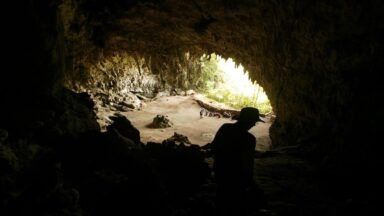
If we were to compare this process to the most recent precedent in archeology, we would have to consider the discovery of the Denisovans. When archeologists found a 40,000-year-old finger bone of a hominin ancestor in a Siberian cave, they didn’t realize its anomalies for nearly two years. Once they did, it took another two years to fully sequence its DNA, before they could confidently classify it as a previously unknown species.
When the Denisovan discovery was made, it received pushback from the scientific community by those unwilling to accept the fact that, not only did another hominin ancestor exist, but it may have also interbred with our human ancestors. It was a controversial discovery, indeed.
And with a controversial discovery such as Maria, it can be difficult to find archeologists and laboratories willing to get involved. Cultural, social, and political sensitivities all play a role in the decision of those who may fear a negative outcome could affect their careers and reputation among colleagues. This is understandable, though it limits the pool of those we can work with to acquire results in a timely fashion.
But as the sensationalism around the discovery has faded over the past year, we have been in contact with a number of new scientists, domestically and abroad, who are excited to lend their expertise in helping us uncover the true origins of the mummy, known as Maria. We are excited to move forward with our research and will keep you informed along the way.
By reexamining our history we believe we can shift our paradigm and learn more about ourselves in the process. We care about more than headlines, we care about seeking truth.
Watch the original report below:
About the Author

Human 'Hobbit' Ancestor May Still Be Alive in Indonesian Jungles
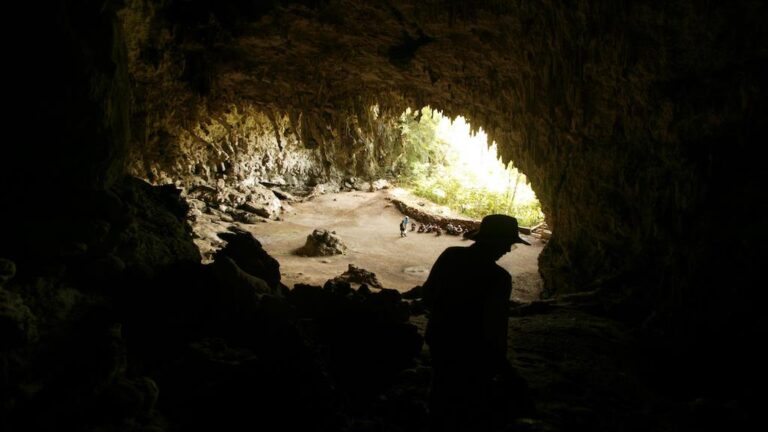
Could an ancient human species still be alive deep in the forests of Indonesia? An award-winning anthropologist thinks that might be the case.
On the Indonesian island of Flores, some locals tell tales of an animal that is like a human but is not human. Some say they are extinct, others claim to have seen them with their own eyes. Anthropologist Gregory Forth, who lived with and studied the people of the island for decades, calls this creature the “Apeman.”
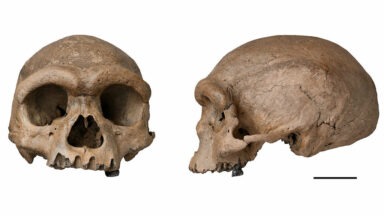
For years it was an interesting story, but as many anthropologists will tell you, stories like this are often allegory or a way to explain the natural world. But in 2004, the anthropological world was shaken when the “hobbit” skeleton was found. This was a tiny species of hominin. A rebuilt skeleton stands at just 3’7,” but apparently lived at the same time as early modern humans.
The tale of the relationship between oral histories and the fossils, dubbed Homo floresiensis, is the subject of Forth’s new book, “Between Ape and Human.”
Forth, now retired, was a professor of anthropology at the University of Alberta for more than three decades. He first heard of the “Apeman” from the “Lio” people of Flores in the 1980s.
But what about this story sounded like it might be true?
“It’s the way that people were describing them as animals, as a kind of animal — not human beings by the way, the distinction is very important for them as it is for most people. But at the same time they’re beings that walked erect unlike any other animal, and otherwise looked humanlike, although they were very small (or they are very small), and somewhat hairier.”