The History of Lemuria: Discover the Lost Continent
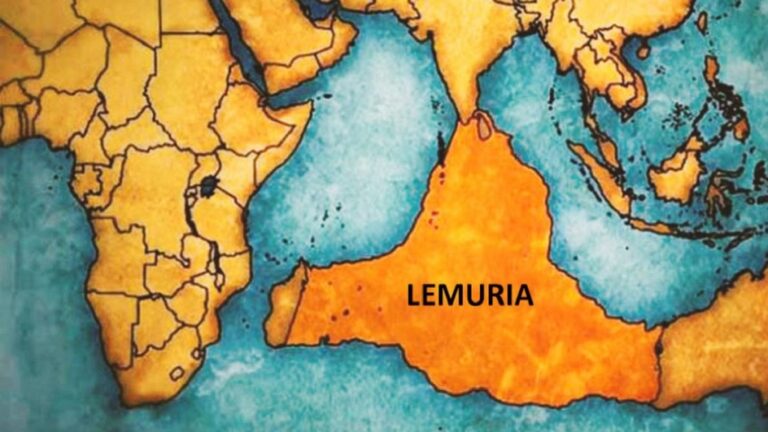
Lemuria, also referred to as Mu, was a vast, ancient continent said to have existed in the Pacific Ocean, inhabited by an advanced and spiritually developed civilization. It significantly influenced human evolution and left a legacy that endures to this day. In this article, we explore what Lemuria was, its origins, evolution, and impact on human history.
Table of Contents
- What Was Lemuria?
- Origins and Evolution of Lemuria
- Life in Lemuria
- Lemurian Technology and Knowledge
- The Relationship Between Lemuria and Atlantis
- The Fall of Lemuria
- The Legacy of Lemuria
What Was Lemuria?
Lemuria was a continent located in the Pacific Ocean, home to one of the earliest advanced civilizations on Earth. The Lemurians were highly spiritual beings who lived in perfect harmony with their surroundings. Their civilization was known for its profound knowledge of energy and its ability to manipulate it for the well-being and evolution of their society.
The Lemurian civilization thrived for thousands of years, developing advanced technologies that allowed them to build great cities and temples dedicated to meditation and spiritual connection. Lemuria was also a center of knowledge and wisdom, where various spiritual and scientific disciplines were taught and practiced. The Lemurians were known for their telepathic communication abilities and their capacity to access higher dimensions of existence, which enabled them to reach high levels of evolution and consciousness.
In Gaia’s series Ancient Civilizations, experts examine the origins of many of the legends surrounding Lemuria throughout the Pacific Rim, as well as the clues that lead to Mu’s catastrophic demise.

Origins and Evolution of Lemuria
The history of Lemuria begins approximately 200,000 years ago when the Alithir, an advanced race, arrived on Earth to raise the planet’s vibration and encode the water. These highly evolved beings chose the continent of Lemuria as their home, establishing a civilization that would become a beacon of light and knowledge for the world.
The evolution of Lemuria was marked by a deep respect for nature and an advanced understanding of cosmic energies. The Lemurians developed technologies that allowed them to harness the energy of natural elements, using resonance and vibration to create sustainable structures and systems. Their ability to work in harmony with nature enabled them to thrive for thousands of years, maintaining a perfect balance between technological development and spirituality.
As Lemuria grew and evolved, it became a center of cultural and spiritual exchange. The Lemurians established relationships with other advanced civilizations of the time, sharing knowledge and technologies that would benefit humanity as a whole. This intercontinental cooperation allowed Lemuria to expand its influence and leave a lasting legacy in Earth’s history.
Life in Lemuria
Life in Lemuria was deeply integrated with nature and cosmic energies. The Lemurians lived in harmony with their surroundings, practicing an advanced spirituality that permeated every aspect of their existence. Their society was based on cooperation, peace, and balance, creating a rich culture of spiritual knowledge and practices.
- Peaceful society: The Lemurian society was characterized by its focus on peace and cooperation. There were no wars or conflicts, as everyone worked together for the common good.
- Natural homes: Lemurian homes were built with natural materials and energetically aligned with the environment. These sustainable structures provided comfort and harmony with nature.
- Spiritual education: From an early age, Lemurians received an education focused on spiritual development and connection with the universe. This allowed them to grow with a deep understanding of their place in the cosmos.
- Telepathic communication: The Lemurians had telepathic abilities, facilitating effective and profound communication among themselves. This eliminated misunderstandings and promoted greater social unity.
- Holistic health: Medicine in Lemuria was holistic, combining spiritual and scientific knowledge. They used energy and medicinal plants to heal and maintain well-being.
- Community rituals: Ceremonies and rituals were an essential part of Lemurian life, strengthening social cohesion and connection with cosmic energies. These events included collective meditations and celebrations of natural cycles.
- Relationship with nature: Daily life was synchronized with natural cycles, respecting and honoring the Earth and all its beings. This respectful relationship ensured the sustainability and abundance of resources.
Lemurian Technology and Knowledge
The Lemurian civilization was known for its advanced technology and profound understanding of natural energies. The Lemurians developed various technologies that allowed them to live in harmony with nature and harness cosmic energies for their benefit.
- Crystal energy: The Lemurians used crystals to store and channel energy. These crystals were essential in their healing and communication technologies.
- Resonance technology: They used resonance and vibration for construction and healing. This technology allowed them to create structures and regenerate tissues using specific frequencies.
- Solar energy utilization: Solar technology was highly advanced in Lemuria. They used devices to capture and store solar energy, providing a sustainable energy source.
- Coded water systems: The Lemurians encoded water with specific energies for healing and growth. This knowledge improved the health and vitality of their crops and themselves.
- Light ships: They developed ships capable of traveling through dimensions using light and cosmic energy. These ships facilitated contact with other advanced civilizations.
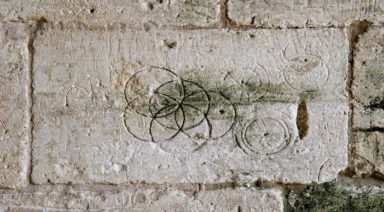
- Sacred geometry knowledge: Sacred geometry was used in all their constructions and technologies. Geometric patterns ensured energetic alignment and resource efficiency.
- Planetary energy networks: They created a network of connected energy points that facilitated energy transfer and long-distance communication. This network maintained balance and harmony throughout Lemuria.
The Relationship Between Lemuria and Atlantis
Lemuria and Atlantis were two advanced civilizations that existed during different periods, though there was a time when they coexisted and maintained contact. Both civilizations shared knowledge and technologies, establishing a relationship of cultural and spiritual exchange. The Lemurians and Atlanteans collaborated on several projects, mutually benefiting from each other’s discoveries and advancements.
The relationship between Lemuria and Atlantis was based on cooperation and mutual respect. The Atlanteans, who emerged after the Lemurians, adopted many of the spiritual and technological practices developed in Lemuria. This exchange allowed both civilizations to reach high levels of evolution and consciousness, significantly influencing the progress of humanity.
However, as both civilizations grew, differences in their approaches and philosophies began to emerge. While the Lemurians focused more on spirituality and harmony with nature, the Atlanteans began to develop technologies aimed at control. These differences eventually led to tensions and conflicts that contributed to the fall of both civilizations.
The Fall of Lemuria
The fall of Lemuria was a cataclysmic event that marked the end of a golden age of wisdom and peace. According to various esoteric traditions, Lemuria was destroyed by a series of natural disasters, including earthquakes and volcanic eruptions, that submerged much of the continent into the Pacific Ocean. This event was seen as a necessary energetic rebalancing of the Earth.
Before their fall, the Lemurians knew their time was coming to an end. Many of them migrated to other parts of the world, carrying with them their knowledge and traditions. These survivors established new communities in regions such as Asia, the Americas, and Africa, where they influenced the development of local civilizations and planted the seeds of new spiritual cultures.
Despite the physical destruction of Lemuria, its legacy continued through the stories and teachings passed down by the survivors. These stories became the foundation of many mythologies and belief systems around the world, keeping the memory of Lemuria alive and preserving its contribution to the spiritual evolution of humanity.
The Legacy of Lemuria
The legacy of Lemuria is evident in various spiritual and cultural traditions around the world. The knowledge and practices of the Lemurians were integrated into the cultures of Asia, the Americas, and Africa, influencing their belief systems, ceremonies, and social structures. This legacy can be seen in the similarities between the mythologies and spiritual practices of these regions.
The Lemurian teachings on connecting with nature and utilizing cosmic energies have endured through the centuries. These teachings are reflected in practices such as meditation, the use of crystals for healing, and the application of sacred geometry principles in architecture. The influence of Lemuria is especially notable in indigenous wisdom and shamanic traditions.
Today, many seekers and spiritual communities continue to explore and honor the legacy of Lemuria. Through study and spiritual practices, they strive to revive ancient knowledge and apply it to the modern world. This renewed interest in Lemuria highlights the ongoing relevance of its wisdom in the quest for balance and harmony with nature and the cosmos.
About the Author

Skull Fragment of Missing Human Species Found in Israel

Archeologists in Israel have just made a groundbreaking discovery; could the skull they found belong to a new type of human and our oldest relative?
In recent years, the regular discovery of new species of archaic humans has been complicating the human family tree. The finding in Israel is the latest to fill in missing information on this ever-changing timeline of human evolution.
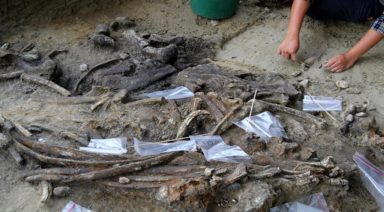
Andrew Collins is an ancient history researcher who has written extensively on the topic. “One of the most important discoveries in anthropology in recent years has been the finding of fragments of a human skull at a place named Nesher Ramla in Israel. It’s an open-air site that was functional between about 120,000-140,000 years ago,” Collins said.
“And the archeologists who have been working there have discovered, not only sophisticated stone tools, but they found fragments of this skull, and this skull is unique because it has elements of an archaic human that look similar to a Neanderthal, but also it has human elements.”