Are Humans Being Recruited for Breakaway Civilizations?

Did you ever wake up in the morning and feel like something was off-kilter? Perhaps you were worried about finances or visiting in-laws. However, if you were a breakaway civilization recruit your waking moments might be more like this:
You feel like you were asleep forever, but the clock says it is just a few hours later than when you went to bed. Maybe you just had an incredibly long and detailed dream. After several flashbacks or moments of déjà vu, you recall that you were a member of a Secret Space Program (SSP) and spent years living on Mars as part of a human colony. You remember stopping by the moon for a short time when going to or coming from Mars.
People are recruited for these colonies, known as breakaway civilizations when their particular skills are needed in a new civilization. Explore how breakaway civilizations may be essential for the future of humanity and potential recruitment criteria for colonists.
Breakaway Civilizations; An Off-Planet Solution?
In the early 1940s, President Franklin D. Roosevelt became concerned that a catastrophic event would require the movement of large masses of people away from areas of destruction. The problem became more dangerous when FDR discovered there was no one place on the planet that could accommodate such large groups. He even explored the idea of digging tunnels and underground shelters. These plans seemed unworkable, so he explored the idea of developing off-planet solutions, like establishing colonies on the Moon, Mars, or Venus.
Hackers Uncover Evidence of Breakaway Civilizations
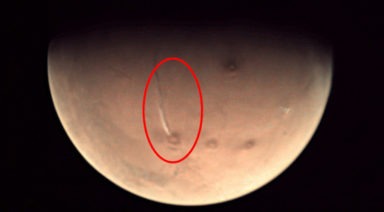
There is strong evidence that breakaway civilizations have existed on the moon and Mars for many years. Two independent computer hackers accessed government computers and found reports indicating there were colonies on the moon and Mars. One hacker, Matthew Bevan, accessed the files in the early 1990s. The other one, Gary McKinnon, accessed records in the early 2000s.
Breakaway Civilizations: Recruitment
There are three recruitment categories for Breakaway Civilizations:
- Some recruits are made
- Some recruits are asked
- Some recruits are taken
1. SOME ARE MADE
Randy Cramer believes he was designated to be part of the SSP and go to Mars prior to his birth. He had no choice and was predestined to be a Breakaway Civilization participant.
2. SOME ARE ASKED
Laura Magdalene Eisenhower, great-granddaughter of President Eisenhower, has shared her experiences of being actively recruited to go to Mars. Eisenhower felt she had been targeted before she was born, but it wasn’t until she was a single mother with twin boys that she was asked. She turned down the “opportunity,” but she has provided details of the attempt that was made to get her to join the project.
3. SOME ARE TAKEN
David Paulides heads a group of retired police officers and others who are experienced Search and Rescue experts (SAR). Their mission is to investigate the thousands of reports every year of missing persons. Paulides documents the mysterious disappearances of people around the world. He says these people are “brilliant scholars, athletes and stellar people.” They suddenly disappear under questionable circumstances.
Development of Technology Supports The Existence of Breakaway Civilizations
There is evidence that technology for space travel now allows people to travel from Earth to the moon or Mars without traversing the distance between the places. This technology involves teleportation or some type of secret portal. When you consider all the advancements that have been made in technology that we use in our daily lives, it makes sense that similar advances would be made in the technology used for space travel.
We have gone from fax machines to scanners and email. From landlines to cell phones. We have gone from the original computer that was the size of a large closet to handheld devices with many more available functions. So, isn’t it possible that space travel technology would also experience such advancements, including how to travel in space by teleportation through portals or some other equally fast way?
Mind Control Devices: Project MK-Ultra
The CIA is known for several mind control programs. Project MKUltra, a secret CIA project designed to test the effect of drugs on humans, was conducted on unwitting subjects from 1953 to 1964. During the program, experimenters gave test subjects drugs that caused them to have hallucinations and other adverse reactions. Other drugs erased memories of time and events.
In 1976, the U.S. Senate investigated the MKUltra program. Senators were shocked by some of their discoveries. For example, Congress learned that the secret program was designed to discover drugs that could help people “withstand privation, torture and coercion during interrogation and so-called brain-washing” and other drugs “which will produce amnesia for events preceding and during their use.”
Using these drugs, along with technology learned from aliens, explains why Randy Cramer and the other whistleblowers would at first have no recollection of their trip. Other drugs to reverse memory loss along with therapy allowed them to recover their memories. Some people view the concept of breakaway civilizations as a “pipe dream” shared by a few folks who are trying to bask in their 15 minutes of fame by telling their incredible stories of life on Mars. What do you think? Share your comments below.
Want more like this article?
Don’t miss Deep Space on Gaia for more on the long and hidden history of Earth’s secret space program.
About the Author

Stargates and Hidden Portals on Earth and in Space

In 2015, NASA admitted that the idea of Earth portals — areas on the planet that instantly teleport human beings from one place to the other — are a reality that they have been studying for quite some time.
One of NASA’s spacecraft, the THEMIS, and cluster probes from Europe have amassed enough observational data to confirm that a magnetic stargate portal exists in many locations.
Usually these are found where the faraway geomagnetic field bumps up against the passing solar wind. The result is a direct pathway between the Earth and the sun.
In March 2015, NASA launched its Magnetospheric Multiscale Mission (MMS) that, among other things, is tasked with studying these portals to gain a deeper understanding of them. Most of these are small with short lives, though others have been observed as gaping holes with sustained lifespans. Opening and closing numerous times during the day, magnetic forces mingle, allowing their crackling energy particles to flow between the Earth and the sun. These meeting points — called X-points by NASA — have been pinpointed by scientists using polar data.
The Bermuda Triangle
The Bermuda Triangle is probably the most famous stargate portal. Encompassing three vertices, the Bermuda Triangle — sometimes referred to as the Devil’s Triangle — is a large abyss that stretches between San Juan, Puerto Rico, Bermuda Island, and Miami, Florida. First noted in late 1950 or early 1951, the Bermuda Triangle was deemed to be a mysterious area in which huge military ships and planes were “lost” without any other plausible explanation forthcoming from the government or the military. In 1964, Vincent H. Gaddis argued that the Bermuda Triangle was the site of strange occurrences such as disappearing tanker ships and jets with the government being unwilling — or unable — to provide a reason or explanation.
The Philadelphia Experiment
The Philadelphia Experiment, also sometimes called Project Rainbow, grew out of the desire to cloak the U.S. Navy’s destroyer, USS Eldridge, so that enemy devices were not able to detect it. Built on concepts relative to stargate portals, the project relied on a technological application developed by well-known and respected scientific greats Nikola Tesla and Albert Einstein.
Testing started in 1943 and was successful to a large degree. In fact, some witnesses noted that they saw a green fog in the area where the massive ship once stood. Further experiments in late October resulted in the USS Eldridge vanishing from its shakedown cruise in the Bahamas. Simultaneously, sailors stationed 375 miles south at the Norfolk Naval Base in Norfolk, Virginia, reported the ship’s appearance for several minutes before it vanished.
Alfred Bielek, a former crew member on board the USS Eldridge, and Duncan Cameron, who would later work on the Montauk Project, jumped from the deck of the USS Eldridge when it was trapped in hyperspace and landed in the future.
Once they arrived at Camp Hero in 1983, they were tasked with returning to the USS Eldridge in order to destroy the equipment holding the ship in hyperspace. The pair did so successfully before leaping off the deck and materializing in the current year.