This Hindu Prophecy is Eerily Similar to Nostradamus’ Predictions

The Kalki Avatar Prophecy states that Vishnu will appear in his 10th form to end the Kali Yuga, Nostradamus predicted a similar event.
According to the Hindu Yugas, we are currently living in the Kali Yuga – the Iron Age, Dark Age, or the lowest point in spiritual consciousness and moral virtue. Despite technological advancement, our current age has been marked by war, inequality, and scarcity. And though this may be a subjective observation, there are certainly some aspects that carry some validity.
While the start and end dates of the Kali Yuga are disputed and somewhat ambiguous, many believe we are nearing the end, when Kalki, the final avatar of Vishnu, is supposed to make his messianic return to Earth. This return will usher in the Satya Yuga, our upward journey back to the pinnacle of truth and cosmic order, known as dharma. Many believe we are on the precipice of experiencing the return of this enlightened being and there is even evidence that Nostradamus’s predictions corroborate this Hindu prophecy.
Is the Kalki Avatar Real?
The name Kalki is thought to have roots in the Sanskirt word kalka, meaning filth – making Kalki the destroyer of filth or foulness. Some interpret this avatar to manifest in the form of a cosmic event, while others see it to be a physical manifestation in human form. But all interpretations see it as a destroyer of evil and the harbinger of a positive turning point, ending the Kali Yuga.
In the Hindu scriptures, Vishnu appears in ten different avatars to mankind, with the final iteration being Kalki. Leading up to this point, the era of the Kali Yuga will be recognized for the deterioration of human values, and falsehood triumphing over truth. In today’s age of misinformation and propaganda this seems all too relevant. Uncontrollable and widespread corruption is another characteristic associated with the age before Kalki’s appearance, and that rampant corruption seems to be apparent in our political systems, banking sector and the corporations that control the global economy. The increasing poverty of the masses and wealth of the few are undoubtedly being exacerbated, making this Hindu prophecy all the more prescient.
“…property alone will confer rank; wealth will be the only source of devotion; passion will be the sole bond of union between the sexes; falsehood will be the only means of success in litigation; and women will be objects merely of sensual gratification. Earth will be venerated but for its mineral treasures.” – Vishnu Purana
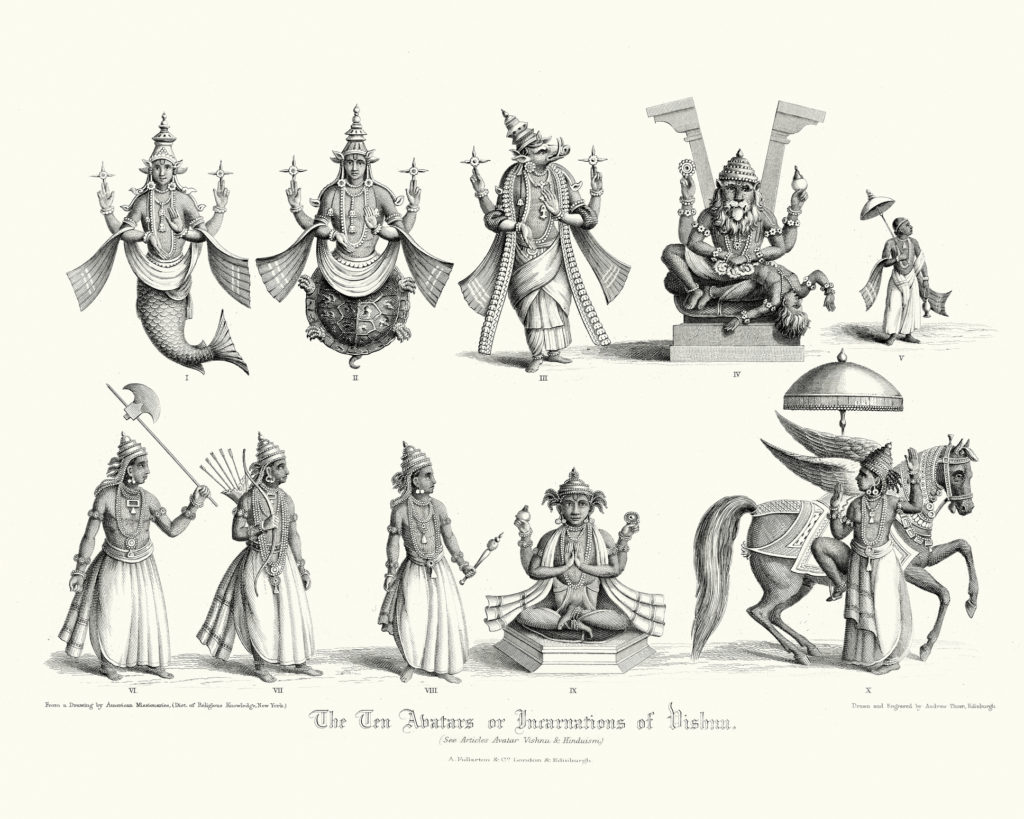
The Ten Avatars of Vishnu
Unfortunately, some believe Kalki’s arrival is slated to occur around a massive war, like WWIII. Around this time Vishnu will appear riding a white horse amid fire and flames. Hindu mythology is allegorical, so it’s likely that Kalki’s return will be slightly less dramatic, but who knows what form it will take.
Others believe that Kalki has already returned and that he has begun the transformation process by invoking a wave of truthseekers and spiritual practitioners across the world. Some have pointed to spiritual gurus like Sathya Sai Baba as being the Kalki Avatar, but this claim is largely disputed. It is thought that when messiahs like Jesus or Buddha incarnate on Earth, their divine status is known to few, so in the case of Kalki, it is likely that his presence won’t be known to the masses.
Characteristics of Kalki
Aside from his white horse, Kalki is told to have eight superhuman faculties, known in Hinduism as the Siddhis. These faculties are the reason why some believe that spiritual leaders from India, like Sathya Sai Baba, might be the Kalki Avatar, due to stories of them performing miraculous acts. The eight Siddhis, or superhuman faculties that Kalki is capable of, are:
- Being smaller than the smallest particle
- Being able to create or destroy anything or anyone at will
- Being able to take any form at will
- Being lighter than the lightest feather
- Being heavier than the heaviest stone
- Being in total control of emotions
- Being able to manifest something out of nothing
- Having total control of all material elements
Nostradamus’ Prophecies
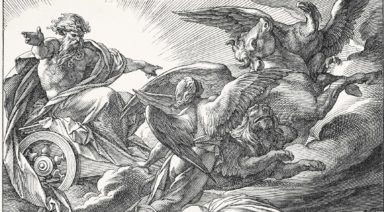
There are some interesting predictions by Nostradamus, that many believe to be his vision of the Kalki Avatar. These predictions have some uncanny resemblances to the Hindu prophecy and have been interpreted as describing the same entity. In his work, Centuries, a compilation of quatrains, Nostradamus talks about a savior from the East who comes down from his throne striking the evil ones with his rod. The depiction of Kalki in Hinduism shows the Avatar descending on a horse, wielding a sword much like Nostradamus’ vision. But rod can also be interpreted to mean the word of God, according to the Bible, and some interpret this to be the new revelation that Kalki teaches.
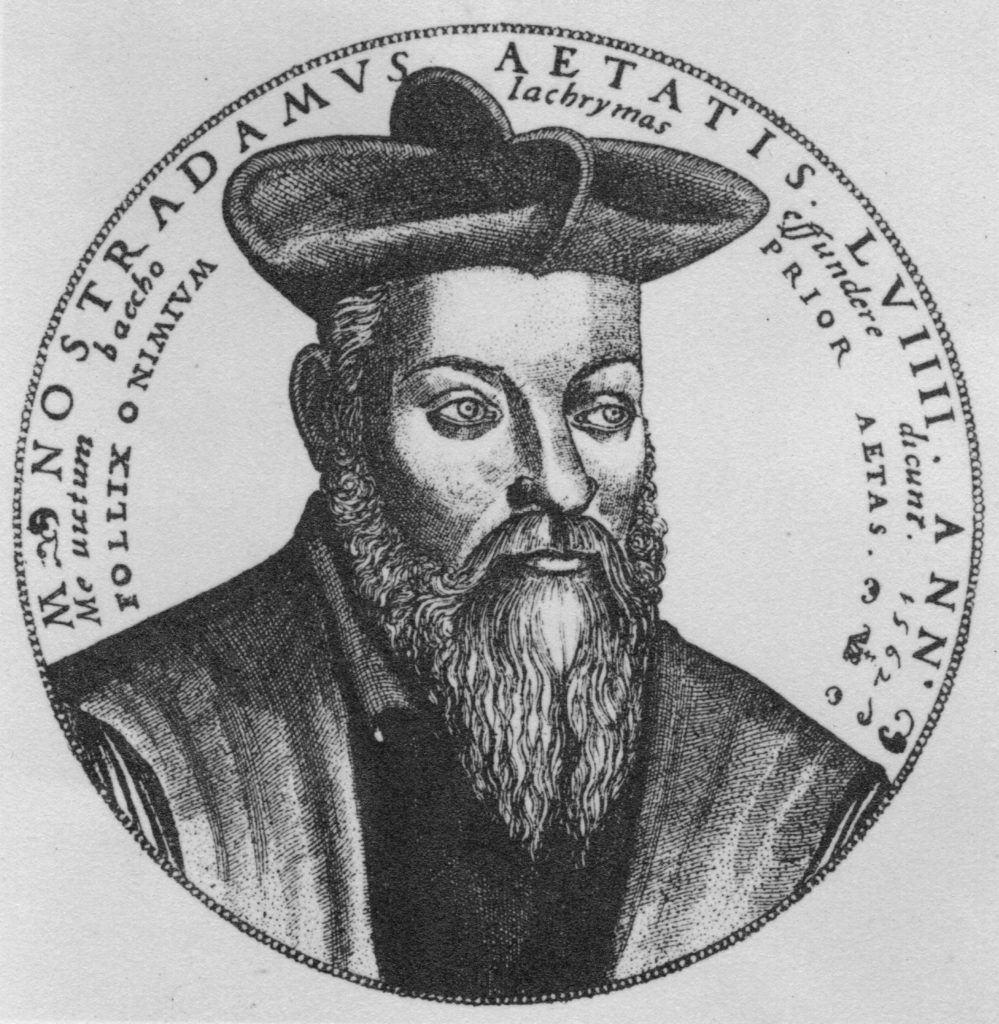
Michel De Nostradamus
Nostradamus describes this being as practicing a religion “called by the sea.” Hinduism takes its name from the Sindhu, or Indus, river and is one of the longest rivers in Asia, flowing into the Arabian Sea. Nostradamus also mentions that this savior celebrates a holy day on Thursday – in Hinduism, Vishnu is worshipped on Thursdays. He prophesied that this person will be born of the three water signs, Pisces, Cancer and Scorpio, which many interpret to be a reference to the Indian Ocean, Bay of Bengal and the Arabian Sea.
Nostradamus also predicted the arrival of this being to coincide with a great war with several decades of suffering and several decades of peace. He predicted his name to be Chiren or Chyren. These names and prophecies seem to hint that this event has yet to happen and Nostradamus’ messiah has yet to come. Could this be evidence that the Kalki Avatar hasn’t yet made his appearance and we are in the final throws of the Kali Yuga? Or are these allegories much subtler and we have already transitioned into the next age toward a higher level of consciousness?
About the Author

Japan's Yonaguni Ruins May Hold the Key to a Sunken Civilization
The mystery of the lost continent of Atlantis has puzzled researchers for centuries, as growing evidence supports the theory that an advanced civilization may have been destroyed and gone unnoticed by mainstream archeology. This antediluvian civilization is assumed to have been located somewhere in the Atlantic Ocean and is thought to have been the progenitor of ancient civilizations like those in Egypt and India. But could there have been another sunken continent from that era that predates Atlantis? The Yonaguni ruins might provide an answer.
The Yonaguni Monument
In 1985, a Japanese diver named Kihachiro Aratake was exploring the seafloor off the Southern shore of Yonaguni-Jima island, the Western-most island in the Ryukyu archipelago of Japan. Aratake came across what appeared to be the sunken ruins of an ancient, megalithic, stepped pyramid, similar to the ziggurats built in ancient Sumer. Since his discovery, the provenance of the ruins has been debated as to whether they are man-made or naturally occurring, due to the possibility of natural geological terracing.
Dr. Masaaki Kimura from the University of Ryukyu is the biggest proponent for the theory supporting the artificiality of the ruins. Surprisingly, Dr. Robert Schoch is one archeologist who has contended Kimura’s theory, despite his support for the Sphinx water erosion hypothesis. Although, Schoch has conceded that he doesn’t perceive Yonaguni to be a closed case and that he hasn’t spent as much time diving there, compared to Kimura’s 15 years.