Viktor Schauberger; The Anti-Gravity Water Wizard
Descending from a line of foresters that stretches back more than 400 years, Austrian engineer Viktor Schauberger harnessed the power of nature to create numerous inventions in the early 1900s. Schauberger spent years caring for more than 10,000 hectares of land, during which time he developed a particular reverence for water, studying its all-powerful force and potential.
Though Schauberger refused to attend university — ardently believing it would weaken his intuition and creativity — it was through self-taught studies where he garnered the wisdom, knowledge, and inspiration for his advanced theories and technologies.
What he discovered harkens to the soul of the Gaia principle — that, like Earth, water is a sacred, living organism. But beyond Schauberger’s genius is a human tragedy, engineered by politics and inhumanity, laying to rest what could have been a saving grace for all life on the planet.
Viktor Schauberger’s Living Water
Following keen observance in the alpine wilderness, Schauberger adopted a shamanistic relationship with water and called the substance the “Blood of the Earth,” recognizing it as the progenitor of life and consciousness. More so, he entertained a holistic vision of energy; where it comes from, how it is used, and what traces it leaves behind after it is spent.
Schauberger realized there are two forms of motion in nature — outward and inward. The outward motion is expansive and destructive. It generates heat, pressure, and even death. It was only this morbid action that mankind had known, thus far, in regard to energy production.
On the other hand, the inward, implosive quality of water produces coolness, suction, powerful vortices, and health benefits; it is used to build up and energize, and is therefore life-enhancing and life-promoting.
Schauberger showed that small changes in temperature affect the process of energy and that life and energy are created through a delicate balance between attraction and repulsion of polarized atoms.
Holistically, he noted humankind’s lack of respect and support for the natural process would eventually lead to the demise of the environment. He envisaged a world wherein people could work, live, and thrive in tandem with nature’s laws — this would be the only hope for survival on this planet.
Viktor Schauberger’s Inventions; Kapieren und Kopieren
Schauberger lived by his motto — “Kapieren und kopieren,” or “comprehend and copy nature.” As a practice, he observed many behaviors of water, from its spiraling forms to its vortices. His study of these characteristics and other natural phenomena inspired many of his inventions and water implosion devices. His work focused on water’s behavior and how it moved in harmony with other natural forces found throughout the cosmos. Unlike other forms of energy, Schauberger’s beloved water left no pollution or toxic residues.
Schauberger knew that the secret to survival for the planet revolved around water. Since the beginning of time, life has depended on water for survival. But there are areas throughout the world where people, plants, and animals face imminent extinction due to threatened sources; going dry continuously looms over billions of species, including human beings. Schauberger held the promise of a planet of blooming deserts, abundant crops, and thriving peoples.
“Protecting the secret of water is a means to protect the interest-power of money. Only in an economy of scarcity can interest thrive. The price of food and the cost of mechanical power would sink to such low levels that speculators would be able to gain nothing from them. Free access to nutrition and mechanical energy are such radical ideas that our concept of the world and all ideologies would be turned upside-down…The secret of water is the capital of Capital—which is why any attempt to reveal it is ruthlessly terminated in embryo.”
– Viktor Schauberger
But it wasn’t just the quality and availability of water that Schauberger found so interesting — it was how water behaves, creating vortices, generating energy, purifying its immediate environment, and so on. From his observations, he formulated a unique theory of hydrodynamics. The inward moving and twisting water vortex held the secret to its usefulness and benefit. According to physics, vortices build upon one another in a system that is coordinated and phased together. Bigger and bigger forces are released when water is allowed to build.
These forces build or condense biological systems. They also create what Schauberger called dia-magnetism, an opposing force to gravitation that enables life-forms on the surface of the earth to grow skyward into the air.
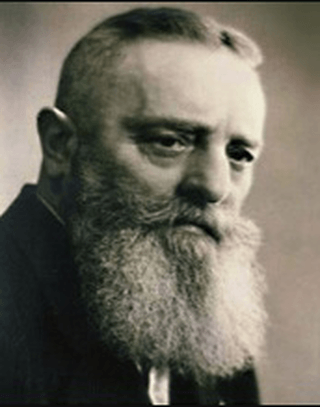
Viktor Schauberger
From what he observed of water, Schauberger invented home power plants and a water implosion turbine that drew in air that spiraled such that the dia-magnetic field created tremendous force.
Among Schauberger’s inventions was a machine that produced mountain-quality spring water; the Klimator, a machine which employed a suctional force Schauberger compared to a typhoon, to naturally manipulate the temperature of a room; and a home power generator that created energy from water and air with jets traveling through spiral pipes.
Caught in the Nazi Crosshairs
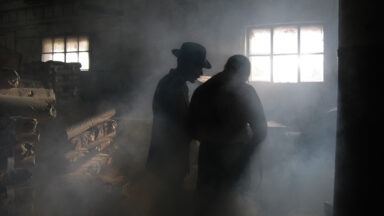
Schauberger’s genius caught the attention of all the wrong people and he found himself caught in the crosshairs of one of humanity’s most destructive eras. Adolf Hitler met with him in 1934 to discuss the potential of weaponizing water, but he refused to collaborate with the Nazis. Schauberger’s resistance led to his internment in one of the most horrific of all death camps in the Third Reich — Mauthausen, in Austria.
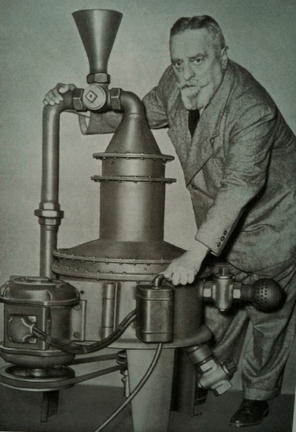
Schauberger’s vortex device
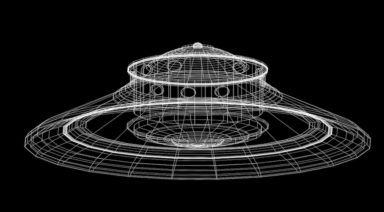
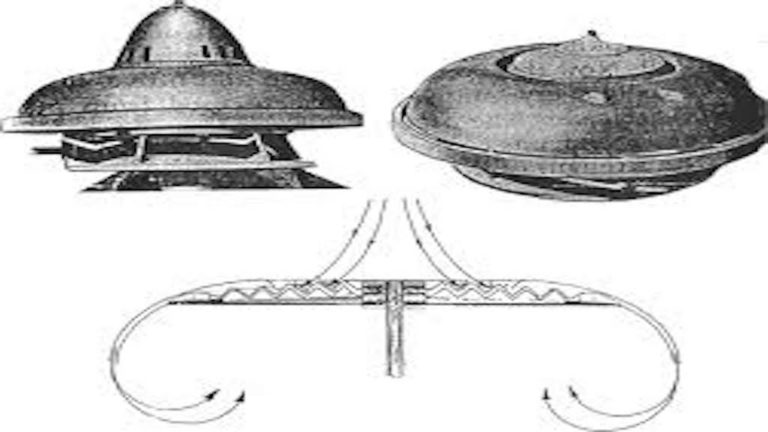
Against his will, Schauberger was forced to work on a prototype of a gravity-defying flying saucer, known as the Vril-7. It was in Mauthausen that he invented an anti-gravity device, called a Repulsine, to power it. Fortunately, by the spring of 1945, the armies of the Allied forces had put an end to the Second World War, thus ending all research and development of the Nazi’s war machine.
Afterward, there was a terrific fight over human resources on behalf of the British, Americans, and Russians. Along with scores of notable and valuable scientists, Schauberger became a natural target. What remained of his work fell into the hands of American and Russian agents. In post-war occupied Austria, the Russians ransacked Schauberger’s home looking for drawings and plans, and found nothing.
But it was the Americans who were able to take possession of Schauberger and hold him prisoner until they could successfully convince him to disclose his work. Having no more use for him, the Americans set him free, but it wasn’t long afterward that Schauberger died a broken and penniless man. Meanwhile, the Americans were already at work across the Atlantic, studying his ideas.
More than seventy years after Viktor Schauberger’s demise, environmentalists still mourn the loss of so many brilliant works that could have presented humanity with a more sustainable road to progress — one based on renewable, clean resources for energy and technology.
What is a Stargate? Explore the Doorways of the Universe

Humans have long been obsessed with the possibility of alternate universes, and a way to instantaneously travel between this one and the next. This concept was popularized by the science-fiction TV show Stargate, and as recently as 2015, NASA admitted to having spent at least a decade researching access points to places outside our world, our universe, even beyond space and time as we know it.
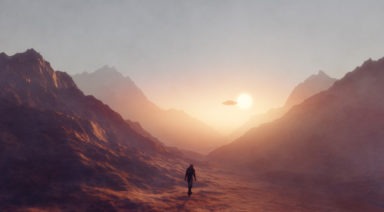
The term Stargate means just that: an otherworldly door or portal to outside realms, hidden within Earth’s and space’s magnetic fields, waiting to transport the enlightened traveler to a place beyond current time limitations. While space seems to be the most likely location for these doorways to other universes, many places on planet Earth have also been attributed with special transportive capabilities, as well as noticeable shifts in energy, different frequencies, and unexplained lights or sounds.
But little to no scientific evidence has supported the theory of ‘wormholes’ in outer space, much less within the Earth’s atmosphere, until NASA’s Jack Scudder found a way to identify the elusive doorways floating between the Earth and the Sun.
Suspected Stargate Location in Space
Similar to an Einstein-Rosen bridge, or ‘worm-hole,’ the theory of formation of a space portal is that one occurs when space-time is distorted, either by the intense gravitational fields created by the collapse of a star, or by the mingling magnetic forces of the Earth and Sun crossing in space, enhanced by violent solar winds. Some of these portals are gaping holes for significantly sustained periods of time, while most are short-lived, yawning wide and re-closing several times in a day.
But Stargates can be difficult to find. Their reliable instability, elusiveness, and tendency to be tricky to spot can mean it will take years to locate one. There are no signs leading down this road, let alone pointing to it.
However, a plasma physicist, Jack Scudder, at the University of Iowa, has discovered a technique for spotting the elusive unpredictable portals. Scudder called these newly-discovered road signs X-Points, where the intersecting magnetic fields flowing between the Earth and the Sun propel vast amounts of charged particles out of the portal, easy to spot with the correct instruments and the right data.
Once Scudder was able to recognize the indications of a portal, he was able to find similar patterns occurring all over the place in the Earth’s atmosphere. Observed by NASA’s THEMIS spacecraft, they surround the Earth at a distance from 10,000 to 30,000 miles away.
Most of them seem to be located where the Sun and the Earth’s magnetic fields connect to form an unobstructed path, causing the area to pulse with charged particles that also create the Northern Lights and geomagnetic storms we sometimes witness here on Earth.
While not entirely certain what exactly these portals are, Scudder and his team remain optimistic that the answer is not beyond reach.
Stargates are a fascinating overlap of science-fiction and reality, and there are some who claim that we have access to portals here on Earth. Some locations are thought to be compass points on a map designed by sacred geometry and posses the ability to transport us to parallel universes. Among the earthly stargate sites, the most noted are the Stonehenge formation and the Bermuda Triangle, but several other locations are also attributed with being ancient alien portals.