Deeper Space: Episode 3

EPISODE 3: GERMAN SAUCERS
“They took everything from me. Everything. I don’t even own myself.” -Viktor Schauberger
Who was Viktor Schauberger?
An important protagonist of the German saucer story, Viktor Schauberger, was an Austrian citizen from humble origins. Viktor Schauberger (1885-1958), invented several flying disc prototypes between 1938-1945. According to eyewitnesses, many of his models defied gravity. Unfortunately, these experimental successes sealed Schauberger’s tragic fate.
Since childhood, nature played a significant part in the inventor’s life and scientific pursuits. In 1919, Schauberger began work as a forest warden. Five years later, Viktor became a timber flotation consultant and built water channeling systems in Austria, Bavaria and Yugoslavia. In 1929, this civil engineer filed patents for turbines and other hydro-engineering developments. Water became an essential element in Schauberger’s research. His study of implosion vortexes by observing trout swimming with and against the current led to his famous statement that “birds did not fly they were flown and fish did not swim they were swum.”
This observation unlocked a hidden insight into energy distribution in nature and the power of the phenomenal universe. For a more detailed study of Viktor’s discoveries, read Olof Alexandersson’s text Living Water: Viktor Schauberger and the Secrets of Natural Energy (2002). Implosion vortexes, turbines, and cyclones inspired Viktor Schauberger to create a device known as the repulsine, an invention that resembled a flattened toy top. Inside this device concentric rings funneled water and air to create forces that could be channeled into anti-gravitational propulsion.
In 1940, Schauberger built the first repulsine. This prototype reportedly broke from its anchoring and penetrated the laboratory ceiling. Eventually, word of the repulsine and its fantastic power piqued the interests of the SS. Schauberger’s inventions became part of the German flying saucer narrative including developments within the Luftwaffe, the Nazi Bell, the Haunebu flying saucers, the future development of NASA, and ultimately the current state of the secret space program. Despite Schauberger’s successes, his collaboration with evil forces left its mark upon his life. The inventor admitted:
“They called me deranged. The hope is that they are right. It is of no greater or lesser import for another fool to wander the earth. But if I am right and science is wrong – then may the Lord God have mercy on mankind. The destructive and dissolving form of movement is centrifugal in Nature.”
At the threat of torture and death, Schauberger began his scientific service for the SS in 1944. Unfortunately, most evidence of his research for the Third Reich was destroyed by the orders of panicked German commanders and by Allied forces.
After his ordeal with the Nazis, Russian troops detonated his apartment in Leonstein, Austria. Like many of Austrian/German scientists and engineers, the inventor fell under the employ of United States aeronautical research programs. In 1958, Schauberger moved to Texas to collaborate with a top secret military project. After a short time, the inventor refused to work and demanded his return to Europe. After arriving in Austria penniless and disillusioned, Viktor died from mysterious circumstances that same year.
Most of Viktor Schauberger’s work remains unknown by popular scientific history but he left a legacy that inspires scientists to this day. In the 1950s, a Swedish science group (which eventually became the Institute for Ecological Technology), became invested in the research and future development of Schauberger’s discoveries. Even now, Schauberger’s research is essential for scientists and engineers engaged in water purification, hydraulic power, and centrifugal force energy.
The repulsine, like the Nazi bell or Die Glocke, became part of the Nazi pantheon of Wunderwaffe or “Wonder Weapons.” These fantastic military inventions were kept in extreme secrecy in Germany, as well as in conquered locations such as Silesia, a regiod of Poland. Some of the well known Wunderwaffe include Nazi U-boats, aircraft carriers, artillery, armored vehicles, and most importantly tactical aircraft. One of these wunder aircraft became a stealth fighter known as the Horten Ho 229, one of the fastest jet fighters known at the time. In fact, researchers such as Mike Bara believe these aircraft were the UFOs spotted by Kenneth Arnold. Were there other secret weapons? Have whistle blowers or investigators come forward recently? In the 1990s a Polish intelligence officer interrogated journalist Igor Witkowski regarding the Bell. In his text, The Truth About the Wunderwaffe (2003), Witkowski revealed a key piece of information during his examination:
“Among other things [the intelligence officer] asked me if I had ever come into contact with a device developed by the Germans, which was code-named ‘the Bell.’”
What was the Bell? A flying saucer? A generator? Or, an interdimensional research project?
The German Flying Saucers
During the furor of World War Two, German engineers created the world’s first flying saucers but fled to Antarctica when the German government surrendered. What would then unfold paved the way for a national security state and gave new grounds to build out a secret space program.
THE BELL
The Bell or “Die Glocke” was one of the many pieces of German technology that can be understood as a primitive flying apparatus using electromagnetic and vortex technologies gleaned from Nazis, Nazi supporters, converted scientists, secret societies, and extraterrestrial entities. Supposedly this relic of Nazi exotic technology synthesised Viktor Schauberger’s vortex research, electrically charged mercury, and esoteric knowledge gathered from individuals such as Maria Orsic, a member of the Vril society.
Die Glocke mechanized two nesting cylinders that rapidly spun mercury in opposite directions. These cylinders were anchored to a hollow metal core in which a cocktail of serums were injected prior to each experiment. A ceramic bell-shaped covering housed the entire array. The Bell was reported to produce blue luminescence, a hypnotic buzzing sound as well as a number of damaging effects upon experimenters’ nervous systems. Any proximity to the device was highly dangerous. Reportedly the device wrecked havoc on animal tissues and plant cells due to high levels of radiation and altered magnetic fields. A prototype generator for the German flying saucers, the Bell essentially manipulated electromagnetic forces and gravitational physics. For an in-depth examination of the Bell, read The SS Brotherhood of the Bell (2006) by Joseph P. Farrell.
IS THERE PHYSICAL EVIDENCE OF THE BELL TODAY?
Allegedly a cement harness structure resembling a circular stonehenge for Die Glocke remains today. Skeptics believe that the assemblage in Ludwigsdorf (currently Ludwikowice Kłodzkie, Poland) is the structural ruins of a cooling tower. However, many researchers believe the “henge” to be a test rig for objects displaying anti-gravitational propulsion.
Were there ancient technologies that harnessed anti-gravitational forces? Many researchers such as David Hatcher Childress suggest the ancient Vimana were primitive aeronautical vehicles.
Was the Bell’s technology ever used in war?

Nazi Germany Used Anti-Gravity technology Called “The Bell” to Power Flying Saucers
The critical component behind the Nazi’s Secret Space Program was the German Flying Bell. Explore how the Nazi’s may have traveled beyond earth in spacecraft powered by anti-gravity propulsion technology.
ADMIRAL RICHARD E. BYRD AND OPERATION HIGHJUMP
Rear Admiral Richard Evelyn Byrd, Jr. (1888-1957) participated in both World Wars and earned many accolades for his accomplishments in aviation and arctic travel. Byrd crossed the North Pole by plane and completed one of the first transatlantic flights. Soon after, he became an overnight sensation and a national hero. His notoriety as an American explorer publicised many popular newsreels and films after The Great War.
From 1946 to 1947, Byrd organized The United States Navy Antarctic Developments Program also known as “Operation Highjump.” According to government records, the purpose of this top-secret expedition was to establish a research base. Following the end of WWII, it is unlikely this mission was unrelated to United States’ conflict with Axis powers. The mission was cut short due to “threatening weather conditions.” In 1947, the Chilean newspaper El Mercurio published the Admiral’s experience in the South Pole: “Admiral Richard E. Byrd warned today that the United States should adopt measures of protection against the possibility of an invasion of the country by hostile planes coming from the polar regions. The admiral explained that he was not trying to scare anyone, but the cruel reality is that in case of a new war, the United States could be attacked by planes flying over one or both poles.”
WHAT DID BYRD ENCOUNTER IN ANTARCTICA?
Researchers believe that Byrd and his fleet set out to capture Nazis that escaped to the South Pole after the fall of the Third Reich. The “hostile planes” referred to in Byrd’s article may have been German engineered flying saucers known as the Haunebu. Following the war, some high profile Nazis were able to escape to Antarctica, Spain, the Vatican, and locales in South America. It is believed that the Germans established a base and top-secret arsenal in an area of Antarctica known as Neuschwabenland.
This narrative also relates to the theories surrounding extraterrestrial presences in Agartha or hollow Earth. Other Naval missions headed by the US Navy followed Operation Highjump, and the US government still maintains a strong military presence on the frozen continent in the form of the United States Antarctic Program or (USAP)today. Richard E. Byrd died in 1957, shortly after his tour in Operation Deep Freeze(1955-1957). Many consider Byrd’s mysterious death, like that of James Forrestal, to be the subject of conspiratorial assassination.
Was the true story behind Operation Highjump ever revealed?
It may be possible that the fantastic story of Admiral Byrd’s encounter with otherworldly technology became adapted within popular media as a form of informal disclosure. Operation Highjump first became popularized in the feature film The Thing from Another World (1951). Two remakes followed this cult classic: John Carpenter’s The Thing (1982) and The Thing (2011).
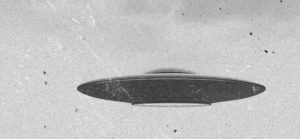
Nazi UFO Technology: Foo Fighters Exposed
The Germans were on a quest for power. How powerful were they? Learn about Nazi space program, the Nazi Antarctic base and other WWII era mysteries.
BECOME YOUR OWN DETECTIVE.
Explore government websites to discover declassified documents, photos, and data:
*FBI Records: The Vault *CIA X-Files *NSA UFO Documents Index *The Department of Defense Reading Room *National Archives Declassified Records *The Freedom of Information Act FOIA
There is no shortage of what you can find, even an FBI document sighting Hitler’s arrival in Argentina. Nazi arrival in South America and the United States will be explored further in “Dark Alliance,” the next episode of Deep Space.

About the Author

Project Serpo and the Zeta Reticuli Exchange Program

In November 1977, Steven Spielberg released his movie, “Close Encounters of the Third Kind.” It was a financial and artistic success. It received a number of accolades, including nominations for four Golden Globes and eight Academy Awards. In 2007, the U.S. Library Of Congress deemed the film “culturally, historically and aesthetically significant” and chose it for preservation in the library “for all time.” Read the purported story of Project Serpo, then consider the evidence.
UFO Encounter Classification
For those new to the topic, the title of Spielberg’s movie came from the UFO classification developed by astronomer and UFO researcher, J. Allen Hynek’s Classification of UFO encounters: + Encounters of the first kind: Someone sees a UFO at a distance closer than 500 feet and is able to give a pretty good description of the object + Encounters of the second kind: The viewing of an UFO creates a physical sensation. For example, the encounter may involve a feeling of heat, or a feeling of paralysis in the body + Encounters of the third kind: Encounters in which a type of “animated creature” accompanies the UFO encounter.
Hynek was an Advisor to the U.S. Air Force on several of its UFO study projects. While he was bound by security clearances, he was undoubtedly privy to information that he was unable to share publicly. He also had a cameo appearance in the Spielberg movie.
In the movie, there are human encounters with extraterrestrials (ETs) and, in the end, one person voluntarily decides to join the ETs and travel with them back to their planet. Could there be any truth to this story? Is it possible that Earth has contacted ETs or that Americans have visited other planets? Read about the Serpo Exchange Program and President Ronald Reagan’s knowledge of Project Serpo.
The Exchange Program Between Earth and Project Serpo In the Zeta Reticuli System
The Planet Serpo exchange project traces its origins to the Famous Roswell Incident where a UFO reportedly crashed in the plains near Socorro, New Mexico, on May 31, 1947. The remains of the craft and one living ET, along with the bodies of his four dead companions, were taken to Roswell for analysis. Meanwhile, the government reported to the American public by telling them they had only seen weather balloons.
As it turned out, there were Two Crashes. The remains of the second UFO were not found until about two years later. It appeared the two spacecraft had crashed into each other. By then, six bodies of dead aliens had decomposed, so there wasn’t much of them left. Even so, the remains were taken to Wright-Patterson Air Force Base for evaluation and study.