Were Recent Radio Signals From Proxima Centauri Evidence of Alien Life?
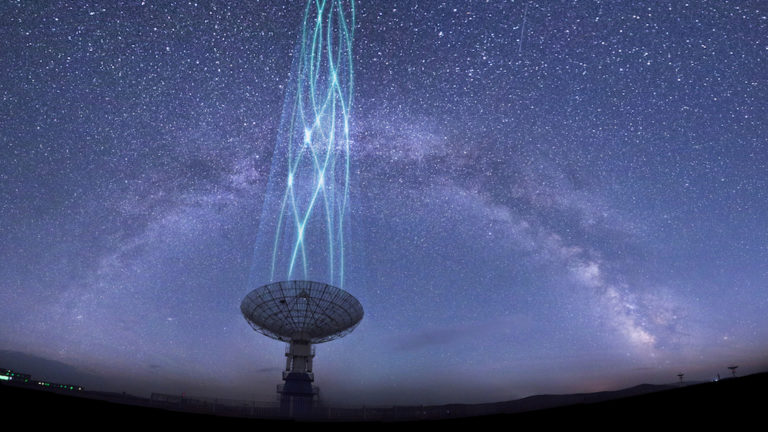
The mystery signal from space… what was actually broadcast from Proxima Centauri?
In December 2020, news broke of a mysterious signal coming from the area of Proxima Centauri. Ufologists and astronomers were excited by the news as the planet Proxima B may be able to host life. The signal was originally detected in the spring of 2019 by the Breakthrough Listen Project using the Parkes Telescope in Australia. But the significance of what they found was only recently made public.
But what was so intriguing about this transmission?
Watch more:
About the Author

Harvard Professor Starts Independent Investigation to Find Aliens

The search for signs of extraterrestrial life is getting a boost from scientists. Could this grassroots transparent effort answer the biggest question in the universe: are we alone?
The quest to find evidence of higher lifeforms is getting a boost from higher education. Harvard Professor of Science Avi Loeb, has just launched the Galileo Project, the goal of which is to bring the search for “Extraterrestrial Technological Civilizations (ETCs) from accidental or anecdotal observations and legends to the mainstream of transparent, validated, and systematic scientific research.”
Professor Loeb, who published his book “extraterrestrial: The First Sign of Intelligent Life Beyond Earth,” which claims Oumuamua, the first known interstellar object to pass through our solar system, could be an extraterrestrial artifact.
His research, coupled with the US government’s recent report on unidentified aerial phenomena, spurred him to action.