5 Signs That a Deceased Loved One Is With You
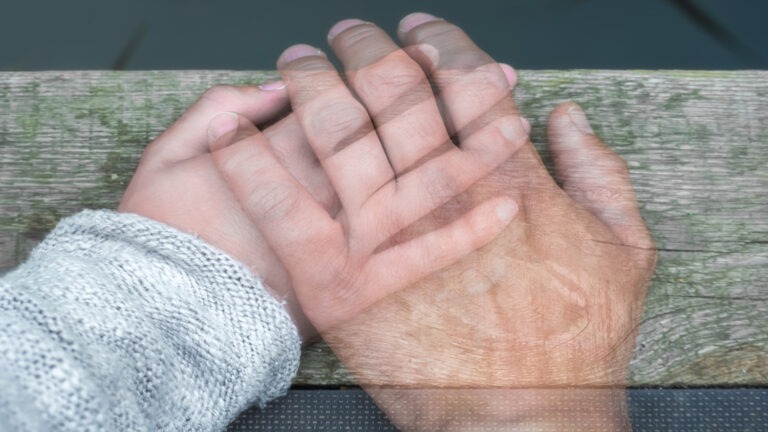
Are there times when you feel that someone who has passed away is still close to you? The presence of a deceased loved one can be felt in a real way through subtle signs, emotional sensations or physical manifestations. In this article we explore how to know if the spirit of a family member is with you, what types of signs may appear, and why you shouldn’t ignore them.
Table of Contents
- Spiritual Signs That a Deceased Loved One Is Nearby
- How to Interpret Messages From the Spiritual World?
- What to Do When You Feel the Presence of a Deceased Loved One?
- When Does a Departed Soul Want to Give You a Message?
- Is It Possible to Contact a Deceased Loved One?
- Intuition as a Channel to Receive Messages From the Beyond
Spiritual Signs That a Deceased Loved One Is Nearby
Although we can no longer see or hear them as before, the emotional links with our deceased loved ones remain active at an energetic and spiritual level. It is common that their presence is manifested through signs that, if we learn to recognize them, can bring comfort and confirm that they are still close, accompanying our processes and taking care of us from another dimension.
These signs are not always obvious. That is why it is important to pay attention to the small details of everyday life, especially if you are going through an emotionally significant stage or feel that someone who has passed away needs to give you a message. Here are some of the most frequent manifestations so you can understand how to tell if a deceased loved one is with you.
- Vivid dreams and dream messages: One of the most frequent ways deceased loved ones communicate is through the dream world. These dreams are not only intensely real, but also emotionally meaningful: you can see their faces clearly, feel their energy, and remember precisely what they conveyed to you. It is not a simple evocation of memory, but a spiritual encounter that often has a clear purpose: to comfort you, to guide you, or to convey a message you need to hear.
- Interference or electrical phenomena: Spirits have the ability to interact with energy fields, so their presence is often manifested by lights that flicker, appliances that turn on by themselves, or radios that play songs with personal meaning. If something like this happens just when you think of that person, it’s probably not a coincidence.
- Aromas that evoke specific memories: Sometimes, for no apparent reason, you may perceive a smell that immediately transports you to the presence of someone who is no longer physically present. Your mother’s distinctive perfume, the aroma of freshly brewed coffee that your grandfather used to make, or the smell of flowers given to you by a loved one may appear suddenly and without logical explanation. These sensory experiences are one of the most direct and recognizable ways in which spirits make their closeness felt.
- Presence of symbols, animals or repetitive elements: Deceased loved ones often use elements loaded with meaning to send you signals. It can be butterflies, feathers, coins, songs or numbers that are repeated frequently. If these symbols appear insistently in emotional moments or when you think of that person, it is very likely that they are trying to establish a connection from the spiritual plane.
- Subtle but obvious physical sensations: Some people report feeling a gentle caress, a sudden shiver, a light pressure on the shoulder, or the distinct sensation that someone is beside them, even though no one is present. These manifestations usually occur when someone deceased needs to give you a message or simply wants to make you feel their company.
How to Interpret Messages From the Spiritual World?
Signs from the spiritual world do not always manifest themselves in a direct or obvious way. It is not a matter of looking for a literal message, but of observing how these symbols present themselves and what connection they have with your emotional and spiritual life. Each person has a different sensitivity, so it is important to develop a more conscious perception of what you feel when these signs appear.
A good way to interpret these messages is to pay attention to what is going on inside you at the moment you perceive the sign. Does it generate peace, excitement, nostalgia or clarity? The emotional charge that accompanies a signal can be as relevant as the event itself. It’s not just about what you see or hear, but what that experience awakens internally, and how it relates to your personal process.
It is also important to note repetition. When a signal occurs more than once, in different contexts, it is probably not a coincidence. Sometimes messages are not immediately understood, but reveal themselves over time. Keeping an open attitude, without forcing interpretations, allows you to connect more authentically with what the spiritual world is trying to show you.
What to Do When You Feel the Presence of a Deceased Loved One?
Feeling the presence of a deceased loved one is a real and meaningful experience that can generate different emotions, from peace and comfort to bewilderment or uncertainty. Far from being something that should frighten you, it is a manifestation of the bond that continues to exist beyond the physical plane. Acknowledging that closeness with openness and calmness allows the experience to integrate naturally into your life, without fear or confusion.
You can speak out loud or in your mind, express what you feel, thank them for their closeness or simply send thoughts of love. You don’t need to do complex rituals: a sincere gesture of emotional connection already creates a bridge between your energy and theirs. This inner communication is as valid as any other form of spiritual contact.
It is also helpful to keep a record of these moments. Writing down what you felt, when it happened, if there were any physical or emotional signs, can help you identify patterns and better understand the purpose of the presence. Over time, these experiences can become a valuable guide for your personal and spiritual process.
When Does a Departed Soul Want to Give You a Message?
There are specific times when deceased loved ones try to communicate more clearly. This often occurs when you are going through a major change, facing a major decision or in need of emotional support. In such cases, the signals may intensify and become more obvious, as if something is insisting on getting your attention.
It can also happen that the message arrives shortly after the death, when the emotional bond is still very active. In that period, it is common to receive unexpected dreams, symbols or emotions that bring a sense of direct connection. The message is not always verbal or specific; sometimes it is simply the certainty that they are well, that they are still present or that they are accompanying you on your journey.
It is important not to force the message to be received. Although many people wonder how to know if a deceased person wants to tell you something, the answer does not always come immediately. Maintaining a receptive attitude, but without anxiety, is the best way to facilitate communication. If the message needs to get through, it will do so at the right time and in the clearest way for you.
Is It Possible to Contact a Deceased Loved One?
There are different ways to contact a deceased loved one. Some people manage to establish this type of connection spontaneously, through dreams, signs or sensations that arise at specific moments. In other cases, they resort to more structured practices such as deep meditation, intuitive writing or symbolic rituals that favor the energetic link with the spiritual plane.
One of the best known ways to contact deceased persons is mediumship. Mediums are people with the ability to perceive subtle energies and act as a channel of communication between this plane and the spiritual world. Through specific sessions, they can transmit messages, emotions or images from loved ones who are no longer physically present, providing guidance or comfort to those who consult them.
There are also other tools such as the use of oracle cards, working with pendulums or connecting with spiritual guides who act as intermediaries. Although each experience is unique, the key element is always emotional openness and the sincere intention to establish that contact. It is not about forcing communication, but allowing it to occur naturally and respectfully.
In the series Channeling: A Bridge to the Beyond, available on Gaia, various experts and channelers explore how it is possible to connect with unseen dimensions and receive messages from higher consciousness. Through real experiences, quantum theories and spiritual practices, this series offers an in-depth look at methods for contacting the beyond and better understanding the link between worlds.
Intuition as a Channel to Receive Messages From the Beyond
Intuition is one of the most powerful tools for perceiving messages from the spiritual world. It is that inner knowledge that arises without logical reasoning, but with a clear and profound certainty. Many times, when a deceased loved one tries to communicate, intuition is the first to pick up that signal: a sudden idea, a phrase that comes to mind or an unexplained physical sensation.
Learning to trust this subtle perception is fundamental to strengthen the link with the spiritual plane. Intuition does not need concrete proof to be valid, because it manifests as an inner truth that is simply known. Often, the most intuitive people perceive signs even before they materialize physically, proving that communication with the beyond is not always visible, but perceptible.
Cultivating intuition is a process that can be developed with practice and mindfulness. Meditation, inner silence, connecting with nature and recording personal experiences are effective ways to strengthen this channel. The more you learn to listen to your inner voice, the easier it will be to recognize when a message is coming from your own mind and when it is coming from another dimension.
About the Author
How a Near Death Experience Enhanced My Consciousness

There’s no doubt that consciousness is rapidly expanding throughout the human race. My coffee cup is about to start talking to me. A lot of what was once considered ridiculously paranormal has now been empirically-proven and popularly embraced. In fact, the human race is clearly now a race between the realization of how expanded consciousness plays in the creation of our world and the destructive consequences that ignoring it has caused and continues to cause every day.
Consciousness as an Elemental Force
So what does that have to do with near-death experiences (NDEs)? Well, now it seems even science is converging on the ancient—but currently revolutionary—concept that consciousness itself may be an elemental force: a field, like gravity. It might be an eternal quantum field of being, necessary for the formation of material life – rather than the other way around (this idea is nicely, and controversially, proposed by Dr. Robert Lanza, of Wake Forest University). And what are NDEs but further testimonies of the continuation of consciousness beyond physical life?
Co-Creating our Reality
The rapidly growing Near-Death Movement, based on thousands of testimonies of people who have experienced consciousness beyond the limitations of our physical life, is yet another example of humanity’s spiritual potential. It’s additional evidence of our ability to co-create whatever reality we participate in, be it on the earth right here, or in that sweet hereafter.
I’d never given any of it much thought until the power and meaning of my own three NDEs arose and compelled me to write a book that put me into the hub of the hubbub. I’ve since discovered that the community of near-death experiencers ranges somewhere from five to fifteen percent of the general population globally. Now that’s a whole lot of non-ordinary reality!
Consciousness – and Individuals – Are Unique
Naturally, I have less reason than the average Joe to doubt the veracity of all that testimony; but I have found plenty of reason to ask this question: why is it that near-death experiences are all so different? If we’re all governed by eternal, invisible machinery, why do we see such a range of afterlife options, all tailored to the individual participant? Shouldn’t we all go down that identical tunnel into the light and meet Grandpa in the shimmering fields of Elysium?
Some near-death returnees report celestial extravaganzas. Some tell of organizations of elders and angels, structured in an elaborate cosmic framework. For others, it’s a hellish nightmare, complete with every infernal cliché. The reason for all these differences can be simply explained if we consider the way we’re always participating in the field of consciousness, how we are always creating our own individual realities.
The Continuum of Consciousness
My own NDEs were humble by comparison, but they all had one glorious factor in common; that I did not lose consciousness when I lost consciousness. In fact, all three times, I experienced an enhanced consciousness, seamlessly uninterrupted from this life to the next.
Skeptics suggest this sense of continuity is the result of a still-active mind – a mind not yet fully “dead.” And they’re right. Since consciousness is a field we eternally participate in, our minds never do die, they simply join a greater mind. The Hindu Vedas suggested that thousands of years ago. Dear old Dr. Jung described it too, way back in the 20th century. The mind continues working.
“Memory ensures that nature creates individual forms that are copies of the primal universal forms.”
The Hermetica
And as for the differences, well, imagine someone dying, and awakening in this world. What would they experience? The war in Syria? A recital by the Mormon Tabernacle Choir? Perhaps a high-powered business lunch, or that visit to Grandpa’s? In this elemental context, we all imagine the life we are living and live it. We all enter into the life we need to experience. This is the mystery of any incarnation, and it will continue to be the mystery from this life to the next (although NDEs do generally suggest that things are better explained over there).
The Unharnessed Power of the Mind
And what if all bets were off when it comes to our greatest potential imaginable – the unharnessed power of mind? What if our imaginations were released from the obvious limitations of this physical form? Almost anything is possible here and now––how about a world where your imagination is set free to manifest reality without material limit?
In “the next world,” as in this one, our imagination is like the clay; consciousness is like the ever-spinning potter’s wheel, and the source of power is like, well, The Source of Power. Welcome to every life (and afterlife) you will ever live – and remember, whatever life you’re living, always look for the love!
Article originally published Oct. 4, 2014