3 Magical Mantras to Experience an Attitude of Gratitude

Showing appreciation for all that we have is one of the most important factors in manifesting a splendid life, and a feeling of gratitude is something we should experience every day.
When we strive for our goals from a place of lack and need, we send a message to the Universe that we are “running away” from something, as if there is “something wrong” with our present reality. This gives off a vibration of desperation and scarcity, and therefore, we attract more of the same. The great paradox is that when we are truly grateful and appreciative of our life as it is NOW, we send out the positive vibrations of abundance, therefore attracting in more wonderful people, prosperity and experiences. The more abundant we feel, the more abundant we become.
Gratitude is also a wonderful way to bring us into present time consciousness. When we are in a state of gratitude, it means that we are indeed, paying close attention to and appreciating everything that we have right NOW. In contrast to the sensation of striving to a better life that we convince ourselves will improve at some point in the future when we achieve or attain X, Y or Z. Being in the present allows us to experience joy, peace and calm. As all worries are about future anticipated events and sadness and pain comes from past memories.
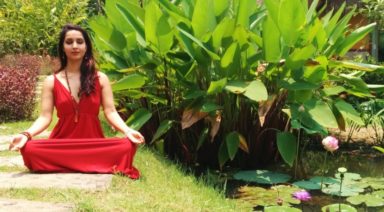
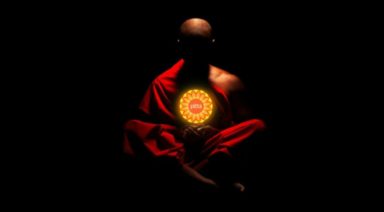
Use these gratitude mantras to create a serene meditation, with your eyes closed as you imagine yourself looking into the cosmos. You will be put into a deeply profound state of gratitude, guaranteed to change your energy vibrations from negative to positive. You will align with the frequencies of abundance and love so that everything you wish for flows naturally into your life.
By using theses Magical Mantras throughout the week you will:
- Embrace an attitude of gratitude.
- Increase and enhance your energy vibrations.
- Attract abundance and joy.
So, now, if you’re ready, here are your three Mantras to bring yourself into a profound state of gratitude. With your hands on your heart, repeat these three Mantras throughout the week and feel their vibrational energy entering in your being:
- I appreciate the abundance in my life and I allow myself to expand in gratitude, success and joy everyday.
- I clearly see all there is to be grateful for in life. I acknowledge the blessings I have received in my life with gratitude.
- Gratitude brings me into a harmonious relationship with the good in everyone and everything that surrounds me.
You can permanently re-wire your subconscious mind to accept these affirmations by listening to them in a deep meditative state with guided meditation.
Enjoy and let me know how you go!
What Is the Om Mantra: Origin and Meaning
The mantra “Om” is much more than a simple syllable in yoga practice; it is an ancestral link with the universe and the divine. This article explores the secrets of this powerful mantra, delving into its origin, pronunciation, and meaning in yoga and spirituality.
Table of Contents
- Meaning of the Om Mantra
- What Is the Origin of the Om Mantra?
- How Is 'Om' Pronounced Correctly?
- What Does Om Mean in Yoga?
- Why Is Om Chanted in Yoga Classes?
- Benefits of Chanting the Om Mantra
- What Does the Om Symbol (ॐ) Represent?
Meaning of the Om Mantra
The Om mantra, symbolized by the sacred ॐ, is one of the most ancient and revered mantras in the spiritual traditions of India. It represents the essence of the universe, being a primordial sound that encapsulates truth and ultimate reality. In its vibration, Om encompasses everything that exists and everything that does not exist. This sacred sound is a synthesis of the spiritual and the material, symbolizing the union of the individual soul with the Divine, the Brahman, the ultimate reality.
More than just a syllable, Om is a symbol of connection and unity. In spiritual practices such as yoga and meditation, chanting Om helps align individual energies with those of the universe. Each repetition of Om is a reminder of our relationship with creation and a call for harmony and inner peace. It acts as a bridge between the material and spiritual worlds, facilitating the path to enlightenment and profound self-understanding.
What Is the Origin of the Om Mantra?
The origin of the Om mantra dates back to the ancient scriptures of India, such as the Vedas and the Upanishads, which are thousands of years old. In these texts, Om is presented as a cosmic sound, the original sound of the universe from which everything else emerged. This concept is found in various Dharmic philosophies and religions, such as Hinduism, Buddhism, and Jainism, where Om is considered the root of all spiritual knowledge.


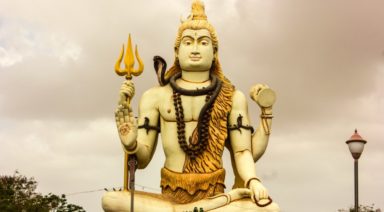
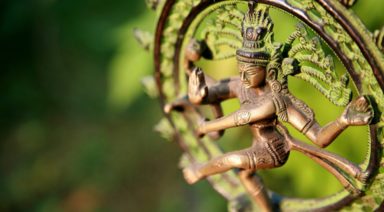
In Hindu philosophy, Om represents the whole, the totality of existence, and is associated with the most important gods such as Brahma, Vishnu, and Shiva. In Buddhism, especially in tantric traditions, it holds great importance as part of longer mantras. This universality of Om underscores its significance in spiritual and philosophical practices, being a symbol of unity, peace, and spiritual knowledge throughout the ages.
How Is “Om” Pronounced Correctly?
Correct pronunciation of Om is essential for its effect and meaning. The syllable is pronounced “AUM” and consists of three sounds: A (ahh), U (ooh), and M (mmm). These three sounds symbolize different aspects of divinity and existence. The sound “A” represents the beginning, creation; “U” symbolizes preservation, and “M” represents transformation or destruction. When combined, these sounds represent the complete cycle of existence.
When pronouncing Om, the sound begins with an open and deep “A,” which starts in the throat and opens toward the chest. The sound transforms into “U,” moving toward the palate and vibrating in the middle of the mouth. Finally, the “M” closes the mantra, with a vibration that resonates in the front of the mouth and skull. This process not only has spiritual significance but also helps align and calm the mind and body, preparing them for meditation or yoga practice.
What Does Om Mean in Yoga?
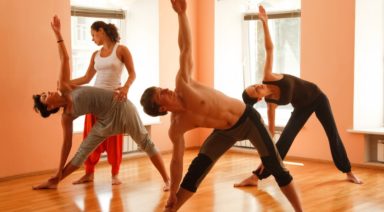
In yoga, Om represents much more than a simple chanting or meditation practice. It is a symbol of profound connection between the practitioner and the universe. By chanting Om at the beginning or end of a yoga session, the goal is to harmonize the mind, body, and spirit with universal energies.
This sacred sound acts as a catalyst for mental tranquility and concentration, creating a space of serenity and focus for practice. Om in yoga not only prepares the body and mind for the session but also symbolizes the intention to unify the individual self with the cosmic whole, facilitating a deeper and more enriching experience.
Why Is Om Chanted in Yoga Classes?
Chanting Om in yoga classes serves several purposes. First, it creates a bond of connection and unity among participants, establishing a collective atmosphere of focus and serenity. Additionally, the vibrant sound of Om helps calm the mind and center attention, clearing mental and emotional noise.
Chanting Om is also considered beneficial for physical health, as the vibration generated can help relax muscles and calm the nervous system. This practice is not only a symbolic introduction or conclusion to the yoga session but also a powerful tool for deepening the spiritual and physical experience of yoga.
Benefits of Chanting the Om Mantra
Reciting the Om mantra has multiple benefits for both the mind and body:
- Reduces stress and anxiety: The vibration of Om induces relaxation, decreasing tension and mental restlessness.
- Improves concentration: The focus required to correctly chant Om helps enhance attention and mental clarity.
- Encourages spiritual connection: Repeating Om can intensify the feeling of spiritual connection and unity with the universe.
- Aligns body energy: The vibration of Om can help balance and align the chakras or energy centers in the body.
- Promotes respiratory health: Chanting Om involves conscious breath control, which can improve lung capacity and breathing.
What Does the Om Symbol (ॐ) Represent?
The Om symbol (ॐ) is a rich and complex visual representation of the Om sound. Each part of the symbol has a specific meaning: the lower curve symbolizes the waking state, the upper curve represents the deep sleep state, and the curve extending outward symbolizes the dream state. The crescent and dot at the top symbolize the transcendental state, a level of consciousness beyond conventional physical and mental states.
This symbol not only represents different states of consciousness but also the essential aspects of the universe: matter, soul, and God. The Om symbol is a visual reminder of the connection between the microcosm (the individual) and the macrocosm (the universe). In spiritual practice and daily life, the Om symbol serves as a constant reminder of our essential nature and our connection with everything that exists.
Whether through chanting or visual representation, Om is a timeless tool for those seeking harmony, balance, and a deeper connection with themselves and the universe.