9 Ayurvedic Rituals for Youthful Vitality

I love the buzzword “longevity”. Saying it almost makes me feel five years younger. Try it.
Don’t we wish it were that easy? We have tried the “low carb” diet and the “eat right for your blood type” diet. We heard about the power of goji and acai berries and so on, and we believed that the magic anti-aging pills would actually work. We believed these multi-million dollar industries that avowed that their products would indeed remove ten years from our being.
The truth of the matter is that it takes serious effort and a massively strong will for changes to occur.
The good news is that if we make the optimal “choice” of changing our lifestyle habits, we can attain that beloved state of being which radiates “youthfulness” even late into our eighties. By beginning to take seriously the task of obtaining balance over your own health and wellbeing, and committing fully and wholeheartedly to a set of healthful daily habits, the universe will be at your service.
The 5,000 year old science of Ayurveda holds all the secrets to living, maintaining and preserving a sweet long life, in all respects to our constant dance of life.
Attaining a human life, according to the Vedas, Buddhism and old Ayurvedic scriptures (such as Cakara Samhita) is by far the greatest gift nature endowed on us humans. This gift makes it so that we can conquer the most profound of goals possible: nirvana/moksha or liberation.
It is indeed our birthright to realize our true selves.
Such lucky humans are we.
According to Ayurveda (Dr. Arindham Chatterjee of Global Ayu Care in New Delhi, India), by following 70% of the techniques and tools suggested by the ancient knowledge of Ayurveda, one can truly attain well-rounded health of mind and body. Viva! This is in fact an attainable goal.
9 Regimens for Youth and Vitality
It might be impossible to introduce all of the following rituals at once. Take your time and try two at a time. It won’t take long to get a taste of success.
- Immediately upon rising (hopefully slightly before sunrise) brush your teeth, scrape your tongue and drink a cup of warm water with lemon. Toxins accumulate on the tongue while we sleep and we don’t want to introduce them back into our system. Tongue scraping acts to stimulate and massage the internal organs. The water with lemon kick starts the liver for a brand new day of work.
- Splash open eyes with clean water. This practice strengthens the eyes, improves eyesight, clears the mind and recharges mental energy.
- Self-massage with appropriate oils a minimum of three times per week. Don’t forget to include the ears. Self-massage ignites your internal pharmacy, according to Deepak Chopra, and stimulates all the systems of your body.
- Exercise daily. This includes either a daily yoga practice or a daily practice of the 5 Tibetans (fountain of youth).
- Eat only when hungry. Aim to eat Sattvic foods (pure foods). Ayurvedically speaking, eating only when you’re hunger rises means that you are responding to the urges of the body appropriately. Learn how to differentiate hunger, from eating for the sake of eating.
- Utilize turmeric in your cooking. Turmeric is considered the most medicinal Indian herb. Its powerful healing benefits help to clear infections, fight inflammation and support joint function. It also works to promote healthy skin and aids in digestion.
- Fast at least once per month. The term fasting does no have to mean avoiding food completely. One can fast on solids or grains for twenty-four hours in order to simply give your digestive system a break.
- Triphala before bedtime. If you had to choose one herb out of the thousands of herbs used in Ayurvedic Medicine, Triphala would be the one. Triphala translates to “three fruits” and is comprised of Amalaki, Bibhataki and Haritaki, which are three of the most important herbs in Ayurvedic medicine. Triphala is known as a rasayana, which means that it rejuvenates and strengthens the tissues–specifically as it cleanses and tonifies the gastro-intestinal tract.
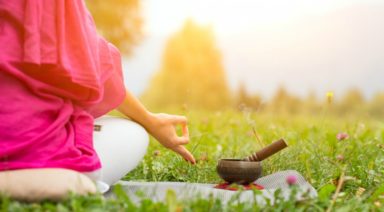
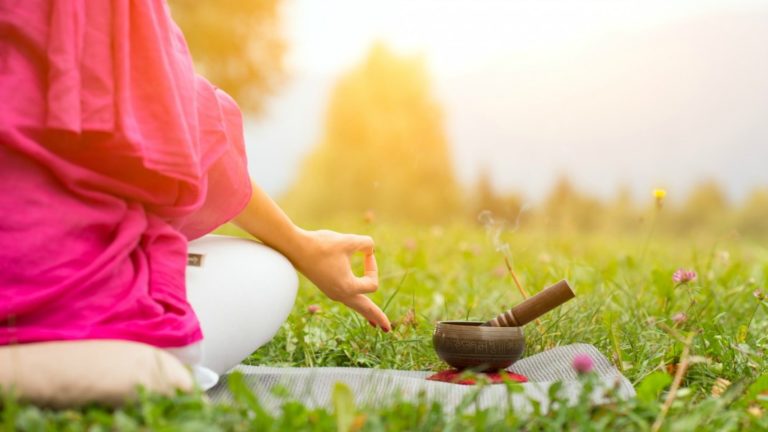
- Meditate every day. A regular meditation practice will calm the mind. Learning to observe the movements of the mind is paramount to helping us to make conscious choices, live in the moment and face the daily battles of life from a much more detached place of acceptance.
Unlock your inner healing powers; you are your own healer.
For another perspective on increasing your longevity, watch the documentary The Immortalists.
Learn How to Meditate
Whether you’re looking to cultivate more authenticity, increase happiness, improve relationships, or reduce stress, all of these things are accessible to you through the practice of meditation. Learn how Gaia can help you transform your life in our Beginner’s Guide to Meditation.
About the Author

What Your Dosha Type Means for Your Diet
Ayurveda is Sanskrit for “the wisdom of life.” Ayurveda originated in India and pre-dates modern medicine by thousands of years.
Ayurveda healing differs from modern medicine in the following ways:
- Focuses on preventative techniques, instead of merely reacting to illness as it arises
- Diet and habits are more strongly considered when diagnosing and treating
- Emphasizes on the uniqueness of the individual and finding what works for you personally
Three Types of Ayurveda Doshas
There are three types of Ayurveda Doshas – kapha, pitta, and vata. Doshas are more commonly known as mind-body types and are derived from the five elements.
While we all have aspects of each of the three doshas, for most of us, there is one dosha that dominates. You can also be a combination of two doshas, but that is less frequent. Before you learn about the characteristics of each type of dosha, determine which one(s) are most pertinent to you by taking this quick quiz.
I took this quiz with a little bit of healthy skepticism, not expecting anyone dosha to be that much stronger than the others, but for me, the traits corresponding to vata dosha are twice as strong. There are several dosha quizzes online, all of which gave me similar results.
Once you determine which dosha pertains to you, read about the strengths and weaknesses of that dosha and what dietary changes you can make to keep yourself in better alignment. While this article focuses on dietary modifications, there are all sorts of supplements, lifestyle and yoga practices that are also beneficial.