Magical Mantras to Boost Your Energy

Energy is defined as “the capacity for vigorous activity.” Energy is also defined as the exertion of power. When thinking about energy on a personal level, think about having stamina and longevity to power your days. Energy is a key part of making the most of our days.
Sometimes we have all the energy we need to work, take care of our families, and even a little energy left for play. On the other hand, we all have days in which our energy supplies are so depleted we can hardly imagine doing any vigorous activity. Fatigue is a great way to put a damper on your day.
Beyond just feeling down, being low on energy might mean that your body isn’t getting all the care it needs. Your body demands lots of energy to operate at full capacity in order to build muscle, process toxins, repair body tissue, digest food, and perform many other daily functions. Many of these functions happen automatically without us having to think about it.
The Basics of Mantras
One way to boost your energy is to recite a mantra especially suited for enhancing your daily energy level. Mantras are an important part of many Eastern religions, including Hinduism and Buddhism, but are becoming more and more a part of Western culture as well. Merriam-Webster defines a mantra as “a word or phrase that is repeated often or that expresses someone’s basic beliefs.” They are generally a short phrase or a few words, so you can recall them easily and use them often. The more you repeat something, the more you give it meaning.
I use mantras for energy most often during exercise or when the late afternoon lull kicks in. A powerful mantra is a better work-out companion than a sugary sports drink, because it provides you with that extra boost of energy without setting you up for a sugar crash later. With an energy-boosting mantra there is all upside and no downside.
Another situation that lends itself well to mantra use is when that late afternoon lull hits. I used to work for a nonprofit in Washington. Our offices were in a large room filled with cubicles, with four desks to a group. Each of our desks faced a different corner, but at almost exactly 3 pm every day, we would all turn to the middle of the cubes and start talking to each other. Albeit better than downing a cup of coffee, but still not great. It was the afternoon lull, that time of day when your body is sick of being sedentary and is crying out for some energy. What we should have done is gone outside for a walk around the block, but a more likely alternative would have been to take two minutes and let a mantra give us a quick jolt to get us to the end of the work day.
Six Energy Boosting Mantras
Mantras can be an incredibly powerful tool. Begin by picking one of the mantras provided below and incorporate it into some aspect of your day or into your mediation or yoga practice. You will find that some mantras are more fitting to your personality, or similarly, a different situation might require a different mantra.
- In taking this time to be calm, I am rebooting. This time will help me rebuild my energy resources to get me through the rest of the day.
- Today I will be the best version of myself. I will call on my reserves of energy to give me strength today.
- I have more energy inside myself. I am taking time to be still, so that when I reopen my eyes, I will have found more energy.
- After this time, I will be rejuvenated. I will feel a new found strength and livelihood.
- Strength can be found within me. There is more energy inside of me.
- If I ask, I shall receive. If I ask my body for more energy, it will provide.
Creating Self-Tailored Energy Boosting Mantras
Powerful mantras can come from anywhere. They can be treasured lines from friends or family. For instance, my mom has a line that she says to each of her three daughters when she needs to get our attention. Over the years, she crafted them to suit each of our personalities perfectly. I’ll be honest that I can’t remember my sister’s special message, but mine comes through loud and clear, “You are the only Sarah I have.” My mom used this a lot when I was a teenager. Anytime she was concerned, instead of trying to tell me what to do, she would use this mantra to remind me to be cautious and to tell me I was important. Such a simple phrase was highly effective, because it was personalized for me.
While it’s not an energy-boosting manta, it still a good example of mantra coming from unusual places. Your perfect energy-boosting mantra could come from something inspirational a friend once told you or from a quote from a book or movie. All you need to do is ask yourself, after reciting this mantra, do I feel recharged?
I recently moved to a brand new continent – well brand new to me anyways – and have been struggling with culture shock and finding my place in what feels like a new world. While adjusting to a whole new life can be exhilarating at times, it can also be overwhelming. When I start to feel overwhelmed, I employ my new favorite mantra: This too shall pass. It reminds me that for every low, fatigued day, there are wonderful days filled with comfort and energy. Just this knowledge helps me reboot in that moment and look forward to the better days around the corner.
Mantras and Meditation
As I mentioned in my article on self-loving mantras, “a mantra is a great tool to deter one’s minds natural tendency to wander off.” In addition to mediation, mantras are associated with praying and certain types of exercise. Let’s walk through how you can incorporate a mantra into your mediation practice.
First, look for a quiet, peaceful place where you are unlikely to be disturbed for 10-15 minutes. I strongly recommend creating a space that you can use on a regular basis, but sometimes you need to use your mantra at work or on the metro and you will just have to make do. If you do create a space for yourself, a few options are a cozy chair in your bedroom or a blanket spread out in your garden. Be very particular about what you let into your space. Only allow objects that bring you joy and calm. For instance, I like to use candles and cozy blankets, but I have friends that prefer flowers, inspirational quotes, or soothing music.
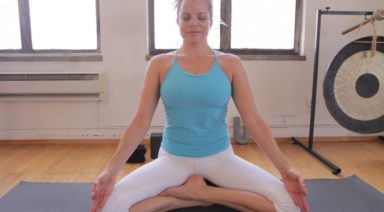
Once you have your space settled, gently close your eyes, and begin to focus on your breathing. After ten deep breaths, start to recite your chosen mantra – either out loud or silently in your head. Let yourself go back and forth between focusing on your breath and your mantra for about ten to fifteen minutes. When you are ready, open your eyes and check in with yourself. Are you feeling a new surge of energy? If so, remember that mantra for the next time you are feeling low on energy.
Other Energy Boosting Techniques
In addition to employing these or your own energy boosting mantras, there are numerous other ways to increase your daily energy supply, the most important of which is to get a good night sleep. Other daily habits can boost your energy, such as:
- Stay hydrated or take it a step further and try a Hydrotherapy Detox
- Get your vitamin D (supplements are helpful, but barely scratch the surface compared to the benefit you can get from 15 minutes of sun each day)
- Eat healthy foods with lots of vitamins and high-levels of protein (like super greens and nuts)
- Energy Boosting Pilates
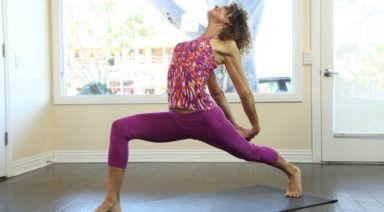
- Energy Lift Yoga, which can be combined with your energy boosting mantra for an added boost
- Go for a brisk walk. A fast-paced walk, with your arms moving, does wonders for jumpstarting many of the systems in your body from immune to respiratory system. Twenty minutes of brisk walking a day can dramatically increase your energy.
- Make plans to spend time with energetic, upbeat friends. Even looking forward to time with friends can give you a little energy boost.
About the Author

What Is the Om Mantra: Origin and Meaning
The mantra “Om” is much more than a simple syllable in yoga practice; it is an ancestral link with the universe and the divine. This article explores the secrets of this powerful mantra, delving into its origin, pronunciation, and meaning in yoga and spirituality.
Table of Contents
- Meaning of the Om Mantra
- What Is the Origin of the Om Mantra?
- How Is 'Om' Pronounced Correctly?
- What Does Om Mean in Yoga?
- Why Is Om Chanted in Yoga Classes?
- Benefits of Chanting the Om Mantra
- What Does the Om Symbol (ॐ) Represent?
Meaning of the Om Mantra
The Om mantra, symbolized by the sacred ॐ, is one of the most ancient and revered mantras in the spiritual traditions of India. It represents the essence of the universe, being a primordial sound that encapsulates truth and ultimate reality. In its vibration, Om encompasses everything that exists and everything that does not exist. This sacred sound is a synthesis of the spiritual and the material, symbolizing the union of the individual soul with the Divine, the Brahman, the ultimate reality.
More than just a syllable, Om is a symbol of connection and unity. In spiritual practices such as yoga and meditation, chanting Om helps align individual energies with those of the universe. Each repetition of Om is a reminder of our relationship with creation and a call for harmony and inner peace. It acts as a bridge between the material and spiritual worlds, facilitating the path to enlightenment and profound self-understanding.
What Is the Origin of the Om Mantra?
The origin of the Om mantra dates back to the ancient scriptures of India, such as the Vedas and the Upanishads, which are thousands of years old. In these texts, Om is presented as a cosmic sound, the original sound of the universe from which everything else emerged. This concept is found in various Dharmic philosophies and religions, such as Hinduism, Buddhism, and Jainism, where Om is considered the root of all spiritual knowledge.
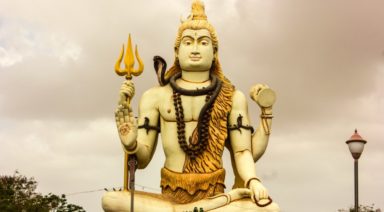
In Hindu philosophy, Om represents the whole, the totality of existence, and is associated with the most important gods such as Brahma, Vishnu, and Shiva. In Buddhism, especially in tantric traditions, it holds great importance as part of longer mantras. This universality of Om underscores its significance in spiritual and philosophical practices, being a symbol of unity, peace, and spiritual knowledge throughout the ages.
How Is “Om” Pronounced Correctly?
Correct pronunciation of Om is essential for its effect and meaning. The syllable is pronounced “AUM” and consists of three sounds: A (ahh), U (ooh), and M (mmm). These three sounds symbolize different aspects of divinity and existence. The sound “A” represents the beginning, creation; “U” symbolizes preservation, and “M” represents transformation or destruction. When combined, these sounds represent the complete cycle of existence.
When pronouncing Om, the sound begins with an open and deep “A,” which starts in the throat and opens toward the chest. The sound transforms into “U,” moving toward the palate and vibrating in the middle of the mouth. Finally, the “M” closes the mantra, with a vibration that resonates in the front of the mouth and skull. This process not only has spiritual significance but also helps align and calm the mind and body, preparing them for meditation or yoga practice.
What Does Om Mean in Yoga?
In yoga, Om represents much more than a simple chanting or meditation practice. It is a symbol of profound connection between the practitioner and the universe. By chanting Om at the beginning or end of a yoga session, the goal is to harmonize the mind, body, and spirit with universal energies.
This sacred sound acts as a catalyst for mental tranquility and concentration, creating a space of serenity and focus for practice. Om in yoga not only prepares the body and mind for the session but also symbolizes the intention to unify the individual self with the cosmic whole, facilitating a deeper and more enriching experience.
Why Is Om Chanted in Yoga Classes?
Chanting Om in yoga classes serves several purposes. First, it creates a bond of connection and unity among participants, establishing a collective atmosphere of focus and serenity. Additionally, the vibrant sound of Om helps calm the mind and center attention, clearing mental and emotional noise.
Chanting Om is also considered beneficial for physical health, as the vibration generated can help relax muscles and calm the nervous system. This practice is not only a symbolic introduction or conclusion to the yoga session but also a powerful tool for deepening the spiritual and physical experience of yoga.
Benefits of Chanting the Om Mantra
Reciting the Om mantra has multiple benefits for both the mind and body:
- Reduces stress and anxiety: The vibration of Om induces relaxation, decreasing tension and mental restlessness.
- Improves concentration: The focus required to correctly chant Om helps enhance attention and mental clarity.
- Encourages spiritual connection: Repeating Om can intensify the feeling of spiritual connection and unity with the universe.
- Aligns body energy: The vibration of Om can help balance and align the chakras or energy centers in the body.
- Promotes respiratory health: Chanting Om involves conscious breath control, which can improve lung capacity and breathing.
What Does the Om Symbol (ॐ) Represent?
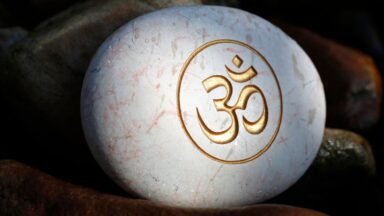
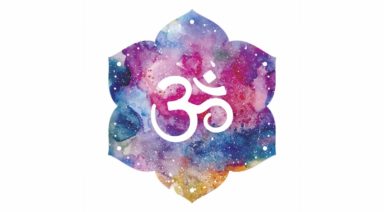
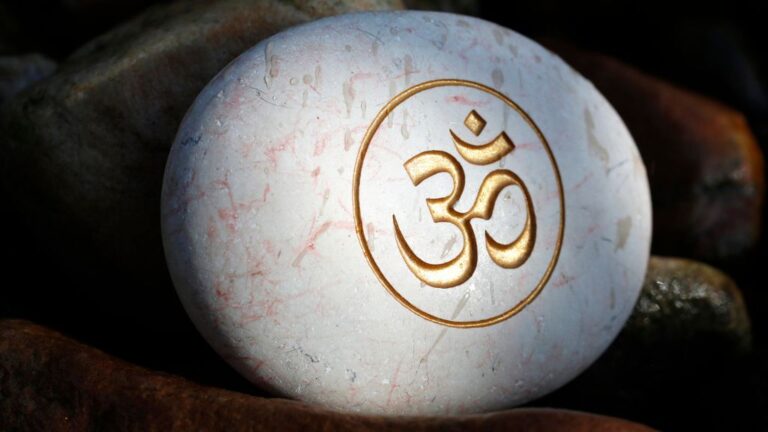
The Om symbol (ॐ) is a rich and complex visual representation of the Om sound. Each part of the symbol has a specific meaning: the lower curve symbolizes the waking state, the upper curve represents the deep sleep state, and the curve extending outward symbolizes the dream state. The crescent and dot at the top symbolize the transcendental state, a level of consciousness beyond conventional physical and mental states.
This symbol not only represents different states of consciousness but also the essential aspects of the universe: matter, soul, and God. The Om symbol is a visual reminder of the connection between the microcosm (the individual) and the macrocosm (the universe). In spiritual practice and daily life, the Om symbol serves as a constant reminder of our essential nature and our connection with everything that exists.
Whether through chanting or visual representation, Om is a timeless tool for those seeking harmony, balance, and a deeper connection with themselves and the universe.