We’re Overdue For The 150-year Carrington Event
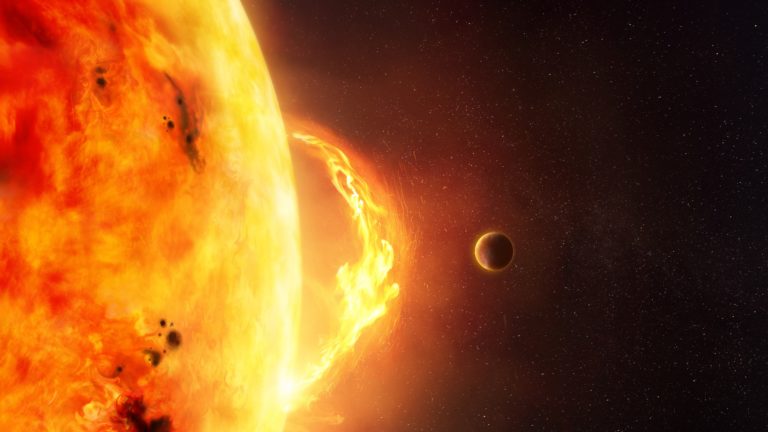
An 1859 solar storm caused the Sun’s corona to expel a massive release of magnetic energy, known as a coronal mass ejection, or CME. It lit up the night sky leading some in mountainous regions of North America to wake up and start their day, believing it was morning, when it wasn’t even midnight.
Though radio communication was in its nascent phase at the time, telegraph operators reported sparks and fire coming from their equipment, while some were even thrown across the room. A man named, Richard C. Carrington, had been recording the activity of sun spots at the time, quickly recognizing the nature of this phenomenon, and so it became known as a Carrington Event. Based on historical precedence, these massive CMEs typically happen every 150 years, leaving us overdue and more vulnerable than ever.
The Carrington Event
Although they often occur in conjunction with solar flares, CMEs can happen on their own and tend to happen often, though not to the extent of the 1859 solar storm. CMEs, like the Carrington Event of 1859, send a massive wave of x-rays and solar plasma at us, that eventually interact with particles in the Earth’s magnetosphere. In a Carrington Event, these waves of particles can be so massive that they take up half of the volume of space between the Earth and the Sun, some 93 million miles. CMEs this big can eject up to a billion tons of plasma into space.
There are many organizations that monitor the Sun’s activity around the world, mapping and plotting its sunspots, flares, and CMEs. The National Oceanic and Atmospheric Administration (NOAA) as well as NASA are two organizations keeping a constant eye on the sun’s activity, in the event that we would need to prepare for a large CME. While we are constantly barraged by different forms of solar weather, including these ejections, much of it is blocked by the Earth’s natural magnetosphere.
Depending on how powerful of an ejection occurs, it can take between one to four days for the particles to reach the Earth. The Carrington Event however, took only 17 hours, striking the Earth with the opposite magnetic field direction, causing a massive disturbance in the Earth’s magnetosphere. To put this amount of power into perspective, it would equate to roughly a billion hydrogen bombs, in fact, some ejections are as large as our planet.

How Do CMEs And Solar Flares Effect Earth?
Today, our society relies heavily on electricity and radio communications, leaving us highly susceptible to catastrophe from a Carrington Event. Roughly 80 percent of people on Earth rely on electricity in one form or another, which would make a CME of this size globally devastating. It is estimated that a Carrington Event today would cause trillions of dollars in damage and, by some estimates, leave many people without power for months and even years in some areas.
In densely populated areas, a long-term lack of electricity could lead to a multitude of problems, but the most pressing would be maintaining a source of potable water. Water treatment plants as well as communication and transportation systems could be effected, making transportation of food and medical supplies difficult. Government agencies and banking systems might not be able to function and electronic records could be wiped out entirely. Our reliance on the power grid is tied to almost every aspect of our lives and so any threat to it would be sweeping and devastating. What makes the situation more difficult is that one of these CMEs would destroy many of the transformers that are so necessary to our grid. Averaging at about $10 million each, power utilities don’t keep a large back stock of these lying around, due to the high price tag, not to mention they’re also difficult to install.
But what about the essential technology that is not as protected by our atmosphere and more susceptible to radiation and space weather, like satellites? Low Earth orbit satellites, including the International Space Station would be subject to a type of drag that could pull them down and cause them to fall from the sky. This has happened before and would cause billions of dollars in damage to the satellites themselves as well as the communications systems that rely on them.
Preparing for the Storm
With the number of government agencies currently monitoring solar activity, we should have enough notice to give us time to make the minimum, necessary preparations for absorbing a CME. Some power grids would be able to store energy in reserve systems that would be impervious to one of these solar storms.
But despite our careful monitoring of solar weather, we wouldn’t know how damaging a CME would be until about 30 minutes to an hour before it hits. And it wasn’t until earlier this year that a bill was passed in the US Congress to put safeguards in place for such an event. Though they may not be able to agree on threats from terrestrial weather, at least they can agree on the threats posed by space weather.

In 1989, Quebec was hit by a relatively large CME which took out enough of the grid to keep the entire province in the dark for nine hours. The Hydro-Quebec power grid went down in just over a minute, leaving millions without power in the middle of the winter when the average temperature is about freezing. Not only did this affect Canada, but it had residual effects reaching down into New England and New York City. It also affected several satellites, including NASA’s TDRS-1, which reported 250 anomalies during the storm.
CME and Solar Flare Effects on Humans
Solar weather from flares and CMEs can cause a number of issues for us, aside from the threats posed by a Carrington Event. Certain types of space weather, when strong enough, are thought to have the potential to disrupt our circadian rhythms and cause sleep loss. This can lead to a number of other negative side effects related to mood, anxiety, hormonal activity and other physical ailments.
While the effects of space weather haven’t been sufficiently studied, there doesn’t seem to be a large chance that a Carrington Event would have significant impacts on human health. The majority of radiation from space is absorbed into Earth’s atmosphere through its poles, which is why the auroras can only be seen so far north or south. Because of this, polar flights submit passengers to about 70% of the annual recommended radiation exposure. In the case of cosmic radiation like that experienced during the 1859 solar storm, radiation regularly absorbed through the poles would be seen at latitudes closer to the equator, but would really only affect those at higher altitudes. This could lead to some harmful radiation exposure, causing cellular damage and mutation to those in the air, but when larger than normal CMEs are expected, airlines typically cancel flights.
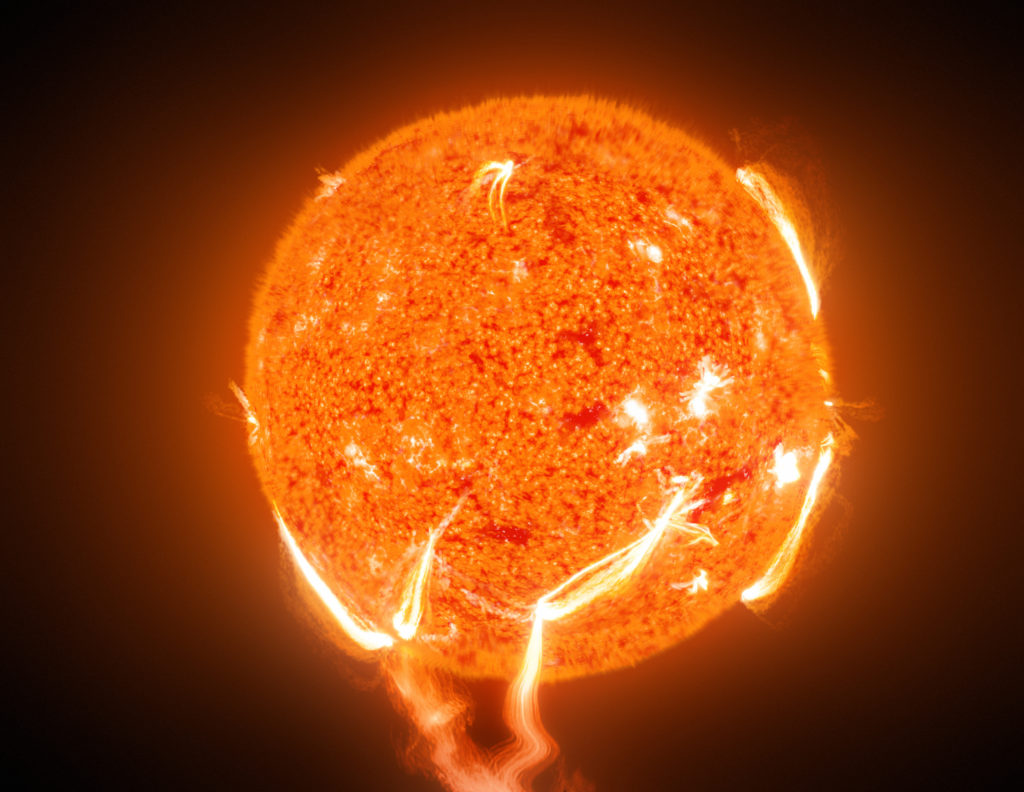
Over the next three years, there’s currently a one-in-eight chance that we’ll be hit by a CME like the one experienced during the 1859 solar storm. So, what can you do to prepare and protect yourself personally against such an event?
One option, which isn’t always the most feasible, is to get off the grid as much as possible. Without necessarily becoming a doomsday survivalist, having a back-up plan can never hurt. Being able to purify water or have a reserve supply of clean water is always a good start. Having a generator or alternative energy source, like solar panels or a wind turbine can be effective. Decentralized, individual power utilities are starting to be produced by companies like Tesla, and could also be useful in events like this.
For smaller electronic devices like cell phones and computers, building a Faraday Cage can protect from damaging electromagnetic fields. The Faraday Cage will disburse electromagnetic waves, which could potentially harm electronics, and can be easily built with a cardboard box wrapped in aluminum or a metal garbage can, lined with cardboard.
We did just dodge a Carrington-sized CME about three years ago, but that doesn’t necessarily mean we have another 150 years until the next one. While an 1859 solar storm would be devastating, scientists are more concerned with the 500-year or 1000-year solar storm that there is no recorded history of. Could a solar storm this severe exist and should we be worried or could there be some unforeseen, beneficial changes happening that correlate with this solar activity?
About the Author

What is a Stargate? Explore the Doorways of the Universe

Humans have long been obsessed with the possibility of alternate universes, and a way to instantaneously travel between this one and the next. This concept was popularized by the science-fiction TV show Stargate, and as recently as 2015, NASA admitted to having spent at least a decade researching access points to places outside our world, our universe, even beyond space and time as we know it.
The term Stargate means just that: an otherworldly door or portal to outside realms, hidden within Earth’s and space’s magnetic fields, waiting to transport the enlightened traveler to a place beyond current time limitations. While space seems to be the most likely location for these doorways to other universes, many places on planet Earth have also been attributed with special transportive capabilities, as well as noticeable shifts in energy, different frequencies, and unexplained lights or sounds.
But little to no scientific evidence has supported the theory of ‘wormholes’ in outer space, much less within the Earth’s atmosphere, until NASA’s Jack Scudder found a way to identify the elusive doorways floating between the Earth and the Sun.
Suspected Stargate Location in Space
Similar to an Einstein-Rosen bridge, or ‘worm-hole,’ the theory of formation of a space portal is that one occurs when space-time is distorted, either by the intense gravitational fields created by the collapse of a star, or by the mingling magnetic forces of the Earth and Sun crossing in space, enhanced by violent solar winds. Some of these portals are gaping holes for significantly sustained periods of time, while most are short-lived, yawning wide and re-closing several times in a day.
But Stargates can be difficult to find. Their reliable instability, elusiveness, and tendency to be tricky to spot can mean it will take years to locate one. There are no signs leading down this road, let alone pointing to it.
However, a plasma physicist, Jack Scudder, at the University of Iowa, has discovered a technique for spotting the elusive unpredictable portals. Scudder called these newly-discovered road signs X-Points, where the intersecting magnetic fields flowing between the Earth and the Sun propel vast amounts of charged particles out of the portal, easy to spot with the correct instruments and the right data.
Once Scudder was able to recognize the indications of a portal, he was able to find similar patterns occurring all over the place in the Earth’s atmosphere. Observed by NASA’s THEMIS spacecraft, they surround the Earth at a distance from 10,000 to 30,000 miles away.
Most of them seem to be located where the Sun and the Earth’s magnetic fields connect to form an unobstructed path, causing the area to pulse with charged particles that also create the Northern Lights and geomagnetic storms we sometimes witness here on Earth.
While not entirely certain what exactly these portals are, Scudder and his team remain optimistic that the answer is not beyond reach.
Stargates are a fascinating overlap of science-fiction and reality, and there are some who claim that we have access to portals here on Earth. Some locations are thought to be compass points on a map designed by sacred geometry and posses the ability to transport us to parallel universes. Among the earthly stargate sites, the most noted are the Stonehenge formation and the Bermuda Triangle, but several other locations are also attributed with being ancient alien portals.