Tech Start-Up Offers to Upload Clients’ Consciousness to Computer
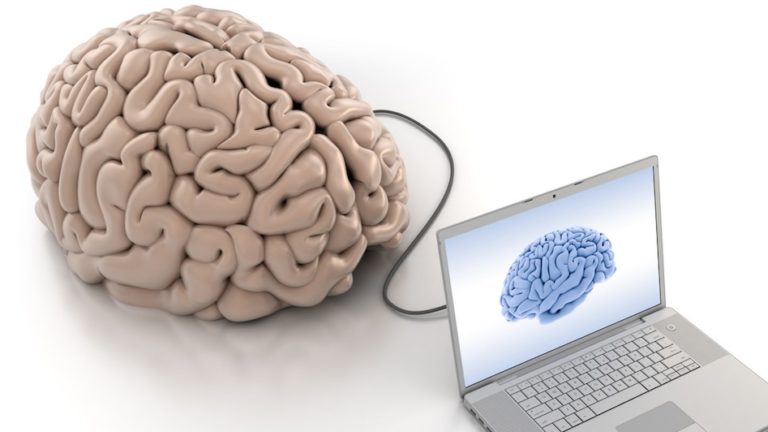
The tech start-up accelerator, Y Combinator, is investing in a company aiming to upload consciousness into a computer simulation at some point in the future when the technology exists. The one catch? You’re guaranteed to die first.
Through a combination of cryonics and embalming the brain, a company called Nectome hopes to posthumously preserve its clients’ brain tissue, under the assumption that uploading our consciousness to a computer is an inevitable future prospect. But in order for this to happen, Nectome must euthanize its clients in the process.
The company, whose slogan reads, “Committed to the goal of archiving your mind,” has recently attracted the attention of silicon valley execs who have become enamored with the prospect of living indefinitely. In addition to receiving blood transfusions from healthy teenagers, older tech luminaries are exploring the possibility that technological advancements could one day lead to immortality. At least for those who can afford it.
Sam Altman, president of Y Combinator, said, “I assume my brain will be uploaded to the cloud.”

Altman and other investors have put down a refundable $10,000 deposit, to one day have their brains embalmed and stored, though the company hasn’t been able to prove that memory can be revived from dead brain tissue.
Nectome plans to take advantage of a recent piece of legislation passed in California, known as the End of Life Option Act, which allows for physician-assisted suicide for terminally ill patients. The company is also straightforward with its clients, calling its product “100 percent fatal.”
So why would prospective clients enthusiastically pay for something guaranteed to kill them?
“The user experience will be identical to physician-assisted suicide.” Nectome’s co-founder Robert McIntyre said, “Product-market fit is people believing that it works.”
McIntyre and cofounder Michael McCanna were recently able to acquire the corpse of a woman whose brain they were able to preserve a couple hours after she passed away. They described their process, known as aldehyde-stabilized cryopreservation, as “a fancy form of embalming that preserves, not just the outer details, but the inner details.”
The company recently won a significant federal grant for its use of a technique developed by MIT neuroscientist, Edward Boyden, that successfully preserved a pig’s brain, so every synapse could be seen through an electron microscope.
The idea of uploading consciousness, also known as the singularity, has been explored in sci-fi literature and film, including the Matrix and recent episodes of Black Mirror. The concept overlaps with the idea that our reality as we know it, may potentially be a computer simulation. Thought leaders in the tech world, including Elon Musk, said he believes there is a one in billions chance we are living in “base reality,” or a completely organic reality.
About the Author

Who Was The Mysterious Ed Leedskalnin, Creator of the Coral Castle?

When one thinks of iconic 20th century pioneers in the fields of engineering and electromagnetism, the genius of Nikola Tesla usually comes to mind. But rarely is the name Ed Leedskalnin mentioned; a man who single-handedly constructed one of the most fascinating monoliths – the Coral Castle – claiming he implemented secrets used by the Ancient Egyptians’ to build the pyramids.
Leedskalnin’s story is a strange one, and he did his best to maintain a mysterious legacy through cryptic messages, symbols, and hints in his work. And it all began when he immigrated to the United States from Riga, Latvia at the age of 26, heartbroken his teenage bride-to-be Agnes Scuff, left him the day they were to be married.