Did The Vikings Use a Solar Stone Crystal to Navigate Cloudy Seas?

Vikings dominated the North Atlantic seas for at least 300 years, but how did they sail across great distances with incredible accuracy, without a magnetic compass? A long-held theory about Vikings using crystals for navigation may have been proven true with modern science.
The Vikings, the great north seamen, sailed from Norway to Greenland and many parts in between. They were known to have amazing maritime navigation skills, by using the sun to plot their position on the globe. But scientists have wondered for years how they could navigate when they couldn’t see the Sun. Enter the sunstone, or solar sign, a crystal that when held up to a cloudy sky, can help to locate the Sun.
For years the use of Sunstones has been nothing but a theory based on a legend. Such as this mention in the tale Rauðúlfs þáttr:
“The king made people look out and they could nowhere see a clear sky. Then he asked Sigurður to tell where the sun was at that time. He gave a clear assertion. Then the king made them fetch the solar stone and held it up and saw where the light radiated from the stone and thus directly verified Sigurður’s prediction.”
Watch more:
About the Author

Are These Out of Place Artifacts Evidence of Ancient Alien Technology?
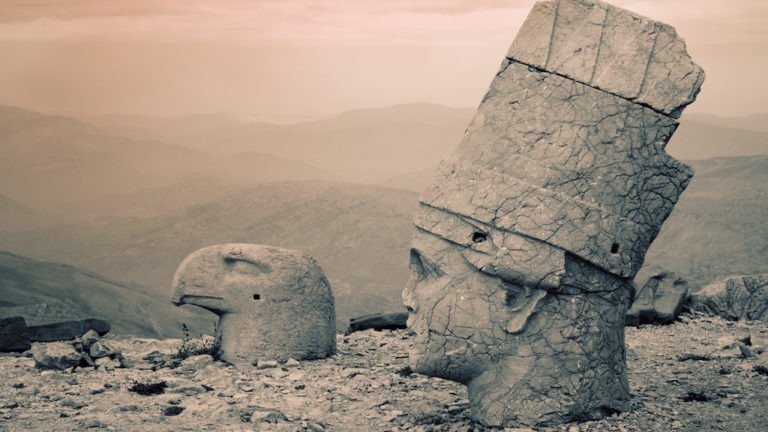
The evolution of technology follows a pretty linear path throughout history. But sometimes we stumble upon anachronistic artifacts that challenge that perception and throw those perceived timelines for a loop. To some, these out of place artifacts are none other than ancient alien technology proving our ancestors were once visited by an advanced race, while others maintain it’s evidence we’ve underestimated the technological faculties of those ancestors.
Here’s a list of alleged ancient alien artifacts — you decide for yourself.
Puma Punku’s Ancient Technology Mysteries
Growing up, most are taught that the Egyptians built the pyramids through primitive means, using simple pulleys and brute force from slave labor. But under deeper scrutiny, this explanation doesn’t seem to make sense. And the same could be said about the temple complex of Puma Punku in Bolivia.
The temple grounds of Puma Punku are believed to date back to between 536 and 600 AD, constructed by a civilization appearing to have been wiped out by a cataclysmic event. Puma Punku is part of the larger, well-known Tiwanaku site, an important location to the Incas, who believe it is the cradle of their civilization – characteristics ancient astronaut theorists might consider significant as well.
This area of Tiwanaku is marked by a decorated megalithic archway known as the “Gate of the Sun,” and according to Freddy Silva, it may be one of the world’s oldest temples. Once home to somewhere between 10,000 and 20,000 people, the name Tiwanaku translates to “navel at the center,” implying it once served as a cultural hub.
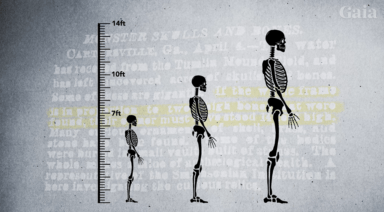
Atop the Gate of the Sun is a carving of (https://www.gaia.com/article/viracocha-the-great-creator-god-of-the-incas), the supreme God of the Incas. Silva says that Viracocha and his ilk were described as being much different than the indigenous Incas – white-skinned, bearded, fair-headed, and capable of bending the laws of nature. They were also significantly taller. And these weren’t descriptions of the Conquistadors – they didn’t come along for about another century.
The reports of Viracocha’s superhuman race make the anomalous stonework at Puma Punku all the more interesting. Perfect 90-degree angles, precision cuts, and immaculately even spacing in the stones are shocking, considering the primitive epoch in which they were made. Much of this craft stonework remains distinct to this day, confounding scientists and archeologists alike.

What technology could they have possessed to create such fine masonry and who were the people responsible for such precision work?