The Epic Showdown Between Atlantis and Lemuria

Since Plato first mentioned the existence of an ancient land that once served as the hub of a great civilization, people have been intrigued by Atlantis—an alleged civilization of advanced people who descended from the stars.
Through the centuries, researchers have not only been driven to find where Atlantis once existed, but also its connection to unseen forces, distant civilizations, and a seat of wisdom now buried beneath the ocean. Thanks to the memories of Matias De Stefano, an indigo child who remembers his past life in the Atlantean colony of Khem, we can take an even closer look at this lost civilization.
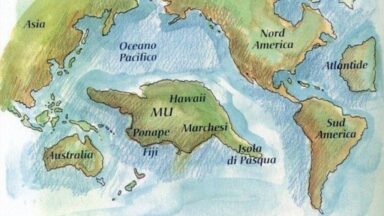
Matias reveals the real nature of Atlantis and its historical connection with the Mu people, a species whom he refers to as the Alithir. This civilization has also been referred to in history as the Lemurian civilization. Lemuria has been thought to be a lost continent of the Pacific that was once an exotic paradise. Lemuria is front and center in an epic confrontation with the ancient empire of Atlantis across the globe, having left a lingering impression upon our modern world, and even influencing the way we live today.
Approximately 50,000 years ago the Alithir, also called the Angels of the Sea, made their home in the Pacific, where billions of years ago, the moon crashed into the Earth, creating the massive crater. The crash opened a powerful portal on the planet and attracted otherworldly beings to settle on Earth.. That territory was within the area that triangulates Hawaii to the north, New Zealand to the west, and Easter Island to the east. From there, the Alithir settled four main portals in North America, South America, Australia, and Asia, where the four largest deserts on earth existed.
Matias says the main preoccupation of the Alithir was to work with our planet’s water to connect the vibrations of Earth and all beings as one consciousness. As more civilizations came through the portals, they set out to rule with different agendas. Early on, the Sirius people arrived to organize the Kundalini energy of the planet and raise the vibrations of all beings.
The correlation of the planet’s landmasses to the chakra system of the human body was a key connection for people to live in harmony not only with one another, but with the consciousness of the whole earth. This philosophy has been preserved by way of the earliest teachings in India and Asia, suggesting there is but one single consciousness.
Much of the world’s interest in Mu and Atlantis was rekindled in the written works of Theosophist Madame H. P. Blavatsky in her 1888 book titled, The Secret Doctrine. Blavatsky wrote that Lemuria and its diverse people preceded Atlantis and were eventually wiped out by subterranean fire, volcanos, and the sinking of their land into the depths of the Pacific Ocean, at a time when Atlantis was still in its infancy.
The Rosicrucian teachings agree that the downfall of the Alithir began with volcanic eruptions, earthquakes, and the collapse of subterranean gas belts. While this set off magnetic waves of energy that spread across the earth, there were barely enough for small groups of humans to flee to India, Mesopotamia, and Egypt. Others made their way eastward on primitive rafts, where they settled in the Americas to become the earliest indigenous tribes.
Eventually, the Atlanteans left the confines of their own continent to follow the earth’s energy patterns along the mountainous regions to the east, until coming to the portals of the Lemurians. Now threatened, Matias explains, the Alithir grew concerned that the Atlanteans would control the free flow of life, information, and energy that they had fostered and cherished, which would put an end to their civilization.
But the Alithir were not fighters; they were protectors and angelic in their mission and demeanor. Instead of waging war, they left the cities and portals, and went underground, while thoseMatias refers to as the Yomiom, a close relative to the Alithir, protected these portals. The showdown between the Atlanteans and Lemurians then led to a new humanity that not only changed the course of the human experience, but also the earth’s polarity, weather patterns, continents, and more.
This history causes one to wonder if Earth may have once been quite different from what we know today. One can only imagine what it may have been like to witness early civilizations, forged by alien peoples who understood the energies of the planet, how to use them for healing and communication, and how to relate them to the consciousness of human beings who would later enter the scene.
Matias gives us pause to consider what has been lost spiritually, culturally, and bio-energetically, that led to the decay of our civilization, the health of our planet, and our very humanity.
Were the Gods of the Sumerian Kings List Real?
Our history books are continually being tested and challenged, but few discoveries have thrown a wrench into the officially accepted narrative of man’s origin like the DNA of Alfred Perry. Thanks to a chance submission of this one man’s blood to a genealogy laboratory, scientific theories of our species’ origin have been turned upside-down.
The story began in 2013, when a female relative of Alfred Perry, a South Carolina man, submitted a sample of his DNA to trace the family’s genetic roots. It turned out Perry’s DNA was not only rare, but it reset the entire timeline for human existence on this planet. Perry’s Y chromosome contained a signature unlike any other.
Y chromosomes represent the genetic factor that determines the male gender, and from Perry’s DNA, scientists were forced to admit that the common ancestor for his lineage was roaming the earth some 340,000 years ago. Previous to Perry’s DNA sample, scientists believed the origins of humankind traced to an original “Adam” somewhere around 140,000 years ago.
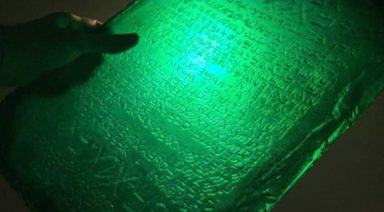
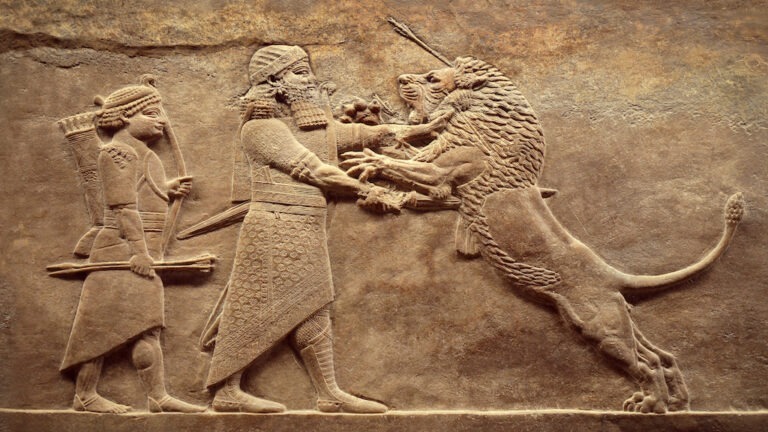
Perry’s DNA may support the theory that this planet has been home to earlier human civilizations that somehow became extinct—or nearly extinct—and that humanity may have been involved in a reboot, so to speak. This theory is supported by an ancient artifact known as The Sumerian Kings List—a written history of kingship in ancient Mesopotamia discovered in Sumerian cuneiforms.