Skandasana: Side Lunge Pose
ADJUSTMENTS | BENEFITS | PREP POSES | SANSKRIT | STEPS
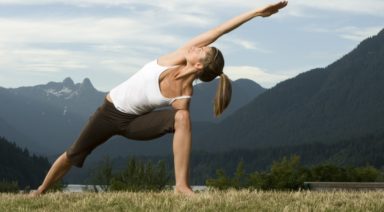
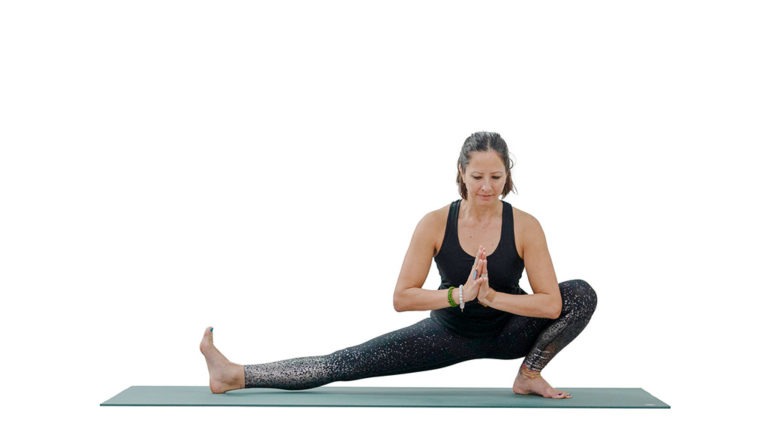
Side lunge is an aesthetically beautiful pose and a wonderful release for the legs and low back. This pose is sometimes referred to as skandasana.
Philosophy + Origin
Side lunge pose can be a wonderful way to begin to understand the concept of a “moving prayer,” especially when you allow the body to flow freely from one side to the other. While malas (prayer beads) are used in many spiritual practices as a way to help keep the mind engaged, repetitive physical movement can have the same effect. Whether you practice a flowing version of side lunge pose, or use the posture as part of a salutation, give your body and mind enough time to find rhythm and ease so that you can enjoy the benefits of a physical embodiment of prayer and meditation.

ADJUSTMENTS/MODIFICATIONS:
- Use a block underneath your seat to support your joints.
- Option to add a bind with your arms around the bent knee and lower back.
- For a more lunar or restorative version of the posture, allow your upper body to drape toward the ground with the arms relaxed.
STEP-BY-STEP:
- Begin standing with a wide stance, toes pointing toward the long side of your mat.
- Lengthen the spine and broaden across your collarbones. As you exhale, begin to bring your hands down to the mat, keeping the spine long.
- Bend your left knee and allow your hips to shift to the left. Press evenly through the sole of the left foot as you flex your right toes toward the ceiling. Engage your legs actively to safely deepen the stretch.
- Option to bring your hands off the floor, bringing them to your heart in anjali mudra (prayer gesture) or to any mudra of your choice.
- Hold the pose for several breaths before shifting your weight and flowing to the opposite side.

PREPARATORY POSES:
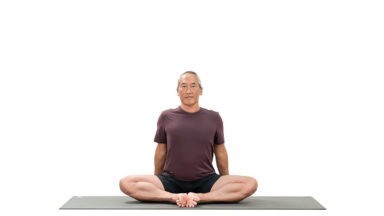
- Bound angle pose | Baddha konasana
- Wide-legged forward fold | Prasarita padottanasana
SEQUENTIAL POSES:
- Seated wide-legged forward fold | Upavistha konasana
- Garland pose | Malasana
- Half splits pose | Ardha hanumanasana
COUNTER POSES:
- Head to knee pose | Janu sirsasana
- Cow face pose | Gomukhasana
- Half lord of the fishes | Ardha matsyendrasana
BENEFITS:
- Strengthens the lower body.
- Stretches hamstrings, calves, and groins.
- Can promote balance and stability.
Legal Disclaimer Before participating in any exercise program or using any fitness products or services that may be described and/or made accessible in or through the Gaia Website and/or the Services, you should consult with a physician or other healthcare provider. Read more about Gaia’s Terms Of Use.

About the Author

Parsvottanasana: Intense Side Stretch Pose
ADJUSTMENTS | BENEFITS | SEQUENCING | SANSKRIT | STEPS
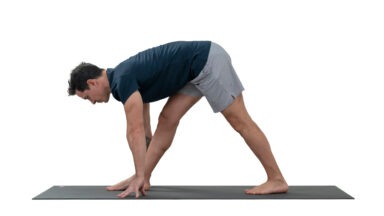
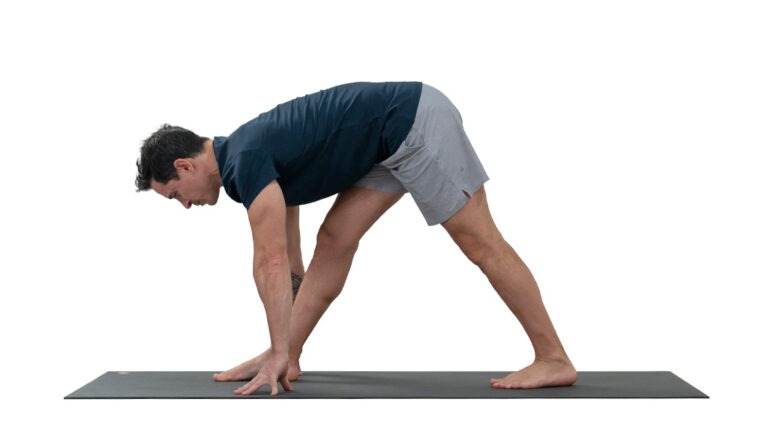
From lengthening the spine to stretching the legs to calming the mind, there’s a little bit of everything in parsvottanasana (parsh-voh-tahn-AHS-ah-nah) Also known as intense side stretch pose or pyramid pose, this shape is helpful for finding balance while stretching hamstrings.
Parsvottanasana requires a combination of flexibility, strength, and patience. With the help of props such as blocks or a wall, this pose becomes accessible for everyone.
ADJUSTMENTS/MODIFICATIONS:
- Blocks: Place hands on blocks to help keep the torso long.
- Wall: Place hands on a wall in front of you to work on strengthening the muscles of the back.
- Heart opening variation: Take the hands in reverse prayer position behind the back to stretch and open your shoulders and chest while also challenging your balance. If reverse prayer isn’t accessible, you can still bring the arms behind the back, reaching for opposite elbows instead.
- Adjust your stance: If the back heel is lifted off of the floor, shorten the stance so you can push through the heel to activate the back leg. For more stability, widen your stance.