Viparita Karani: Legs Up The Wall Pose
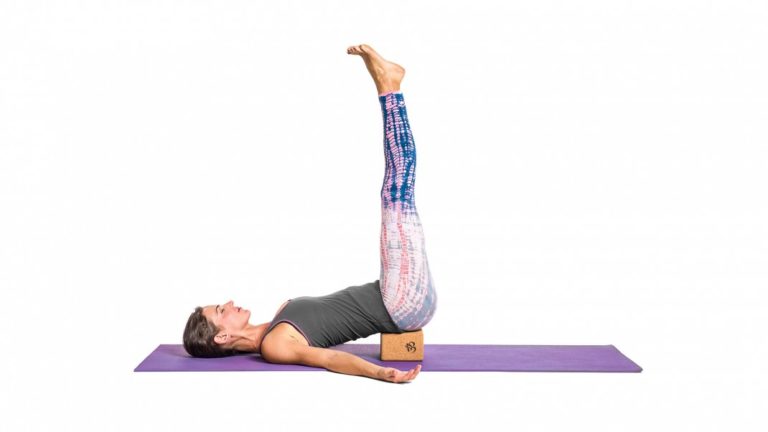
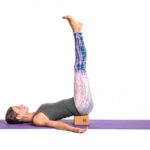
Viparita karani (vip-par-ee-tah car-AHN-ee) is a gentle restorative pose. This slightly inverted pose can ease busy mind chatter and may relieve uncomfortable symptoms like tension and menstrual cramps. You may enjoy practicing this pose with a block, folded blanket, or pillow under your hips to lift your hips above the plane of your heart.
Sanskrit:
- Viparita: reversed/inverted
- Karani: doing/action
Physical Benefits:
- Relieves tired feet and legs.
- Gently stretches the hamstrings and legs.
- Can relieve discomfort in the lower back.
Energetic Benefits
- Thought to calm the mind.
- Thought to ease symptoms of anxiety and stress.
Preparatory Poses:
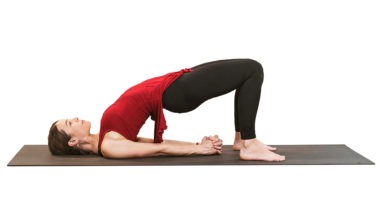
- Bridge pose | Setu bandha sarvangasana
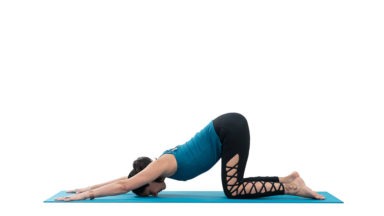
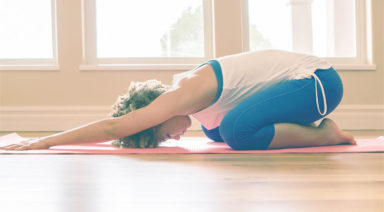
- Child pose | Balasana
- Standing forward fold | Uttanasana
Sequential Poses:
- Shoulder stand on the wall
- Dragonfly on the wall
- Figure four on the wall
Counter Poses:
- Savasana
Adjustments/Modifications:
- Place a pillow, bolster, or folded blanket under your hips to release the hamstrings and low back.
- Gently lower your feet out to the sides so your legs make a wide “V” shape for dragonfly on the wall.
- Place a rolled up blanket under your neck for additional support.
- Loop a strap around your thighs to allow the legs to relax more deeply.
Step-By-Step:
- Begin seated beside an open wall, with your hip and shoulder against the wall.
- Gently lower your torso down to the ground as your legs lift up against the wall.
- Option to wiggle closer to or further away from the wall to your comfort level.
- Option to place a block, pillow, or folded blanket under your hips to release any discomfort in the low back or hamstrings.
- Allow your head to rest on the ground or a pillow and place your arms wherever they are most comfortable.
- Stay anywhere from one to 15 minutes.
- To release, push the bottoms of your feet into the wall and lift your hips slightly. If using a support, move the support out of the way. Gently roll to one side and stay for a few breaths before returning to your seat.
###Legal Disclaimer Before participating in any exercise program or using any fitness products or services that may be described and/or made accessible in or through the Gaia Website and/or the Services, you should consult with a physician or other healthcare provider. Read more about Gaia’s Terms of Use.
About the Author

Natarajasana: Lord of the Dance Pose
ADJUSTMENTS | BENEFITS | SEQUENCING | SANSKRIT | STEPS
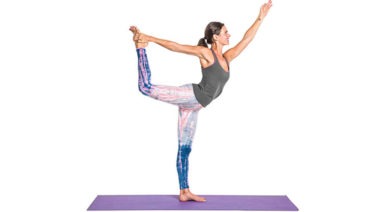
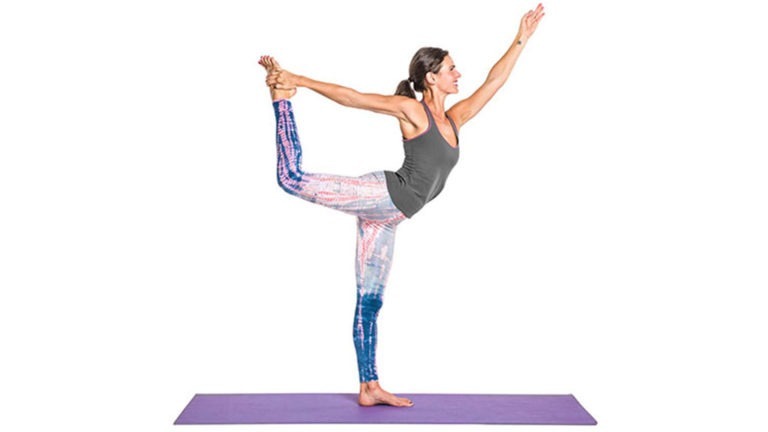
Natarajasana (not-ah-raj-AHS-anna) is a physically challenging, beautiful pose that requires flexibility in the spine, legs, and hips. To practice the pose, use a thoughtful sequence filled with plenty of preparatory poses in order to make sure your body – and mind – are adequately prepared. Regular practice will help develop strong mental fortitude and determined concentration.
Philosophy + Origin
A physical embodiment of King Nataraja, a form of the lord Shiva, lord of the dance pose (also referred to as king dancer pose) is a tribute to this powerful god of destruction. Embracing destruction and even death as part of the cycle of change and growth, this pose is a helpful reminder that no good can exist without evil, no birth without death.
In most depictions of King Nataraja, he is standing on one leg (hence the shape of the pose), gazing over the head of a small dwarf, whose presence represents ignorance. In this way, lord of the dance pose encourages our consciousness to elevate above ignorance, above the common thoughts and misunderstandings that cloud our view. The balance that comes from the pose awakens our understanding that clarity brings steadiness.