The 50th Anniversary of Erich von Däniken’s Chariots of the Gods
The 50th Anniversary of Erich von Däniken’s Chariots of the Gods
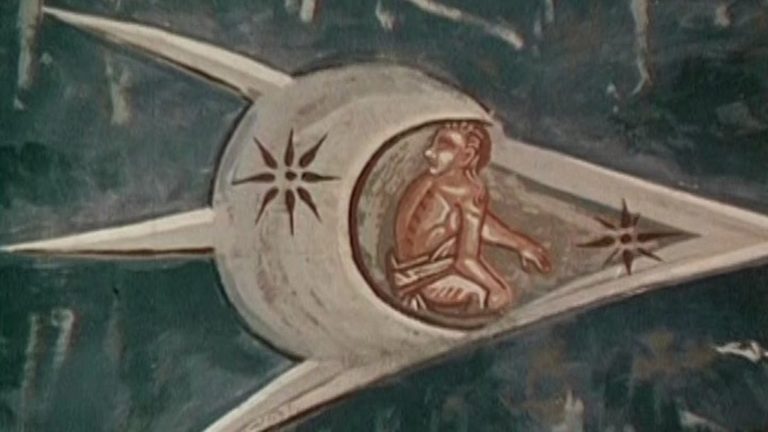
This month marks the 50th anniversary of Erich von Däniken’s seminal work, Chariots of the God; a book that introduced millions to the novel idea that the deities of ancient religious scripture may have actually been advanced ancient astronauts from another part of the cosmos. Now, after half a century of criticism and scrutiny, von Däniken’s work has stood the test of time, spreading curiosity, wonder, and a message of modesty, that maybe there is more to our reality than we claim to know.
Originally released in 1968 under the title Erinnerungen an die Zukunft, or “Memories of the Future,” von Däniken’s book would be rechristened Chariots of the Gods, after an English publisher read his interpretation of Ezekiel’s vision in the Old Testament.
The title would go on to sell 16 million copies, laying the groundwork for 40 sequels that sold 72 million books worldwide. Von Däniken’s work inspired a number of eminent Hollywood productions, television series, and written works that challenged archeological and theological tenets, much to the chagrin of mainstream scholars.
He prefaced Chariots of the Gods with the sentence, “It took courage to write this book and it will take courage to read it,” knowing he faced detractors who would dismiss his theory as sacrilege.
After Chariots of the Gods found success in its paperback sales, it became the impetus for a television series called In Search of the Ancient Astronauts. The series featured interviews with such names as Carl Sagan and Werner von Braun, and was narrated by Rod Serling and Leonard Nimoy.
This set the stage for the popular, contemporary series Ancient Aliens, on History Channel. And now, the legacy continues with Erich von Däniken: Beyond the Legend, on Gaia; a series dissecting his theory and its implications on modern society.
But despite a lifetime of success, von Däniken continues to fend off cynics, maintaining his intention to instill a sense of humility in scientists and theologians who often believe we are alone, or at the top of the universe’s evolutionary chain.
Over decades of welcomed critique, von Däniken has admitted when he was wrong, revised his ideas when necessary, and accepted adversity when presented to him. And in the face of it all, he remains steadfast in his overarching theory that has found increasing support and evidence to boot.
About the Author

When Will We Advance to a Type 1 Civilization on the Kardashev Scale?
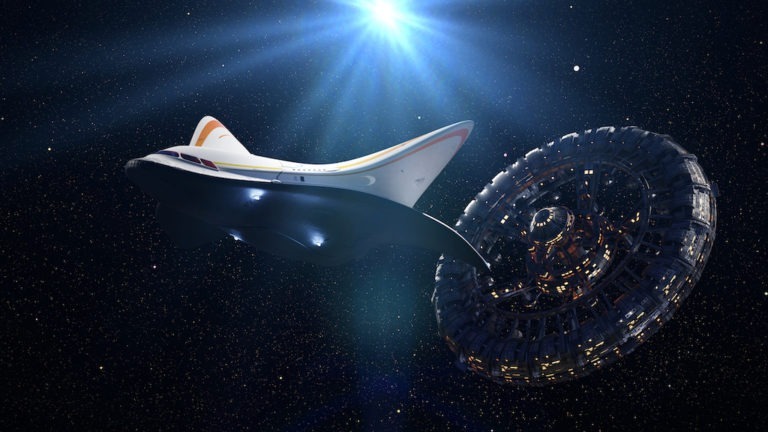
What is the Kardashev Civilization Scale?
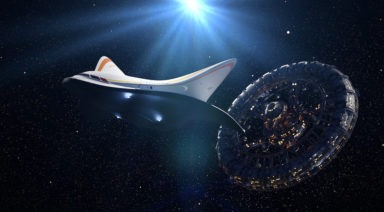
The Kardashev Civilization scale is a hypothetical scale by which civilizations advance technologically, measured by the methods and quantities of energy they are able to harvest. Currently, we fall somewhere between a Type 0 and Type 1 Civilization on the scale.
What is a Type 0 Civilization?
A Type 0 civilization is one that has yet to harness all of the energy output of its planet. This type of civilization is still in the process of utilizing unsustainable energy sources like fossil fuels.
What is a Type 1 Civilization?
A Type 1 Civilization on the Kardashev scale can harness and store all of the energy from its home planet. We haven’t quite achieved this level yet, but it is believed we will probably reach it soon. Many consider humans to be somewhere around .07 or .08 on the scale.
Nikolai Kardashev’s Theory
We like to believe our society is technologically advanced, we’ve mastered our environment and we’re progressing forward exponentially. And while Moore’s Law is holding up with the rate at which computing power has advanced, we barely rank on the Kardashev scale.
And yes, this scale is hypothetical, but it is plausible if we are to consider how we might inevitably ascend to the next level. That’s why Nikolai Kardashev devised his eponymous scale, ranking civilizations primarily on the ways in which they harness energy. And from there it goes on to assume a number of other intriguing possibilities.
Kardashev is a Russian astrophysicist, who developed this thought experiment in 1964. And though we haven’t quite reached the first level on his scale, we are a relatively new civilization by his standards. The amount of time required to reach his successive stages often requires millions and sometimes even billions of years. If a civilization can survive long enough to ascend one level without self-destructing, its chances dramatically improve in continuing to further levels.