Vernal Equinox: Ritual Through Yoga
Over the course of each year, our playful planet performs an elliptic dance around the sun while simultaneously spinning about its own imperfect axis, which tilts roughly 23 degrees from vertical. Born of the primordial fire, the terms of this intricate cosmic relationship are responsible for all of the natural rhythms that inform our daily lives — from changing weather patterns to reliable zeitgebers that regulate our internal clocks.
When one tugs at a single thing in nature, he finds it attached to the rest of the world.
::John Muir
The Story of a Blue Sphere and a Fiery Mass
As Earth diligently revolves around the sun each year, there are four distinct sandhis, or junctures, where a clear seasonal shift occurs from our terrestrial perspective. The vernal equinox is one such juncture, marking the transition from winter to spring.
As we welcome the appearance of new life in nature, many of us remain blissfully unaware. We may neglect or even override the innate curiosity that seeks to understand how our cozy blue sphere and its fiery solar star orchestrate this magnificent show year after year. The truth is, when it comes to their relationship status, “it’s complicated.”
A Practical Approach to Visualization
Imagine yourself sitting in a camping chair with your feet warmed by the heat of a well-burning fire. Fortunately, you’re equipped with a warm scarf and hat to dull the chill you might otherwise experience as you recline back (at exactly 23.4°) to enjoy the stars. Now, without adjusting the direction your chair is facing, imagine yourself orbiting around the focal fire to the opposite side, giving the back of your head a chance to enjoy the warmth of the flame.
If your feet were the southern hemisphere and your head where the northern hemisphere, these two positions would represent the winter solstice (with more heat reaching the bottom half of your body) and the summer solstice (with more heat reaching the top half of your body) respectively.
To visualize the vernal equinox, imagine your chair was to revolve just a quarter of the way around this campfire circle. In this position, your body would be leaning neither toward nor away from the fire and the projected plane of your navel (the equator of your body) might pass directly through the center of the glow. Also, the light reaching one side of your body would match the darkness on the opposite side, much like the day and night which are of approximately equal length on the equinox.
Still confused? Don’t sweat it, simply allow yourself to enjoy the fruits of spring with a deep knowing that there are some wildly wonderful forces at play.
Emergence of the Exhale
Played out on a living, organic sphere, the seasons are guided by a unique planetary breath rhythm. The annual breath of the Earth, much like our own cyclical respiration, serves the purpose of bringing nutrients into the system in exchange for that which cannot be utilized. During the Vernal Equinox, our sleepy planet awakens from the depth of its winter inhalation and begins a 6-month out-breath.
Lean into the Light
Illustrated in the table above, the vernal equinox is a point of orbital balance marking the emergence of days that outlive nights as the axis of the planet bows once again, toward the sun. In direct response to increasingly available sunlight, a life that remained dormant in the barren winter months begins to awaken in receipt of new light. All of nature comes to life — hibernating creatures wake up with healthy appetites and germinating plants shed the shackles of their seeds.
“For a seed to achieve its greatest expression, it must come completely undone. The shell cracks, its insides come out and everything changes. To someone who doesn’t understand growth, it would look like complete destruction.” ::Cynthia Occelli
Subtle Body Spring: Melting the Inner Snow
As nature begins to melt the winter snow in spring, rivers and far-reaching tributaries swell with freshwater that sustains the natural environment as well as human communities. Mirroring the wisdom of the planet, now is the time to water any seeds of intention we may have planted at the beginning of the year and evaluate which future crops and creative projects we will irrigate with the melt of our inner snow.
Just as mountain rivers are swelling their waters, our bodies respond in much the same way at this time of year. This is nature’s way of melting the inner “snow” of the body.
::Shiva Rea, Tending the Heart Fire
Recalibrating Rhythm
Like a bear emerging from the deep sleep of hibernation, sometimes it can be difficult to recalibrate the body and mind for the vibrant spring rhythm. During the long period of seasonal darkness that precedes the vernal equinox, the body naturally increases melatonin production, a hormone that promotes the desire for sleep. This is the planet’s way of encouraging us to slow down and regenerate during fall and winter.
However, with the advent of smartphones and 24/7 connectivity, we override many of these environmental signals which can disrupt our natural circadian rhythms. This dissonance may leave energy levels, which were supposed to have been replenished during the winter, somewhat depleted when springtime arrives.
Fortunately, the daily increase in sunlight that occurs during this half of the year, has its own subtle body effects which include an increase in the mood-elevating hormone, serotonin as well as testosterone and estrogen.
While the shift in our internal chemistry generally increases energy and vitality, this period of hormonal recalibration puts a strain on the endocrine system which can leave us feeling a little tired as we meet the seasonal transition. To navigate the changing internal landscape, any effort to cleanse and detoxify the body can help alleviate energetic stagnation in preparation for the luminous spring ahead.
The Kappa Season
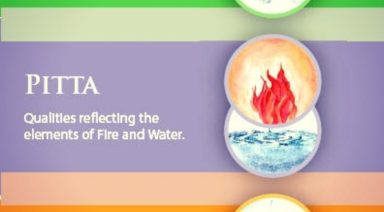
The predominant dosha during springtime is kappa, comprising earth and water. With heavy rains and warming temperatures, the elemental density and heaviness of kappa in late winter continues into spring. As we approach the equinox, it becomes necessary to balance these kappa qualities in order to alleviate winter-induced inertia and energetic malaise. The ideal rhythm for springtime is kappa-pacifying: meet the cool, oily, and heavy qualities of earth and water with the arid warmth and lightness of air and fire.
- Lighten Up. The vernal equinox welcomes a thorough spring cleaning, in our homes and in our hearts. Start by addressing any clutter that has accumulated during the winter and dispose of it in a meaningful way. In your home, this might be as simple as donating articles of clothing or re-purposing a piece of furniture. In your heart, you might tune into the presence of any heavy emotions, assimilate what you can learn from, and let the rest dissolve. Write in a journal to rid your subtle body of excess energetic weight and to create space for what is to come. Only once you have cleared any obstructions, can you begin a deep clean.
- Cleanse. Since kappa is able to sustain with or without food, enjoy a short fast or cleanse during the spring season using astringent fruit juices or warming, spiced kitchari. To stimulate the digestive fire before meals, try chewing on a small slice of fresh ginger. Shed layers of winter skin by dry-brushing before bathing and minimize the use of body oils. If you find yourself battling allergies with spring fever, consider cleansing the nasal passages with nasya, herb-infused oil, to facilitate the clear exchange of Prana. Alternatively, this can be done with warm salt water using a neti pot.
- Nourish. Concentrate on slow, mindful meal times so that your body experiences maximum satiety to avoid overeating or emotionally driven consumption which are symptoms of excess kappa. Favor light foods that are easy to digest with pungent, bitter, and astringent tastes. Foods like apples, pears, brussels sprouts, cabbage, and carrots for instance. Avoid heavy, oily foods with sweet, salty and sour tastes which increase kappa.
Invigorating Yoga Practices for the Spring Equinox
To bring balance to the gunas (attributes) of the kappa season, we emerge from the regenerative practice of the cold winter months and transition into the increased energy and mobility of spring. As we adapt to the seasonal rhythm, the most beneficial physical practices are those that enliven vira rasa. The term rasa can be used to define the intrinsic energetic quality or essence of being and vira is a word for hero. Vira rasa is the embodiment of potency and courage which are reinforced by an active, solar practice. This particular movement alchemy is appropriate for any time when we are experiencing a cycle of growth and renewal.
- Summon Your Strength — Enjoy arm balances and core cultivation as well as heating inversions to experiment with a new strength that has developed from the fortifying rest of winter.
- Clear Congestion — Relieve physical and emotional congestion by practicing dynamic postures with a vigorous pace before exploring strong, standing hip-openers, and activation. This can mobilize stagnant earth and water elements that may have accumulated here through winter.
- Burn Bright — Experience the ardent internal cleansing of heat-inducing pranayama such as kapalabhati, bhastrika and surya bhedana.
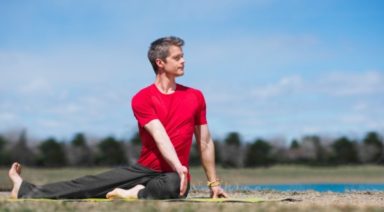
- Detoxify — Any process of purification requires a great heat. In the same way that steam can disinfect the surfaces in your home, internal heat and massage can assist the body’s natural metabolic processes which rid the system of toxins and purify the cells while reducing inflammation. Focus on postures that stimulate the circulatory, digestive and lymphatic systems like bound twists and activating backbends.
Spring Equinox Sequence: Moving Meditation for the Whole Body
Heart
Tap into your innermost virya, meaning vitality, enthusiasm, and effort, with focus and attention. Maintain an affirmative inner dialogue and embody the heart of a warrior. Either internally or aloud, invoke the mantra of supreme light with reverence to the sun, our absolute source of sustenance. Allow this to be a mantra of purification and release as you move toward internal balance.
OM HRIM HAMSA SO’HAM SWAHA
om: the primordial sound of the universe, the vibration of all creation, the guru
hrim: bija, seed sound for clarity and dispelling illusion, mantra for the cosmic light, the sun
hamsa so’ham: the balance of light and dark, sun and moon, Shiva and Shakti, the power of the breath for bringing vitality
swaha: let it be so, dedication to the light
*translations by David Frawley
Breath
During this stimulating practice, focus on powerful ujjayi breathing to circulate a steady supply of oxygen through the blood. Maintain a strong, audible breathing rhythm through the nostrils, releasing heat through the mouth on the exhale as needed. With this victorious yogic breath, internal body heat increases as does the circulation of Prana.
Body
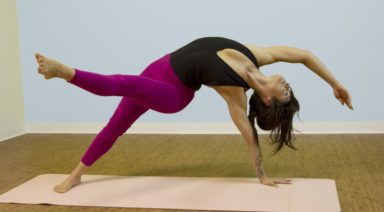
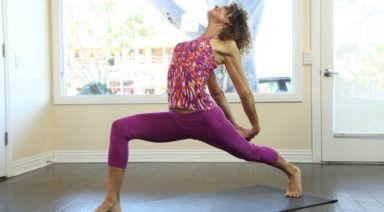
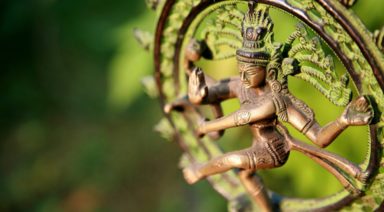
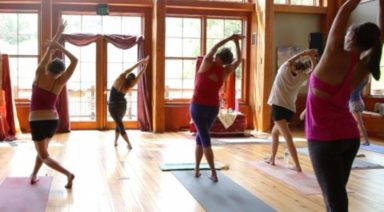
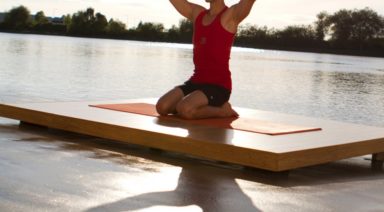
This practice is a pilgrimage to Natarajasana that alchemizes twisting and backbends to open the channels of the spine and create space in the body. Beginning with an energizing kriya, we employ the breath to heat and polish the body from the inside out. What follows is a series of progressive twisting namaskars to energize and open before diving into standing backbends. The practice will close with deep-seated hip openers to alleviate emotional congestion before releasing into final relaxation.
To support your self-practice, please refer to the pose breakdown below with links to photos and alignment for each posture or enjoy the complete guided sequence video.
About the Author

Earth: Reclaim Your Connection to Gaia thru Ritual & Reverence

The natural environment is not only our home, but the foundation of our physical structure. Connection to nature has traditionally encompassed a physical relationship and rested on the assumption of spiritual connection. As the western world developed, belief of a spiritual connection with nature began to lose favor in lieu of a new mechanistic worldview. The scientific revolution, at the forefront of this change, contended that the natural world was something that could be quantifiably measured and dominated. However, as scientific understanding of the phenomenal world evolves, science itself may exemplify the value of ancient teachings. This article explores the history of our relationship with nature and how the natural world is in fact deeply connected to our body and being. It concludes with a ritual of the senses, designed to take you deep into the intelligence of nature and in so doing, deep into the wisdom of Self.