Mandukasana: Frog Pose
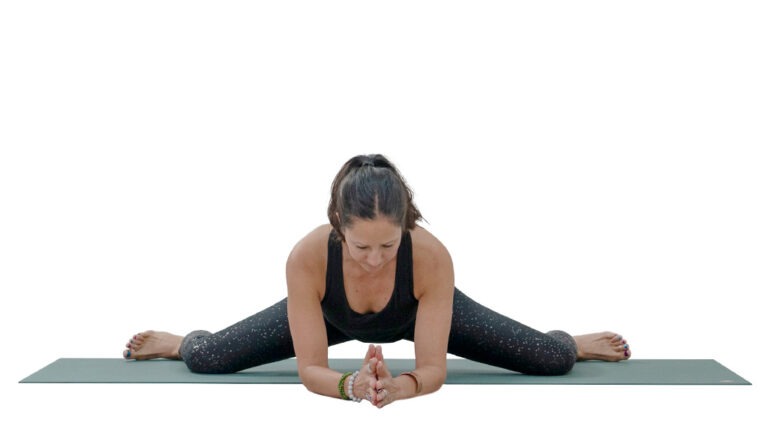
Mandukasana (man-doo-KAHS-ah-nah) is a simple yet intense pose that brings length to the spine and deep stretches to the inner thighs and groins. This pose is best for warmed-up hips, and healthy knees and low backs.
SANSKRIT:
- Mandu = frog
- Asana = pose
PHYSICAL BENEFITS:
- Stretches the inner hips and groins.
- Encourages length in the spine.
- Strengthens the back muscles.
PREPARATORY POSES:
- Child’s pose | Balasana
- Wide-legged forward fold | Prasarita padottanasan
- Bound angle pose | Baddha konasana
SEQUENTIAL POSES:
- Garland pose | Malasana
- Bound garland | Baddha malasana
- Crow pose | Bakasana
COUNTER POSES:
- Cow face pose | Gomukhasana
- Supine twist | Jathara parivartanasana
ADJUSTMENTS/MODIFICATIONS:
- Use a pillow or folded blanket under your knees.
- Place a bolster under your torso for additional support.
STEP-BY-STEP:
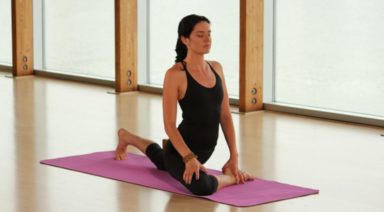
- Begin in a table top shape facing the long edge of your mat.
- Walk your knees out wider than your hips. Flex your feet so your toes face outward and your heels are directly behind your knees.
- Option to place additional padding (e.g. blanket) under your knees or walk your knees closer together.
- Walk your hands forward a little or a lot. If you have room, place your forearms on a block or on the ground.
- Reach the crown of your head forward and your tailbone back. Keep your hips in the same plane as your knees (if you saw yourself from the side, knees would look like they’re under your hips).
- Lift your belly away from the ground.
- Hold for up to two minutes, then gently release to child’s pose.
###Legal Disclaimer Before participating in any exercise program or using any fitness products or services that may be described and/or made accessible in or through the Gaia Website and/or the Services, you should consult with a physician or other healthcare provider. Read more about Gaia’s Terms Of Use.
About the Author

Ardha Hanumanasana: Half Front Splits Pose
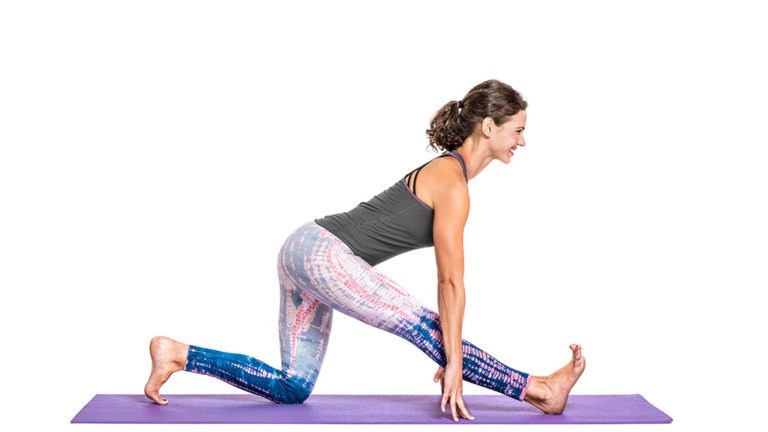
ADJUSTMENTS | BENEFITS | SEQUENCING | SANSKRIT | STEPS
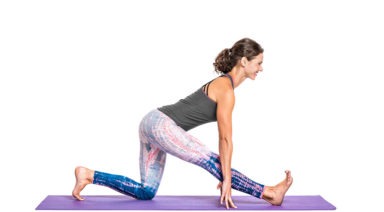
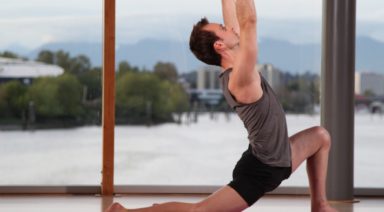
Ardha hanumanasana (are-dah hah-new-mahn-AHS-ah-nah) is a big stretch for hamstrings. This pose is more approachable than full hanumanasana and strengthens the muscles needed to practice front splits safely with the correct muscles properly engaged.
Philosophy + Origin
One of the main characters of the Ramayana is Hanuman, the famous monkey god, devotee of Lord Rama, and son of Vayu (the god of wind). He is celebrated in the pose hanumanasana, which physically represents his famous “leap of faith,” taking him across the ocean from India to Sri Lanka. Ardha hanumanasana, the preparatory pose for hanumanasana, can represent the stability and strength needed to make grand, world-changing (or life-changing) gestures. Rather than only focusing on gaining flexibility, practice ardha hanumanasana to create a healthy balance of flexibility and strength. When practicing ardha hanumanasana, remind yourself of the dangers of only being flexible in life; in order to really get where you want to go, you must also be strong and stable.