Newly Released Report Details The Military’s Encounter With a UFO
A 13-page government report detailing encounters between F/A-18 fighter pilots and a UFO has been released to the public, after it was first reported by the New York Times in December. The documents contain first-hand accounts from the pilots, including their descriptions of the object’s anomalous movements and “cloaked” appearance.
During an intense training mission about 60 miles off the coast of San Diego in 2004, the USS Nimitz and USS Princeton detected multiple Anomalous Aerial Vehicles, or AAVs, that were unable to be tracked with traditional radar.
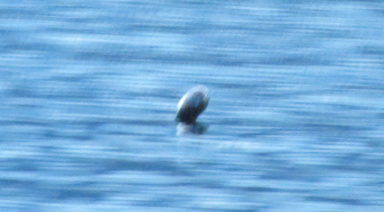
One of the crafts is described as “solid white, smooth with no edges… uniformly colored with no nacelles, pylons, or wings,” or what has come to be described as a “Tic Tac” shape. The object was also depicted as an elongated egg with a discernible midline horizontal axis, which allowed the pilots to distinguish its orientation.
The report, which comes from the investigations of George Knapp and the I-team, goes on to detail the account of Cmdr. Dave Fravor, and his experience approaching the AAV. Fravor was asked to abandon his training exercise to inspect a radar anomaly picked up by the USS Princeton about 30 miles from where he was training.
When he reached the destination, he glanced down to see an unidentified craft hovering above the ocean, creating a disturbance as if something were jutting out of the water. The craft moved around the area in sharp vectors, appearing to be inspecting something in the ocean.
Fravor and the other pilot attempted to lock on to the target using their radar systems, though they were unsuccessful with traditional methods. The report says, “it seemed the radar just couldn’t hack it.” Instead, they tried to use a “helmet lock” that employed the pilots line of sight to track an object – a method not normally practical, due to their constant head movement.
Fravor began a slow descent to further examine the object, before it “recognized” him and began mirroring his movements. He said the disturbance on the water ceased as the craft began to ascend in the opposite direction he took, until he decided to cross over and cut off it’s path.
At this point, he says the AAV took off like nothing he had ever seen. The craft also showed no signs of traditional propulsion, emitting no smoke or exhaust as it accelerated at supersonic speed. The AAV was reported to be roughly 45 feet in length.
Fravor quickly called back to the USS Princeton asking if their radar had picked up on the object. They were told, “you’re not going to believe this, but it’s at your CAP.” This was their rendezvous point 24,000 feet up.
But the AAV disappeared and the pilots returned to the ship, reporting a feeling of confusion as to what they encountered, though they felt normal physiologically and psychologically.
Perhaps the most bizarre aspect about the encounter was that the USS Princeton’s AN/SPY-1 radar system is capable of tracking golf ball-sized targets within a 100-mile radius, yet the report says it had difficulty tracking the AAV. The radar system would pick it up again three times throughout the week, though it would continually drop it, considering it a false target. Had the radar been configured to a Ballistic Missile tracking mode, it may have had greater success, though it’s hard to tell.
This is partially what led those involved to believe the craft had some type of cloaking technology, as well as the fact that it was purportedly capable of making itself invisible to the human eye.
The report also implies the object was capable of underwater travel while remaining completely undetected by our most advanced radar systems, including those equipped by submarines in the area.
After the incident occurred, it was reported that the pilot’s shipmates ridiculed them over the next few days in response to what they claimed to have seen. Others have dismissed the encounter as being the product of unknown natural phenomena, yet to be explained.
Meanwhile, Fravor seems to be in the camp that believes what he witnessed was nothing natural. Luis Elizondo, the former head of the clandestine Pentagon program that studied UFOs, says he believes this is evidence we might not be alone.
About the Author

Avi Loeb's Galileo Project to Use Satellites to Scan Earth for UFOs

The search for UFOs usually has us looking out into the depths of space, but what if we flipped it around and looked towards the Earth from space? Can we find UFOs from above?
An attempt to search for UFOs by pointing satellites at Earth; that’s the idea in Harvard professor Avi Loeb’s latest article for The Hill.
Loeb, also the author of “extraterrestrial: The First Sign of Intelligent Life Beyond Earth,” and founder of the Galileo Project, explains,
“We are planning to use satellite data and potentially look at unidentified objects from above. Of course, the advantage of that is we can cover the entire Earth, if we put telescopes on the ground, we need to put a lot of them to cover the same area. The goal is to establish the reality of objects, first of all, from both directions; from above using satellite data, and from below using telescope systems, and one would guide the other. So, if we see regions of activity we can put our telescope systems there. If our telescope systems see something of interest, we can monitor what that thing does from satellite data. So, I think it’s an extremely powerful method of verifying and guiding the inquiry to the nature of unidentified aerial phenomena.
Founded in the summer of 2021, the goal of the Galileo Project is to bring the search for extraterrestrial technological signatures into the mainstream. What is the next step when we find something?
“The Galileo Project has two branches: one is to figure out the nature of any object near Earth. We plan to pursue that by using ground-based telescopes that we build, but also satellite data from Planet Labs, for example.