Mediumship Development: How to Connect with the Other Side

As a Spiritual Medium, I spend most days with one foot in reality and the other in what many would term “the other side.” I connect people with loved ones who have transitioned, their spirit guides, and their own soul to bring peace and clarity about their personal life lessons.
It is far from a conventional career, but I’d like to think that this is changing. As our religious ideals soften and we continue to tap into our inner being, we help to lift the veil between the physical and non-physical. The recent trends in yoga, meditation and new age spirituality are encouraging people to go within and tap into their own divine identity and intuition. TV shows about mediums are quickly reaching millions across the globe and causing people to ask, “Is mediumship real?”
Let’s start by defining it.
Mediumship is the ability to connect and communicate with the departed and the metaphysical realm using the energy that is felt beyond the five physical senses.
The Nature of Psychic Abilities
Perhaps it is most helpful if we discuss the nature of psychic abilities for it is within these that mediumship abilities are derived. We all have some psychic intution . It’s a survival tool. We’ve all had times in our lives when we clearly “know” something in our gut. Have you ever experienced having an immediate connection with someone when you first meet? Or have you ever just known when someone was lying to you? These unexplainable inclinations are a part of the psychic realm and the metaphysical connection; the energy between things that we don’t experience with the first five senses.
The truth is, everyone has some psychic ability but we’re just not accustomed to using it.
And in some, like with any skill, it’s more developed than with others.
Mediumship Misconceptions
I came into the world quite psychic. I wasn’t raised with any religious influence but by the time I was 4 I had gathered enough vocabulary to talk about God, the angels, why I came to earth and why I chose my parents in this life. I saw things that others weren’t seeing so as a child I learned quite quickly to cut off my intuitive sight. Fear promptly capped these abilities until later in life as an adult when I decided to open them up again, but it didn’t happen over night. I had to get over a lot of fears, doubts and misconceptions about developing mediumship abilities and what it meant to communicate with “the dead.”
People have been taught to fear the ethereal, mostly because we don’t completely understand it and partly because so many religions have taught that it was evil. By changing our perspective about “the other side” and simply considering our eternal nature, we inadvertently open ourselves up to link the bridge between heaven and earth Like anything in life, moving past fear enables us to discover new aptitudes and reach higher levels of consciousness.
As we detach from old societal paradigms, and welcome new ways of seeing our “reality,” it creates space for us to connect with the ethereal.
Because of our collective shift in consciousness, many are becoming more sensitive to receiving messages from the other side. I can’t tell you how many times a client’s suspicions of their loved ones visiting them in the physical have been confirmed. Usually if you feel like they may be visiting you, they indeed are.
I may not be able to give you the scientific expertise that you might be looking for, but I have witnessed the incredible shifts that take place within my clients by communicating with loved ones who have passed over. I have seen the light in their eyes as their beloved offers irrefutable confirmation that it’s them. We’ve had gut busting laughs over the departed’s new-found perspective and take on things from the other side.
I’ve seen incredible weights lifted from clients leading to profound change in their own lives after making peace with a family dynamic by communicating with a loved one has passed.
Even if mediumship wasn’t real, doesn’t it feel better to think that someday we’ll be reconnected to those who have passed? Doesn’t it bring comfort to think that they are at peace and relieved of their suffering? Opening yourselves up to this idea stimulates the feelings of being connected energetically and eternally, and the profound lesson that love has no walls.
We often need our own experience to really know something. So are mediumship abilities real? I encourage you to test the waters with these simple exercises. Acknowledge your ability to receive, recognize your connection to all things, and express gratitude when you do get intuitive “hits.”
Mediumship Development: How to Access the Other Side
Here are some ways to begin to open your intuition and bridge the gap between the physical and non-physical:
Meditate
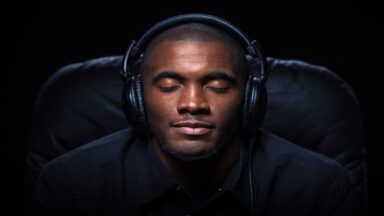
Meditation is the quickest route to strengthening your intuition because it is from this place that all messages come through. You don’t have to be a yogi or guru to meditate. Simply finding quiet solitude through intentional breathing, a guided meditation or even a moving meditation like yoga or waking in nature helps to open your pathways to your intuitive communication.
Relax and Enjoy the Present
Find time to relax and enjoy the present moment. When we’re busy with our thoughts and continually responding to the physical conditions, it’s hard for us to receive information. When we can slow down the pace, when we are not chasing after things, we are more present, awake and aware. We are also more able to meet the vibration of the other side, which is based in love, peace and gentleness.
Release Sorrow
Release sorrow and the misconception, that they are “dead.” From my experience I have witnessed them being them more alive, rejuvenated and vibrant than ever before.
Our perception that they are unattainable blocks our ability to receive their messages. There are many ways they can come in to communicate with us and we can open the doorways by recognizing their eternal self and our infinite connection. We often think we have to hold sorrow in order to honor them, but this can keep us blocked from feeling them. By feeling the eternal love we share, we create more space for us to feel their presence.
Honor Signs
Honor the signs you receive. Pay attention to your dreams, they often visit us this way because we’re in a state of utter relaxation and receiving. Don’t bat these experiences away. They can even reach us through the physical. Pick a sign for you and your loved one to share, maybe a symbol or a word, and watch to see how quickly it can appear. You will be surprised of the ways they can reach you if you open up your heart and have fun with the process.
Create Connection, Find Soul
Creating this connection is easier than you think. After all, we are more soul than anything. We tend to be so focused on the physical. It just takes a little redirection in noticing the infinite ways that life is woven together, the perfect ways solutions are provided, and the seemingly coincidental ways you meet people at the right time. Have you noticed that when you look on back at life, it all makes mores sense? That there always seems to have been a reason for the events that have taken place even if you didn’t se it at the time? It doesn’t hurt to believe that things are working out for you and that somehow this beautiful tapestry of life is woven together through and with love.
If you are curious about the afterlife, there are plenty of books out there on past lives. There are confirmed studies of children remembering their previous lives and personal accounts of mediumship that are soul rocking. The studies are endless, but it has to resonate with you.
About the Author

Dowsing: What It Is, How It Works, and What It’s Used For

Dowsing is a technique that allows one to detect vibrations or subtle fields present in people, objects, and places. It relies on the natural human ability to perceive energetic frequencies that escape the physical senses but can influence our well-being and our environment.
In this article, we explore what dowsing is, how it works, and how it can help us understand the relationship between mind, energy, and matter.
Table of Contents
- What Is Dowsing?
- Brief History and Evolution of Dowsing
- How Dowsing Works and What Energy It Detects
- Uri Geller and His Relationship With Dowsing
- Tools Used in Dowsing
- Applications of Dowsing in Everyday Life
- Everything Is Energy: Understanding the Basis of Dowsing
What Is Dowsing?
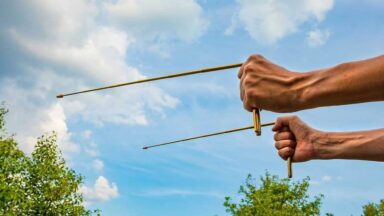
Dowsing is based on the idea that everything in the universe emits a vibrational frequency that can be perceived by the human body. Using tools like pendulums or rods, it is possible to translate this energetic information into physical movements that reveal data about the state of a person, a space, or a situation. This technique starts from the principle that we are sensitive receivers of subtle fields and that this perception can be trained for practical or introspective purposes.
The body acts as a bridge between the visible and the invisible: when it is in a receptive state, it can register signals that bypass logical reasoning and instead reach us through intuition. The movements generated in dowsing tools—such as spins, oscillations, or vibrations—are not caused by the object itself, but by an interaction between the energetic field of what is being consulted and the sensitivity of the dowser.
In addition to its use in the search for water, minerals, or lost objects, dowsing is also used to explore emotional, physical, or spiritual aspects of a person. It serves as a gateway to a more subtle dimension of reality, where mind, energy, and consciousness intertwine in a deep dialogue.
Brief History and Evolution of Dowsing
The use of dowsing dates back to ancient civilizations that used rods or Y-shaped branches to locate underground water or minerals. In cultures such as the Chinese, Egyptian, or Roman, it was acknowledged that the Earth emitted energetic currents that could influence people’s well-being and the harmony of spaces. Over time, this practice took on different approaches depending on the spiritual and scientific traditions of each era.
During the 19th and 20th centuries, dowsing began to be systematized and studied as an energetic discipline. More precise instruments were developed, such as the dowsing pendulum and vibrational measurement scales, which allowed the technique to be applied in fields as diverse as health, geobiology, and the exploration of natural resources. Today, it continues to be used as a complementary tool to explore the relationship between energy, consciousness, and matter.

How Dowsing Works and What Energy It Detects
Dowsing works through the interaction between the energetic field of the environment and the sensitivity of the dowser. When a person enters a relaxed state of attention and holds a tool such as a pendulum or a rod, their body acts as an amplifier that responds to subtle stimuli. The movements produced in the instruments are not random; they reflect an unconscious response that can be interpreted as “yes,” “no,” or as a direction to follow.
The energy detected in dowsing corresponds to vibrations present in everything that exists. These may be related to a person’s vital state, the geobiological energy of a piece of land, the vibrational quality of food, or even emotional imprints that persist in a space. The technique helps identify variations in these fields, aiding in more balanced and aligned decision-making.
The key to how dowsing works lies in its ability to translate the invisible into observable signals. It is not a form of divination, but rather an energetic reading based on a fundamental principle: everything is made of energy, and it is possible to tune into it by training perception and using the right tools.
Uri Geller and His Relationship With Dowsing
Uri Geller, world-renowned for his psychic abilities and telekinetic phenomena, also explored dowsing as a way to understand the energetic field that surrounds us. In the series Uri Geller’s Legacy of Paranormal Experiences, available on Gaia, his experiences with this practice are explored in depth—from its use in the search for deposits to its role in his spiritual transformation.
In the episode From Dowsing to Spirituality, Geller reveals how this technique was key to opening new dimensions of perception in his life.
Tools Used in Dowsing
Although energetic perception can be developed without instruments, many people use tools that amplify and translate subtle impulses into physical signals. These tools hold no inherent power but function as extensions of the operator’s field of consciousness. Each one serves a specific purpose and can be adapted to different types of energetic inquiry.
- Dowsing pendulum: A small mass suspended by a thread or chain. It moves according to the energetic vibrations of the environment and provides simple answers (yes, no, maybe).
- L-shaped rods: Two metal rods bent at right angles. They are used to explore physical spaces and detect energetic alterations in a location, such as geopathic stress or underground currents.
- Y-shaped rod (or forked stick): Traditionally used to find underground water. The tip lowers when the operator approaches a source or flow.
- Aurameter: A rod with a spiral or sphere at the tip. It is used to measure the energetic field (aura) of people, animals, or objects.
- Biometer or Bovis scale: A numerical scale that measures the “energetic vitality” of something. It helps determine whether an energy is high, low, or neutral.
- Witnesses or energetic samples: Objects or photographs that represent what is being searched for. They help focus the search by acting as a point of connection with the target’s energy.
- Dowsing charts or bases: Templates with symbols or geometric shapes. These are placed under the pendulum to guide and refine responses.
Applications of Dowsing in Everyday Life
Dowsing is not only used in spiritual or therapeutic contexts, but also in practical aspects of daily life. Thanks to its ability to detect energetic imbalances, it is used as a tool for guidance, diagnosis, and harmonization at both a personal and environmental level.
- Energetic health: It can be used to identify blockages or imbalances in a person’s energetic field. This helps guide complementary healing practices.
- Food selection: Dowsing helps evaluate the vibrational charge of foods before consuming them, allowing for choices that are more aligned with physical well-being.
- Space harmonization: It is used to detect areas with dense energy in the home or workplace. Measures can then be applied to restore balance to the environment.
- Searching for objects or water: Traditionally, it has been used to find lost objects or underground water sources. The tool acts as a sensor that responds to energetic traces.
- Decision-making: Some people consult dowsing when choosing between important options. The pendulum, for example, may reflect which alternative is more aligned with the person consulting.
- Evaluation of objects or crystals: Dowsing allows the energy of amulets, crystals, or ancient objects to be measured, helping determine whether their frequency is beneficial or needs cleansing.
Everything Is Energy: Understanding the Basis of Dowsing
The foundation of dowsing lies in a fundamental understanding of the universe: everything is made of energy. Beyond visible matter, every being, object, and place emits a unique frequency that can be perceived by those who refine their sensitivity. This energy is not mystical or exclusive to spirituality; it is part of the invisible fabric that sustains physical reality.
When a person trains their ability to perceive these subtle fields, they can access a deeper dimension of the world around them. Dowsing is a tool that facilitates this access, acting as a translator between the energetic and the tangible. By detecting vibrations, it allows for more conscious decision-making, the harmonization of environments, and a deeper understanding of the connections between body, mind, and surroundings.
In the series Superhuman: The Invisible Made Visible, available on Gaia, cases and experiments are presented that demonstrate the power of the mind to interact with energy. Through scientific research and real-life experiences, the series offers a fascinating look at our perceptual abilities and how they can be trained to expand our understanding of reality.