The Dogon Tribe’s Sirius Mystery & Otherworldly Origins
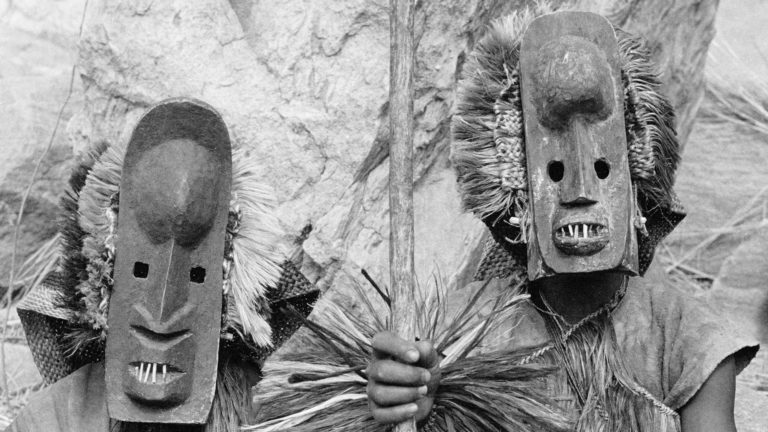
The Dogon, an ancient West African tribe residing in Mali, possess a cosmology that includes surprisingly precise knowledge of the Sirius star system. This has given rise to the “Sirius mystery,” a debate about how a secluded, primitive culture could know about celestial bodies invisible to the naked eye and astronomical phenomena discovered only in recent history.
Table of Contents
- The Mystery of Sirius B and C
- An Otherworldly Explanation: The Nommos
- Connections to Other Ancient Cultures
- Frequently Asked Questions about the Dogon
The Mystery of Sirius B and C
The Dogon’s knowledge, revealed to French anthropologists in the 1930s, includes details of the Sirius system that were unknown to modern science at the time:
- Sirius B: The Dogon knew about Sirius B, a white dwarf star, which was not officially confirmed by Western astronomers until the 1970s.
- 50-Year Orbit: They accurately described Sirius B’s 50-year elliptical orbit around Sirius A, the brightest star in the night sky.
- Sirius C: The Dogon also speak of a third star, Sirius C, an assertion that is currently unconfirmed by modern astronomy but has been speculated about.
The Dogon also had knowledge of Jupiter’s moons and Saturn’s rings and knew our location within the Milky Way Galaxy. Their artifacts, some over 400 years old, depict this astronomical understanding, challenging the notion that their knowledge came from a recent cultural exchange.
An Otherworldly Explanation: The Nommos
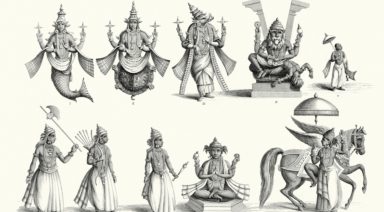
One of the most profound elements of Dogon lore is the story of the Nommos, an amphibious, extraterrestrial race from the Sirius system who are said to have imparted this celestial wisdom to the tribe’s ancestors more than 600 years ago.
- Non-Physical Beings: The Nommos were allegedly non-physical beings who appeared to only a small sect of the Dogon tribe to prevent the contact from being detrimental to their well-being.
- Transmission of Knowledge: The tribe’s advanced knowledge is passed down to new generations every 60 years during the Sigui, a celebration that marks Sirius’s cycle.
Connections to Other Ancient Cultures
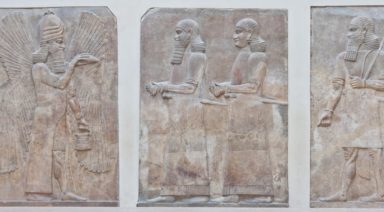
The story of amphibious, god-like beings is not unique to the Dogon. Similar figures appear in the mythologies of ancient civilizations, including Babylonia, Greece, and Slavic nations.
- Egyptian Connection: The most compelling link is to ancient Egypt. The Dogon’s language for describing the Sirius star system contains ancient Egyptian words that have not been used for centuries. Both cultures also shared similar civic structures, like the establishment of upper and lower kingdoms and a 360-day calendar.
- Mesopotamian Deity: The Mesopotamian deity Dagon or Dagan, a merman or fish god, shares a similar name and description with the Nommos of the Dogon tribe.
These parallels suggest a shared history of star knowledge passed down through generations, leaving open the question of whether our ancestors had help from elsewhere in our cosmic neighborhood.
Frequently Asked Questions (FAQ)
- Q: Do scientists believe the Dogon tribe was visited by aliens?
A: Mainstream science, including figures like Carl Sagan, generally dismisses the idea of extraterrestrial contact, suggesting instead that the Dogon’s knowledge was acquired through a cultural exchange with Europeans. However, some evidence, such as the 400-year-old artifacts, challenges this conventional view. - Q: What is the significance of Sirius in ancient cultures?
A: As the brightest star in the night sky, Sirius has been a central part of many ancient cultures. In ancient Egypt, Sirius was known as the “Nile Star” and its appearance heralded the annual flooding of the Nile, a crucial event for agriculture. - Q: Where can I learn more about ancient civilizations and their connection to the stars?
A: Gaia’s library features a wide range of content on ancient cultures, starseed origins, and the possibility of ancient astronauts. Explore our series and films to dive deeper into these fascinating topics.
About the Author

Bering Archipelago May Debunk Land Bridge Migration Theory

A controversial new study may rewrite the history books on how and when North America was first populated.
Historians and archeologists have tried for years to answer the question, “how did our ancient ancestors first populate North America?”
The most prevalent theory has been the Bering Land Bridge theory—that ice age migrants crossed an ancient landmass from Siberia to North America. But a new theory states that ice age migrants may have used a series of islands, The Bering Transitory Archipelago, to make the crossing and use these islands as stepping stones to get to North America. Using a method called retrospective sea-level mapping, scientists found evidence of an archipelago nearly 900 miles long that existed up to 30,000 years ago.
This theory could debunk the Bering Land Bridge theory, change our understanding of early human migration to North America, and shine a light on maritime technologies they may have possessed.