Explore more [topic] on Gaia

Mysteries of the Grand Canyon: Pyramids and Ancient Civilizations
Mysteries of the Grand Canyon: Pyramids and Ancient Civilizations

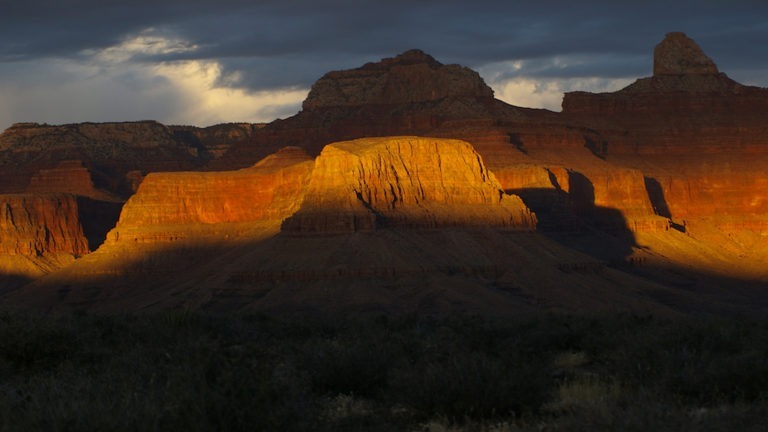
Below the Utah/New Mexico border, running along the Western edge of sprawling Navajo, Havasupai, and Hualapai reservations lands, the Colorado River has patiently carved a geological masterpiece — the Grand Canyon. Despite the extreme desert climate, native people have inhabited the region for centuries.

Dominating the landscape beyond the Rocky Mountains, the immense Colorado Plateau stretches 130,000 square miles from the Wyoming border to the North, the Arizona/Nevada border to the East, and beyond the Four Corners region along the Colorado/New Mexico border further East.

A thorough exploration of the region would take months — even years. The Grand Canyon alone could take weeks to explore, beyond requisite tourist attractions. The Havasupai people have lived in the canyon for at least 800-years, and have successfully fought for restoration of tribal lands taken by the federal government. A travertine dome near the confluence of the Colorado and Little Colorado rivers is believed to be the “sipapu,” or “place of emergence” by native people. This sacred formation is nameless, simply referred to as sipapu by indigenous people. Tribal leaders prefer to keep the location private.”

“Few locations on the planet can rival this amazing ‘great wound in the Earth,’ as it was described to Francisco Vasquez de Coronado by the Hopi in 1540,” said Christopher O’Brien, a journalist and investigator who has explored the canyon and its legends for years.

The first documented white man to “lay sight” on the confluence area in Marble Canyon was Seth Tanner, a Mormon pioneer married to a Hopi woman. While he had good relations with the Navajo and Hopi tribes in the region, when the Hopi learned he had seen the sacred site, they blinded him. His life was spared because of his Hopi wife, but he was told that if he spoke of what he saw, his tongue would be cut out.

Then there’s the astonishing geology — hoodoos, towering mesas, land bridges, and ancient “Vishnu” schist, the basement rock found on the canyon floor, 1.8 billion years old. But this isn’t the only example of geologic features with names from myth and exotic pantheons — there are also Brahma and Rama schists, Babylon Cave, Isis Temple, and the “Cheops” pyramid — a natural pyramid formed by long, slow erosion. Other pyramid formations bear names like “Apollo’s Temple,” “Buddha Cloister,” or the “Tabernacle.”

While some speculate that these commanding geologic formations were engineered by something other than nature, there is simply no indisputable proof. One theory is that these monoliths were built by an ancient civilization and over time, were buried in sediment. The Colorado River eventually washed away the sediment, revealing the ancient formations.
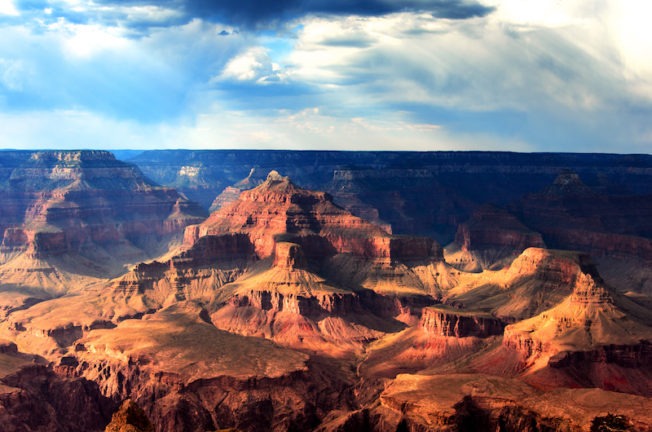
shadows and light in south rim grand canyon national park

Evidence of an Ancient Civilization in the Grand Canyon?

G.E. Kincaid, born in 1863 in the then-wilds of Idaho, was a hunter, explorer, and erstwhile archaeologist. For thirty years he had explored the West for the then-young Smithsonian Institute under Prof. S.A. Jordan, ostensibly employed by the institute. In 1909 he embarked on a journey down the Colorado River in 1909 in a wooden skiff — a less than ideal boat for navigating the river.

Starting from the Green River in Wyoming, Kincaid traveled down the Colorado “looking for mineral” like others exploring for gold in the main canyon and secondary tributaries such as the Little Colorado Canyon. He described when reaching Marble Canyon near the confluence of the Colorado and Little Colorado Rivers in 1908, an area where there were “stains in the sedimentary formation” roughly 2,000 feet above the riverbed. Geographers estimate that Kincaid was at about mile 56 of the river.

Treasure Cave?

Somehow Kincaid scaled the 2000 ft. with “great difficulty,” hauling his camera and glass plates with him. According to the April 9, 1909 Arizona Gazette, Kincaid discovered a cave entrance — upon entering, he discovered what was called “The most important archaeological find in North America.” Called an “underground citadel,” the cave was reportedly vast, with hundreds of chambers filled with mummies and artifacts that appeared to be Egyptian.
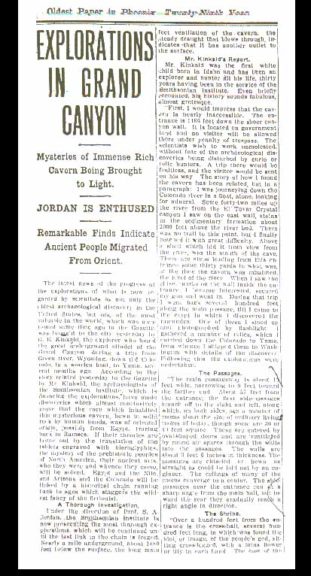
grandcanyonews

Arizona Gazette report of Kincaid’s discovery.

He described a “cross hall” with a buddha-like idol sitting cross-legged with a flower in each hand, carved out of the chamber walls. Additionally, Kincaid reported “vases or urns of copper and gold, enamelled and glazed vessels, granaries filled with seed, burial chambers filled with sarcophagi, and countless other wonders.

According to the story, Kincaid left the location and arrived in Yuma, AZ. Shortly after, the story was published in the Arizona Gazette. There are rumors of the Smithsonian sending a team of 30 to explore and document the amazing find — but no evidence remains. Shortly after, news stories regarding the discovery evaporated into silence.


When queried later, Smithsonian officials denied institutional relationships with Kincaid or Prof. S.A. Jordan. The site and its surroundings in Marble Canyon were reportedly acquired by the U.S. Government and declared “off limits” to visitors. A metaphorical door slammed on the entire topic.

But stories have persisted, and many claim to know the location of the entrance, called “Kincaid’s Door.” Theories and speculation about a coverup abound; just do a google search on “Grand Canyon Egyptian Artifacts,” or some variation — a search will return pages with assertions that the story is a hoax, that the story is true and that the cave was claimed by a secret society, or that the cave is home to reptilian humanoids as per David Icke. To explore the story, start with a segment of Regina Meredith’s “Open Minds” on Gaia — guest Jerry Wills shares details of Kincaid’s Grand Canyon discoveries.


The Story of Atlantis, the Lost City

The history of Atlantis, with its sophisticated society and its tragic disappearance, has been the subject of study and fascination for centuries. In the series Initiation, Matias De Stefano offers a detailed and in-depth look at the evolution and impact of this lost city. In this article we explore the origins, structure, beliefs and fall of Atlantis, based on the accounts and knowledge shared by Matias.

Table of Contents

The Origins of Atlantis

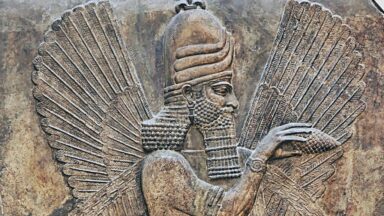
The story of Atlantis begins with the arrival of the Anunnaki, giant beings from the Middle East, who settled on Earth to help their species survive while their own planet was dying. These extraterrestrial beings had children with humans, creating a new civilization that would eventually become the Atlanteans. This mixing of races allowed the Atlanteans to inherit advanced knowledge and skills from the Anunnaki.

The Greek god Poseidon, known to the Atlanteans as Talyn, was one of these Anunnaki. Talyn protected and guided twelve of these mixed-race children, leading them from their isolated civilization in the Middle East to the Atlantic Ocean, away from the dominating influence of other Anunnaki. This established the twelve families of Atlantis, each charged with preserving and transmitting the star information they possessed.

The twelve families of Atlantis divided the main island into twelve small regions, each controlled by a family. These were not traditional rulers, but guardians of cosmic information. Through their connection to the stars, the Atlanteans developed a civilization that valued both spiritual knowledge and technological advancement.

The purpose of Atlantis was to be an experiment in human evolution, run by star beings such as the Arcturians and Pleiadians. These beings taught the Atlanteans to use sacred geometry and cosmic energies to build structures that were not only architecturally impressive, but also spiritually potent. These practices enabled the Atlanteans to achieve high levels of consciousness and wisdom.

In the series Initiation, available on Gaia, Matias De Stefano explores these origins in depth, revealing how ancestral knowledge and connection with beings from other dimensions shaped the advanced civilization of Atlantis.

The Structure of Atlantis

The structure of Atlantis stood out for its advanced organization and the integration of spiritual and technological principles in its urban and social design. The following are the most relevant aspects of this civilization:

  • Regional distribution: Atlantis was divided into twelve regions, each governed by one of the twelve families. These regions represented not only administrative divisions, but also areas of spiritual and technological responsibility.
  • Spiritual rule: The twelve families that ruled Atlantis were not monarchs in the traditional sense, but guardians of cosmic wisdom. Their leadership was based on spiritual knowledge and ethical guidance rather than authoritarian control.
  • Circular city: The capital of Atlantis was a circular city located on the main island. This layout reflected the harmony and balance that the Atlanteans sought in all aspects of their lives.
  • Resonance technology: The Atlanteans used vibration and sound technology for building and healing. This technology allowed the construction of pyramids and temples that acted as resonance points for communication and energy transfer over great distances.
  • Sacred geometry: Atlantean architecture incorporated principles of sacred geometry, using shapes and patterns such as the Flower of Life to align their structures with cosmic energies, facilitating meditation and spiritual connection.
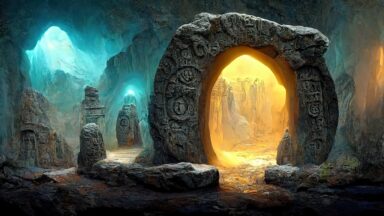
  • Portal network: Atlantis had a network of natural and artificial portals that allowed the connection with other dimensions and the transfer of cosmic information. This network was fundamental for its spiritual and technological evolution.
  • Wisdom centers: Temples in Atlantis served as places of knowledge and energy. They were designed to optimize energetic resonance, facilitating advanced spiritual practices and connection with cosmic forces.
  • Stellar influence: The knowledge and skills of the Atlanteans came from their interaction with beings from other worlds, such as the Arcturians and Pleiadians. This interaction profoundly shaped their culture, religion and technology, integrating cosmic knowledge into their daily lives.
  • Strategic expansion: During their heyday, the Atlanteans established settlements in key regions such as Egypt and the Mediterranean. These settlements not only expanded their territorial influence, but also allowed them access to important energy portals around the world.

Their Spiritual and Religious Beliefs

The spiritual beliefs of the Atlanteans were deeply rooted in an understanding of the connection between the cosmos and life on Earth. They believed that all divinities were different expressions of a single universal consciousness. This approach allowed the Atlanteans to see every aspect of nature and the cosmos as a divine manifestation. Natural elements such as water, fire, earth and air were considered sacred, and each had its own gods and guardian spirits. This worldview fostered a deep respect for nature and the interconnectedness of all life.

One of the pillars of Atlantean spiritual beliefs was the practice of sacred geometry. Atlanteans used specific shapes and patterns, such as the Flower of Life, to align their structures with cosmic energies. They believed that these geometric shapes were the key to understanding and manipulating the energies of the universe. Temples and other important buildings were built according to these principles, allowing the Atlanteans to create spaces that facilitated meditation and spiritual connection.

Atlantean rituals and ceremonies were designed to maintain balance and harmony at both the individual and collective levels. They used vibration and sound to heal and elevate their consciousness, integrating practices such as chanting and harmonic resonance. These ceremonies not only strengthened the community, but also served as a means to align with cosmic forces and receive spiritual guidance. This holistic approach to spirituality allowed Atlanteans to live in harmony with the universe and foster continued spiritual growth.

The Heyday of the Atlantean Empire

At its peak, Atlantis had a population of approximately 300,000 people distributed in several villages along three main islands. This distribution reflected the advanced organization and planning of the Atlantean civilization.

The Atlantean empire reached its greatest expansion by establishing settlements in the Mediterranean and beyond. Following Earth’s energetic patterns, the Atlanteans founded colonies in regions such as Egypt, Asia Minor and the Middle East. These settlements not only extended their territorial influence, but also allowed them access to important energetic portals that strengthened their connection to cosmic energies. Atlantean expansion was both a territorial conquest and an effort to unify the planetary energies under their control.

Atlantean technology played a crucial role in their heyday. They used vibration and sound to build and heal, developing a network of pyramids and temples that functioned as resonance points. This network allowed the Atlanteans to communicate and transfer energy over great distances. In addition, this technology was used for cell regeneration and life extension, demonstrating their mastery over natural forces and their ability to manipulate physical reality.

The Atlantean system of government was based on wisdom and spiritual guidance. The twelve families that ruled Atlantis were not tyrants, but guardians of cosmic wisdom. Their leadership was focused on maintaining balance and harmony in society, using their knowledge of the stars and sacred geometry to guide the civilization toward sustainable and spiritually advanced development. This approach allowed Atlantis to flourish as a prosperous and balanced civilization, capable of integrating advanced technology with deep spirituality.

The Fall of Atlantis

The fall of Atlantis is one of the most tragic and fascinating stories of antiquity. The Atlantean civilization began to disintegrate during the Age of Scorpio. This period was marked by an abuse of the knowledge and technology possessed by the Atlanteans. The leaders of Atlantis, once guardians of cosmic wisdom, began to use their abilities to exert power and control over others, deviating from their spiritual and ethical principles.

This abuse of power led to a series of natural catastrophes that contributed to the destruction of Atlantis. The Atlanteans had developed advanced technologies that used frequencies and resonances for multiple purposes. However, these same technologies were employed for war and domination, resulting in devastating energy waves that caused the disappearance of entire cities and turned fertile regions into barren deserts.

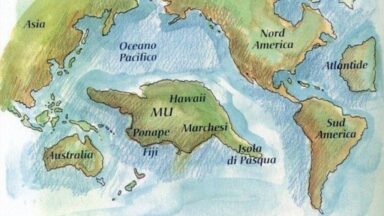
Internal tensions and conflicts with other civilizations also played a crucial role in the fall of Atlantis. The war with the civilization of Mu was especially destructive, leading to a series of battles that depleted Atlantean resources and morale. Finally, a combination of natural disasters and internal social collapse culminated in the complete destruction of the Atlantean civilization, with the main island sinking into the ocean in a single night of misfortune.

Khem: The New Atlantis

Khem, known as the new Atlantis, emerged after the collapse of the Atlantean civilization. This transition occurred during the Age of Virgo, when the remaining Atlanteans migrated and established new bases in Egypt and other regions of the Mediterranean. Khem inherited much of Atlantean knowledge and practices, including the use of sacred geometry and vibrational resonance in their constructions. The temples and pyramids of Egypt bear witness to this transfer of wisdom, which continued to influence the spiritual and technological development of the region.

The new civilization of Khem focused on maintaining and expanding Atlantean knowledge, adapting it to its new environment. This integration allowed Khem to flourish as a center of learning and spiritual evolution. Khem’s leaders, many of them descendants of the ancient Atlantean guardians, worked to preserve the harmony and balance that once characterized Atlantis. Thus, Khem became a bridge between the legacy of Atlantis and future civilizations, ensuring that the lessons learned would not be lost to time.

The Legacy of Atlantis

Despite its destruction, the legacy of Atlantis lives on in numerous cultures and traditions around the world. The teachings and technologies of the Atlanteans were carried to new lands by their survivors, influencing regions such as Egypt, Greece and Central America in their mythology, architecture and spiritual practices. These cultures reflect Atlantean knowledge of sacred geometry and cosmic alignment in their monuments and temples.

The spiritual impact of Atlantis is also evident in many religions and esoteric philosophies. The principles of connection to the cosmos, the importance of energetic alignment, and the use of vibration and sound for healing and evolution are concepts that have endured throughout the centuries. These teachings continue to inspire spiritual seekers and modern practitioners who seek to integrate these principles into their daily lives.

In addition, the story of Atlantis has been a catalyst for exploration and the search for lost civilizations. Archaeologists, historians and explorers have dedicated their lives to unearthing the remains of this ancient civilization, searching for evidence to corroborate the accounts of Plato and others. These efforts have led to numerous important discoveries that have enriched our understanding of ancient cultures and their connection to Atlantis.

The story of Atlantis continues to be a source of inspiration and reflection on human potential and our capabilities. It reminds us that while we can reach great heights of knowledge and technology, we must do so with a sense of responsibility and ethics. The legacy of Atlantis urges us to learn from its mistakes and use our abilities to create a more harmonious and balanced world, avoiding the paths that led to its downfall.

Read Article

Our unique blend of yoga, meditation, personal transformation, and alternative healing content is designed for those seeking to not just enhance their physical, spiritual, and intellectual capabilities, but to fuse them in the knowledge that the whole is always greater than the sum of its parts.


Use the same account and membership for TV, desktop, and all mobile devices. Plus you can download videos to your device to watch offline later.

devices en image
Monthly
$13 .99 /mo
BILLED MONTHLY
Select
First 7 days FREE
then $13.99 billed monthly, cancel anytime
Best Value Save %
Annual
$119 /yr
BILLED ANNUALLY
$9.92/mo
Select
First 7 days FREE
then $119 billed annually, cancel anytime
Gaia+
$299 /yr
BILLED ANNUALLY
$24.92/mo
Select
Includes Events & Guides
$299 billed annually, cancel anytime
All prices USD plus applicable tax
Testing message will be here