The 37th Parallel – A Line of Mystery and Significance

The 37th parallel is a circle of latitude that runs around the Earth at 37 degrees north or south of the equator. While it may seem like just another line on a map, the 37th parallel has gained an unusual reputation over the years.
Not only does it serve as a border between U.S. states, but it is also considered “America’s Paranormal Highway“—a hotspot for UFO sightings, cattle mutilations, and other unexplained phenomena. Additionally, the 37th parallel north plays a role in human health, geological activity, and historical significance.
This article explores the geographical location of the 37th parallel, its paranormal history, and other ways this latitude has left its mark on science and culture.
Where is the 37th Parallel Located on a Map?
Positioned at 37 degrees north of the equator, the 37th parallel is a significant circle of latitude that traverses various nations and states across the U.S.
U.S. States Along the 37th Parallel
In the United States, the 37th parallel serves as a boundary line for several states:
- Kansas and Oklahoma
- Colorado and New Mexico
- Utah and Arizona
- Missouri and Arkansas
This latitude stretches from the Chesapeake Bay on the East Coast to Santa Cruz, California, on the West Coast. Some notable landmarks near the 37th parallel include:
- The Pentagon & Washington, D.C.
- Mammoth Cave National Park (Kentucky)
- Los Alamos National Laboratory (New Mexico)
- Four Corners (where Colorado, Utah, Arizona, and New Mexico meet)
- Area 51 (Nevada)
- The Grand Canyon (Arizona)
Countries North of the 37th Parallel
The 37th parallel north crosses several countries, including:
- Spain (Granada, documented UFO sightings in 1976)
- Italy, Greece, and Turkey
- Iran and China
- South Korea and Japan (Fukushima, site of the 2011 earthquake and nuclear disaster)
Countries South of the 37th Parallel
In the Southern Hemisphere, the 37th parallel south runs through:
- Argentina and Chile
- Australia and New Zealand
The 37th Parallel and Paranormal Phenomena
The 37th parallel has been called “America’s Paranormal Highway” due to an unusually high number of UFO sightings, cattle mutilations, and other unexplained events.
UFO Sightings Along the 37th Parallel
- The Joplin Spook Light (also called the Tri-State Spook Light) has been observed since 1836 in Missouri and Oklahoma.
- In 1853, students at Burritt College in Tennessee reported stationary luminous objects that expanded and contracted in the night sky.
- The 1890s “Mystery Airships” were widely reported across Arkansas, Missouri, Texas, Kansas, and Kentucky.
- The 1947 Roswell incident in New Mexico remains one of the most famous UFO crashes in history.
- The 1948 Aztec, New Mexico UFO crash is another significant incident, reportedly involving a recovered alien craft.
- Dulce, New Mexico, near the southern borders of Utah, is home to rumors of a secret underground extraterrestrial base linked to government experiments.
- Nevada’s Area 51, which lies close to the 37th parallel, has long been associated with extraterrestrial technology and military secrecy.
Cattle Mutilations and Other Strange Events
Reports of cattle mutilations along the 37th parallel have been frequent since at least the 1970s. Ranchers have documented cases where:
- Genitals, eyes, and organs were removed with surgical precision.
- There was no blood left at the scene.
- Thousands of cattle were mysteriously killed, prompting an FBI investigation in 1975.
One of the earliest recorded cases dates back to 1894 in Kansas, and cattle mutilations remain a frequent occurrence in Missouri, Arkansas, New Mexico, Utah, and Colorado. Researcher Chuck Zukowski, who wrote The 37th Parallel: The Secret Truth Behind America’s UFO Highway, has spent decades tracking these incidents and was the first to identify the 37th parallel as a major anomaly zone.
La Llorona and the 37th Parallel
The legend of La Llorona (“The Weeping Woman”) is deeply tied to the southwestern United States and Mexico, particularly near Colorado and New Mexico, along the 37th parallel.
According to folklore:
- La Llorona is the ghost of a woman who drowned her children in a river and now wanders, crying for them.
- Sightings of La Llorona have occurred near the Rio Grande, San Luis Valley, and other locations along the 37th parallel.
- Some believe her presence is linked to UFO sightings and other unexplained lights.
Other Notable Effects of the 37th Parallel
The 37th Parallel and Vitamin D Deficiency
Scientific studies show that people living north of the 37th parallel are at a higher risk for multiple sclerosis (MS). This may be due to:
- Lower sunlight exposure, reducing vitamin D production.
- A higher prevalence of seasonal depression and autoimmune disorders.
Economic and Geological Significance
- In 2010, homes below the 37th parallel were more likely to be underwater in mortgage debt, suggesting possible economic patterns tied to latitude.
- The 37th parallel runs through multiple fault lines, increasing earthquake activity.
America’s Paranormal Highway: The 37th Parallel
The 37th parallel is more than just a geographic marker—it’s a line woven into history, legend, and unexplained events. From UFO sightings and paranormal hotspots to scientific and economic anomalies, this latitude continues to raise questions about our planet and beyond.
Famous figures like Ben Mezrich have explored these topics in books, while Chuck Zukowski’s research has brought the 37th parallel into mainstream extraterrestrial discussions. Anthony Sanchez, author of UFO Highway, has also contributed to the conversation, linking underground bases and government secrecy to the paranormal activity along this latitude. Even in New York, interest in UFO phenomena along the 37th parallel north has grown.
Is the 37th parallel truly a zone of heightened activity, or is it all just coincidence? The mystery remains open for debate.
About the Author

Discovery of 100 Black Holes in Milky Way Has Implications on Consciousness
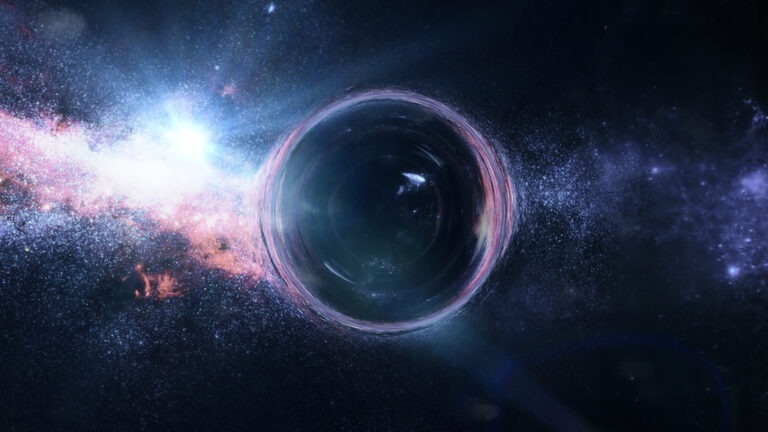
A stellar surprise has been found in hidden space: more than 100 black holes hiding in our own galaxy. What can we learn from this new find and what is the consciousness connection to this mystery of the galaxy?
Scientists were stunned to find more than 100 black holes hidden in the Milky Way, about three times the number of black holes thought to be in the area. NASA describes a black hole as a place in space where gravity pulls so much that even light cannot get out. The gravity is so small because matter has been squeezed into a tiny space. These black holes are hidden within a cluster of stars called Palomar 5, about 80,000 light-years from Earth.
Astronomer and Gaia News contributor Marc Dantonio weighed in on the significance of this discovery.
“They didn’t expect that there would be so many young stars that had blown up and become supernovae and then left these black holes behind, but there are,” he said. “So it means that at one point this was a very rich star cluster, very bright, and most likely visible from galaxies away.”