Healing with Sound, Frequency, and Vibration

Many associate illness and disease with prescriptions and interventions such as surgery. Allopathic medicine and science have traveled a narrow path built on chemical substances and sharp instruments rather than energy.
But the ancients recognized sound, vibration, and frequency as powerful forces that influence life all the way down to the cellular level. The gifted Greek philosopher Pythagoras prescribed music as medicine, asserting that the musical intervals he discovered are clear expressions of sacred geometry. He stated that music is the phenomena of numbers in time, reflecting the structures of nature, and has the power to restore balance in an organism.
Sound Healing Research
According to a study published by the National Institute of Health, “Music effectively reduces anxiety for medical and surgical patients and often reduces surgical and chronic pain. [Also,] Providing music to caregivers may be a strategy to improve empathy, compassion, and care.” In other words, music is not only good for patients; it’s good for those who care for them.
A 2010 Finnish study observed that stroke patients who were given access to music as cognitive therapy had improved recovery. Other research has shown that patients suffering from the loss of speech due to brain injury or stroke regain it more quickly by learning to sing before trying to speak. The phenomenon of music facilitating healing in the brain after a stroke is called the “Kenny Rogers Effect.”
For those struggling with addiction and substance dependencies, learning to play an instrument may play an important role in recovery. A study at the University of Wisconsin showed that exposure to the right music, tones, and frequencies produces dopamine, which is in short supply for the nervous system during the withdrawal process.
“If you want to find the secrets of the universe, think in terms of energy, frequency, and vibration.” —Nikola Tesla
Singing bowl bathing is gaining popularity as a method to reduce stress and anxiety and to promote well-being. Laying down with eyes closed, participants listen while different bowls are struck and toned by a practitioner.
Studies show that this practice, called “sound bathing,” directly reduces anxiety and depression; both are related to increases in disease. According to one study, “Sixty-two women and men with an average age of 50 reported significantly less tension, anger, fatigue, and depressed mood after sound sessions. Tibetan singing bowl meditation may be a feasible low-cost low technology intervention for reducing feelings of tension, anxiety, and depression, and increasing spiritual well-being.”
A study published in the Southern Medical Journal (2005) demonstrated the beneficial effects of music in hospital settings. Researchers reported that “For children and adults, music effectively reduces anxiety and improves mood for medical and surgical patients, and for patients in intensive care units.” Researchers also noted that ambient music increased empathy in caregivers without interfering with the technical aspects of treatment.
Can Sound Fight Cancer?
In 1981, biologist Helene Grimal partnered with composer Fabien Maman to study the relationship of sound waves to living cells. Maman was also an acupuncturist and had previously discovered that by using tuning forks and colored light on acupuncture points he could achieve equal and even greater results than he could with needles.
For 18 months, Grimal and Maman worked with the effects of 30-40 decibel sounds on human cells. With a camera mounted on a microscope, the researchers observed uterine cancer cells exposed to different acoustic instruments (guitar, gong, xylophone) as well as the human voice for 20-minute sessions.
Using the nine-note Ionian Scale (C-D-E-F-G-A-B-C-D), Grimal and Maman observed that when exposed to sound, cancer cells lost structural integrity until they exploded at the 14-minute mark. Far more dramatic was the sound of a human voice — the cells were destroyed at the nine-minute mark.
Next, Maman and Grimal worked with two women with breast cancer. For one month, the women devoted three-and-a-half hours a day to “toning,” or singing the scale. One woman’s tumor became undetectable, meaning it simply disappeared. The other woman underwent surgery. Her surgeon reported that her tumor had shrunk dramatically and “dried up.” It was removed and the woman had a complete recovery and remission.
Maman said, “Cancer cells cannot maintain their structure when specific sound wave frequencies attack the cytoplasmic and nuclear membranes. When the vibratory rate increases, the cells cannot adapt or stabilize themselves and die by disintegrating and exploding.”
Sound Healing Technology
According to a paper published on the Institute of Noetic Science website, “Since its development as a therapy in Australia over 40,000 years ago, sound healing has been used to aid in the treatment of mental and physical illnesses and injuries, as well as to assist in the dying process. Though originally performed using only the yidaki, or didgeridoo, sound healing now involves a wide array of instruments (tuning forks, crystal bowls, drums, ultrasonic devices) as well as human and animal vocalizations.”
One elegant piece of sound healing technology was the inspiration of alternative health practitioner Lilly Whitehawk. Combining her observations of the beneficial effects of specific sound frequencies with her knowledge of quantum physics and physiology, Whitehawk envisioned a healing tool combining ancient knowledge and modern technology. Confirming Maman’s findings, Whitehawk observed that the human voice is the most effective for sound healing, followed by singing bowls and tuning forks.
Partnering with a friend and client Larry Doochin, Whitehawk began the process of bringing her vision to life. “Larry had the faith in the project to go all in and help me make it happen,” she said. After working with a studio engineer, software, and hardware developers, the partners created the HUSO — a small box that delivers “uniquely enhanced human toning sounds” to the body via headphones and pads placed on acupuncture meridians.
Whitehawk believes that the body’s fascia, a network of fibrous tissue that wraps around organs and muscles, can carry toned frequencies throughout the body. The partners also discovered that digital recording technology eliminated essential subtle frequency ranges needed for optimal benefits and results, so they recorded in a “lossless” non-digital mode.
Their clients report improved general health and well-being, better sleep and mental focus, and enhanced performance. Parents of children with high sensitivity and ADD say that their children have better sleep and focus as well as enhanced self-regulation skills. “HUSO utilizes the scientific principles of resonance and entrainment to return an out-of-balance body system to health and harmony. It is non-invasive, safe, and effective,” Whitehawk said.
“The effect is similar to what happens when you experience authentic indigenous shamanic healing using sounds of chanting, toning, drums, rattles, whistles, flutes, and bells. You are hearing the sounds, but also feeling the vibrations from those sounds in your body. These are very powerful transformative experiences. I have seen miraculous things occur that modern science would say are impossible. Yet they happen… again and again,” Whitehawk said.
Sound, Frequency, and Pain Management
Medsonix, a publicly held company, manufactures a medical device that delivers low-frequency sound to increase blood flow and decrease inflammation and pain. Non-invasive and drug-free, the technology is used by health care providers for pain management.
Beginning at age 13, Donatella Moltisanti was plagued by excruciating menstrual pain leaving her bedridden for one full week out of each month. Things changed unexpectedly when Moltisanti began studying singing and music in her late teens. She noticed that she had less pain each month. Later she studied vocal techniques that brought additional healing to her body and could be of benefit to others. Over time, Moltisanti learned to combine her vocal gifts with a healing discipline that includes crystal and singing bowls.
Researchers at McGill University have established that music calms children visiting potentially frightening pediatric emergency rooms. Another study notes that patients who listened to soothing music experienced less pain during the insertion of intravenous (IV) tubing.
An article in “The British Journal of General Practice,” notes that music has a direct effect on pain levels. Responses to a questionnaire sent to a group of chronic pain patients showed that “Those who listened to music more frequently had a higher quality of life, suggesting that music can lessen chronic pain.”
The Future of Sound and Medicine
Quoting British physicist Colin McClare, Dr. Bruce Lipton said, “Information can be carried by chemistry, and information can be carried by vibration. The question is whether one is better than the other.” Lipton explains that chemical reactions transfer only about two percent of information — 98 percent dissipates as heat loss. Information transmitted by frequency and vibration (energy) passes nearly 100 percent of the information. Lipton added that chemical signals travel through fluids at a speed of about one foot per second; vibration, resonance, and frequency (sound) travel at 186,000 miles per second.
The visionary Rudolf Steiner said that “Pure tones will be used for healing before the end of the [20th] century.” Indeed, that has happened, but there is much work to be done in identifying how specific sound and energy frequencies affect the body in specific ways. But with the number of studies underway today, it should not be long before sound therapy technology is embraced by mainstream medicine as a powerful complementary therapy.
About the Author

Bach Flower Therapy: A Guide To Start Using It

Bach flower therapy is a natural system of emotional harmonization created from floral essences. It is used to treat imbalances such as fear, sadness, anxiety, or lack of confidence, without side effects. In this article, we explore what Bach flowers are, how they work on the emotional level, and how to start integrating them into your daily life.
Table of Contents
- What Are Bach Flowers And How Do They Work?
- What Are Bach Flowers Used For?
- The Origin Of The Flower System: Who Was Edward Bach
- The 38 Bach Flowers: A System To Balance Emotions
- How To Start Using Bach Flowers Consciously
- What’s The Difference Between Bach Flowers And Other Flower Essences?
- Can Bach Flowers Be Combined With Other Therapies?
What Are Bach Flowers And How Do They Work?
Bach flowers are natural essences extracted from wildflowers that work on an energetic level to balance emotional states. This system was created in the 1930s by British physician and homeopath Edward Bach, who sought a more holistic and accessible healing method for everyone. His approach is based on the idea that many physical illnesses have an emotional origin, and that by treating the internal cause, the healing of the body is encouraged.
Each flower essence acts as a subtle catalyst that helps dissolve blocked or overwhelming emotions, such as fear, anger, guilt, impatience, or hopelessness. Instead of suppressing these emotions, the flowers allow them to transform into positive qualities such as calmness, confidence, courage, or compassion. That is why it is said they do not fight the symptoms, but rather strengthen inner balance.
Floral therapy does not act on a biochemical level like conventional medicines, but instead operates in the energetic or vibrational field of the individual. For this reason, it is compatible with other treatments and can be used by people of all ages. By harmonizing emotional frequency, Bach flowers help reconnect with the body’s natural well-being.
What Are Bach Flowers Used For?
Bach flowers are used to support emotional processes, promote inner balance, and facilitate the transformation of limiting attitudes. Their application is very broad and can be adapted to different moments in life, both in people and animals.
- Stress management: They help reduce the impact of everyday emotional stress. They are useful in times of overload, pressure, or mental exhaustion.
- Anxiety relief: They help calm internal restlessness and repetitive thoughts. They are especially effective when there is nervousness or excessive anticipation.
- Grief processes: They support sadness and pain during significant losses. They promote a more loving and contained emotional adaptation.
- Improving self-esteem: They foster self-confidence and recognition of one’s own value. They can be helpful for people experiencing insecurity or excessive self-criticism.
- Major life changes: They provide support during transitions such as moving, breakups, motherhood, or new life stages. They offer clarity, stability, and emotional adjustment.
- Support for domestic animals: They are used to address behaviors related to fear, aggression, or hyperactivity. They are also useful when facing changes in home or absence of caregivers.
- Rescued or traumatized animals: They help release painful emotional memories and restore trust. They are a safe tool to support their emotional recovery.
The Origin Of The Flower System: Who Was Edward Bach
Edward Bach was a British physician who, after training in conventional medicine, began to take an interest in a more holistic view of the human being. His experience in bacteriology and immunology led him to understand that the emotional state of patients played a central role in the progression of their illnesses. This approach prompted him to research new forms of treatment that not only alleviated physical symptoms but also restored internal balance.
Through observing nature and his patients, Bach developed a system based on the idea that behind every ailment there is an emotion in imbalance. In his search, he identified 38 wildflowers with specific energetic properties for each emotional state, from fear and sadness to discouragement or indecision. His method consisted of working on the deep emotional cause to promote lasting healing.
The Bach flower system was conceived as a simple, safe, and accessible tool for everyone. He believed that each person could actively participate in their own healing process, without relying solely on medical treatments. His legacy remains alive today, and his essences are used worldwide as a way to reconnect with emotional harmony and inner wisdom.
The 38 Bach Flowers: A System To Balance Emotions
The Bach flower system is made up of 38 essences, each one associated with a specific emotional state. These emotions can range from fear, insecurity, or guilt, to impatience, sadness, or disconnection. By acting on the person’s energetic vibration, the flowers do not suppress what is felt, but rather encourage a more harmonious shift in perception.
The essences are organized into seven emotional groups: fear, uncertainty, lack of interest in the present, loneliness, hypersensitivity, discouragement, and excessive concern for others. This classification makes them easier to use and allows for a more intuitive selection depending on what someone is going through. Some of the most well-known flowers are Rescue Remedy (a blend of five essences for emergencies), Mimulus (for specific fears), and Larch (for lack of confidence).
Although they can be taken individually, it is common to combine several essences depending on the personal situation. The right selection allows subtle aspects of personality to be addressed and supports internal transformation processes. That’s why getting to know each flower and its function is an important step in making the most of the potential of the flower system.
How To Start Using Bach Flowers Consciously
Beginning a process with Bach flowers involves honestly observing what we are feeling. It is important to identify the main emotion we want to work on, as well as others that may be associated with it. Based on this self-observation, between one and seven flowers are selected, which can be combined in a personalized bottle.
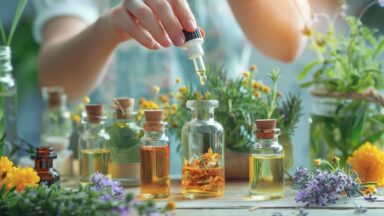
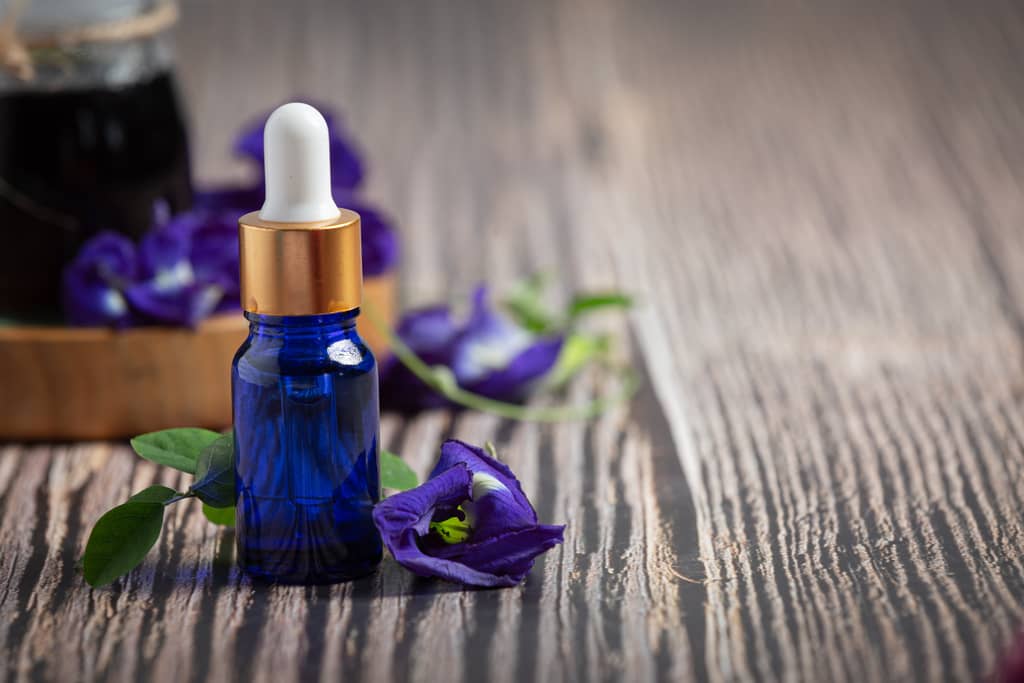
The essences are taken in drop form, usually diluted in water, several times a day. They can also be applied to the skin or added to baths. Although they have no side effects and do not cause dependence, their emotional impact can be profound if used with consistency and awareness.
In case of doubt, a flower therapist can be consulted to help choose the most appropriate essences. However, the system was designed so that anyone can use it safely. Listening to what we feel and choosing with intention is the first step for the flowers to act as allies on our path toward emotional balance.
What’s The Difference Between Bach Flowers And Other Flower Essences?
Bach flowers were the first flower essence system developed with a clear methodological and philosophical foundation. Its approach is focused on treating the emotional states that generate imbalances in the body and mind, and each of the 38 essences was researched by Edward Bach based on his clinical experience. The simplicity and accessibility of the system make it a daily-use tool for people of all ages.
Today, there are many other flower essence systems—such as those from California, Australia, or the Amazon—that broaden the emotional or spiritual spectrum they can address. Although all of them work on the energetic field, they differ in their preparation methods, classifications, and goals. Bach flowers, however, remain one of the most widely used and studied vibrational therapies in the world.
Can Bach Flowers Be Combined With Other Therapies?
Yes, Bach flowers can be complemented with other therapies without causing interference. Since they do not contain active chemical ingredients, they do not interact with medications or conventional medical treatments. They also do not negatively affect therapies such as homeopathy, acupuncture, or psychological approaches.
This versatility makes it possible to integrate the flowers into broader therapeutic processes, adding an emotional dimension that is often left out of traditional clinical approaches. In addition, they can be an excellent support in times of crisis, personal transitions, or self-development. The key is to use them with clear intention and as part of a holistic view of well-being.