Legends and Secrets of the Cosmic Ouroboros
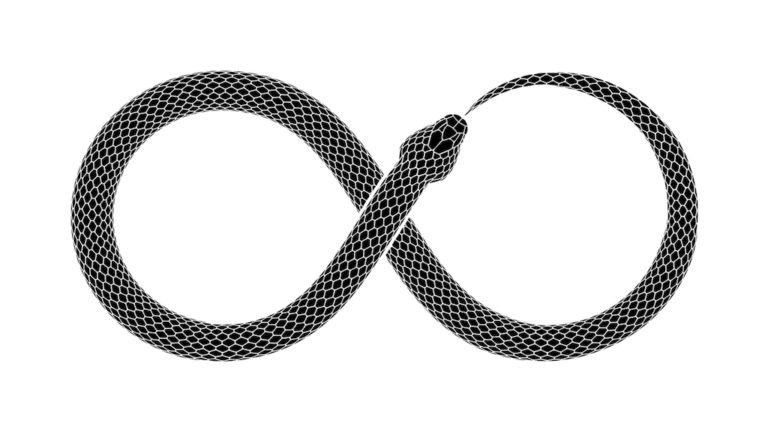
There are few creatures that evoke the range of emotions like the earthbound snake. Across ancient cultures and civilizations, snakes have been viewed as mystical, dangerous, repulsive, and ultimately one of the most fascinating beings in the animal world. However, there might be a deeply rooted reason for human’s fascination with this creature, one that is embedded in the oldest mythology known to humans: Ouroboros, or the one who devours itself.
Translated from the Greek, the word “ouroboros” means “tail devourer,” referring to the circular or figure-eight shape of a snake enveloping itself. One of the oldest mythological symbols known to humans, the ouroboros has been viewed as a symbol of the regenerative cycle of life, enlightenment, renewal, and infinity.
What is the significance of this mysterious and universal symbol, and how did it come to represent so much for so many civilizations?
EGYPT to GREECE to the GARDEN OF EDEN: The Ouroboros Origins
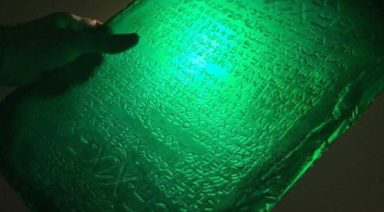
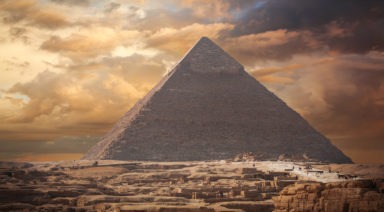
The ouroboros’ origin dates back to ancient Egypt as a symbol of the sun and the sun disk’s travels. Encrypted in the Enigmatic Book of the Netherworld, the engraved stone book found in King Tutankhamun’s tomb, the ouroboros is part of the story of Ra’s mythical journey in the underworld, and is one of the first instances of the symbol being depicted swallowing its tail. As described in the Egyptian Book of the Dead, the Ouroboros is connected to the creator god Atum, often described as being in the form of a water serpent.
From Egypt, the Ouroboros found its path to ancient Phoenicians and ancient Greece, where it is believed the symbol received its name as it is known today. Greek alchemists associated the ouroboros symbol with gold and the path of endless return, or the “One in All.”
In fact, Plato writes of the Ouroboros as being the first living creature in the universe, and that the self-swallowing being represents a completely self-contained system with no need for anything outside of itself.
From Plato’s interpretation, the Gnostics expanded on the theory that the Ouroboros represents the soul of the world.
For some it is the embodiment of evil; for others the reflection of knowledge, in the Judeo-Christian tradition, the Ouroboros, which we know as the serpent in the Garden of Eden, represents the external or human-bound world, or one that resides outside of “God.”
It can also be said that the snake, or ouroboros, can be attributed to what we now call “awareness,” in that after listening to the snake and eating from the Tree of Knowledge, Adam and Eve became aware of their nakedness, or innate humanity.
In the Hindu religion, Ouroboros is equated with Kundalini or the essential energy that resides, coiled in the base of the spine. According to the Upanishads, “the divine power, Kundalini, shines like the stem of a young lotus; like a snake, coiled round upon herself she holds her tail in her mouth and lies resting half asleep as the base of the body.” The Hindus are also among the religions that associates the Ouroboros with the divine feminine energy.
This connection to the feminine would also be mirrored in the Far Eastern interpretation of the Ouroboros with the concept of yin yang, the cosmological balance between light and dark, matter and energy, or the concept of duality. For the ancient Chinese and Japanese, duality represents opposites which form a divine unity, with each aspect being equal in such a creative and reproductive power, that a universe could emerge from the sacred union.
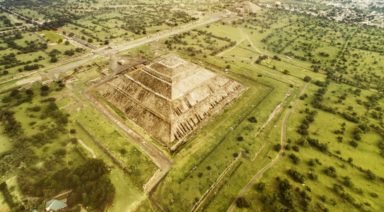
For other cultures, the Ouroboros symbolizes a strong male energy, such as in the Norse culture with Jormungand, the Midgard serpent and son of Loki and Angrboda, who resides in the ocean which encompasses the seen world. The ancient Aztecs portrayed their god, Quetzalcoatl as a serpent biting his own tail, as seen in the ruins such as the Pyramid of the Feathered Serpent.
Still other ancient cultures, such as the Mayan, believe that the Ouroboros is the embodiment of a cosmic and prophetic cycle, or a magnetic pole shift which has always impacted how humans communicate and perceive our world.
This cosmic belief runs parallel to the alchemical associations of the Ouroboros, as described in the ancient Greek text, Chrysopoeia of Cleopatra (unrelated to the Egyptian queen). In the alchemical world, the Ouroboros is a purifying symbol, preparing the path for release, liberation, and the unification of the conscious and unconscious realms.
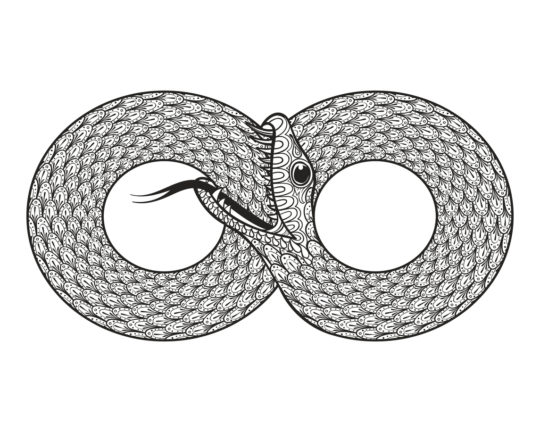
Not to be limited to terra firma, the ouroboros is also connected to the celestial realms, with mythological connections to the Milky Way, with the serpent shape representing the heavenly stars, as well as in scientific realms. Chemist August Kekule saw connections to the snake symbol in his discovery of the compound benzene. Exhausted by his efforts at studying the elusive atomic structure, he fell asleep and reportedly dreamt of the atoms working in unison to form into the shape of the Ouroboros, which inspired Kekule to persevere until he finally proved his benzene theory.
We can even see the existence of the Ouroboros in the art world. M.C. Escher’s famous “Drawing Hands,” often viewed as containing the essence of the circular serpent’s symbolism.
The Ouroboros is a symbol that defies time and civilizations; it would be difficult to find one that has touched so many ages and come to represent so many aspects of this and other worlds. Today, we can turn to this ancient icon as a way to find balance in our often fractured and disconnected world. From the night sky to the atomic structures that make up our universe, the Ouroboros continues to provide answers, as well as leads us into deeper meanings.
About the Author

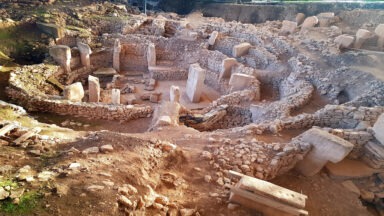
11 New Hills Discovered at Gobekli Tepe Megalithic Site
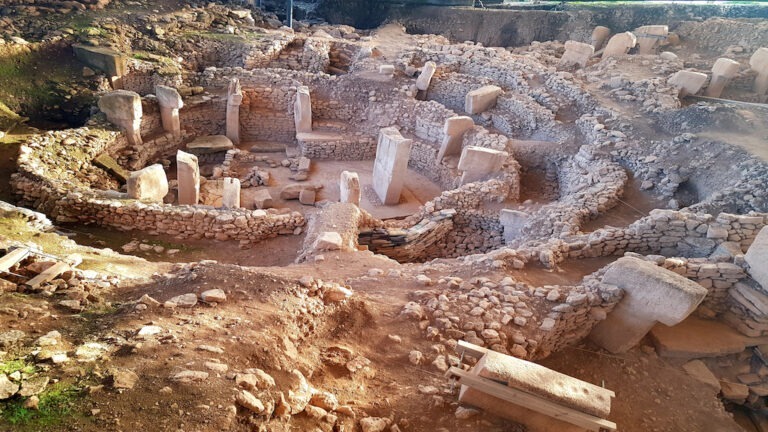
Turkey just made an announcement about a major archeological discovery at Gobekli Tepe. Could this finally shed light on who built the world’s oldest megalithic site, and why?
First unearthed in 1995, the 11,000-year-old excavation site at Gobekli Tepe has yielded the most significant collection of stone pillar monoliths ever discovered. While most archeologists agree that the structure is the world’s oldest temple, they have long-debated the origins and motivations of its builders. The recent findings of 11, possibly 12, new sites around Gobkeli Tepe may provide those answers.
Andrew Collins is an ancient history researcher who has written extensively about the site.
“Gobekli Tepe is in many ways the best evidence that we have of a lost civilization—a pre-Ice Age civilization that existed worldwide and was probably wiped out by very harsh conditions and possibly some kind of comet impact about 13,000 years ago, and that the sole remnants of this went on to create Gobekli Tepe,” Collins said.