What Is Kundalini Yoga?

There aren’t many things that retain their full potency when they are blended together. Ok, maybe Pert shampoo and conditioner. Maybe Simon and Garfunkel. Maybe cronuts, but that’s about it. In yoga, Kundalini is the exception.
Kundalini yoga is a blend of Bhakti yoga (the yogic practice of devotion and chanting), Raja yoga (the practice of mediation/mental and physical control) and Shakti yoga, (for the expression of power and energy).
A well-taught Kundalini yoga class leaves you feeling like you’ve gone to therapy, had an awesome workout in the gym, made it to your yoga mat and enjoyed a fun singing session with friends. The purpose of Kundalini yoga is to provide a modality by which people can achieve their maximum creative potential, free themselves from Karma (the lasting effects of past actions) and realize their life purpose. Experiencing a Kundalini awakening is like being given the secret code to always winning a blue ribbon, along with a get-out-of-jail-free card, at which point you gleefully fire your life coach because now you know more than he does.
Is That a Snake in Your Spine or Are You Just Glad to See Me?
To understand how Kundalini works you first have to understand that you have a snake in your spine. The Sanskrit word kundal means “circular,” and it can be a noun for a coiled snake. The feminine kundalī means a ring, bracelet, or coil of rope. This concept was adopted as kundalinī into Hatha yoga in the 15th century and, by the 16th century, was used in the Yoga Upanishads.
So the term Kundalini means “a spiritual energy or life force located at the base of the spine,” which is usually conceptualized as a coiled-up serpent.
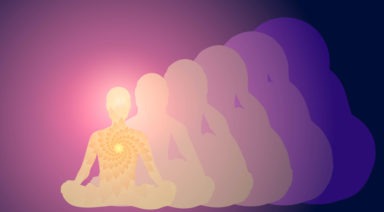
The practice of Kundalini yoga is supposed to arouse the sleeping Kundalini Shakti from its coiled base through the six chakras that reside along the spine, and through the seventh chakra, or crown. Chakras are wheels, or hubs of energy, along which energy or prana, travels like a superhighway to distribute energy throughout the body.
Like a snake being charmed out of a basket by a bansuri, Kundalini weaves and coils, waking up energy and clearing stagnancy along the way. Without the fangs.
These days Kundalini yoga is a synthesis of many traditions, and the kriyas and meditations in Kundalini Yoga are designed to raise complete body awareness to prepare the body, nervous system, and mind to handle the energy of Kundalini rising. Many of the physical postures are designed to activate the navel, spine, and focal points of pressurization on meridians (energy points). Through breath work (pranayama) and the application of yogic locks of energy (bandhas), the release, direction, and control of the flow of Kundalini energy is achieved.
The technique of alternate nostril breathing (left nostril, right nostril) which is described as a simple breathing technique, is one of these often-utilized techniques. When you’re dealing with a stuffed up nose, there’s nothing simple about breathing out of one nostril. Especially the one plugged up. I’ve found the simplicity comes through first attempting, then practicing. This type of breathwork is taught as a way to cleanse the nadis, or subtle channels and pathways, to help awaken Kundalini energy. Probably the last thing you want to do when you’re congested, but can be quite helpful!
On Wearing White in Kundalini Class
A traditional Kundalini yoga class, if photographed from above, would look like a sea of albino ants swarming a hill. It looks like your typical stereotype of a cult, but actually it’s the opposite. Kundalini yoga supports its practitioners wearing all white, so people come to classes in white head coverings, skirts, shirts, and flowing white pants. As Yogi Bhajan said, “Colors create an uncontrollable action in your subconscious mind of inspiration, productivity, and expansion. Colors have an effect on consciousness. We wanted to develop a very fast, progressive, spiritual, and technical method of all the colors, so we have adopted the one color of the seven colors, which is white.”
We in the west basically wouldn’t have any idea or access to Kundalini yoga if it weren’t for Yogi Bhajan.
Born Harbhajan Singh Khalsa, in Kot Harkan, India, to a Sikh medical doctor father, and a Catholic educated Hindu mother, his fairly wealthy family owned much of the property in their village and served as landlords. At that time, and the centuries prior, the practices and techniques of Kundalini yoga were passed down in a very secretive, elitist way from teacher to well-selected student. Yogi Bhajan received these teachings firsthand and mastered them by the age of 16 ½.
The exact origin of Kundalini yoga is unknown, but historical records, referred to as the Upanishads, a sacred Vedic collection of writings dating back to 1000 B. C., cited the science of Kundalini energy and spiritual philosophies. The expression of these was developed over time as a body science, now referred to as kriyas or actions. In other types of yogic practices, these may be referred to as asanas. The word Upanishads has a literal translation similar to that of the word asana: sitting down to hear the teachings of the master. The root of the word asana literally means to sit close to (the teacher).
In the late 1940s, the violent upheaval of India forced Harbhajan Singh Khalsa’s family to flee Punjab (what is now Pakistan) to New Delhi, and in the next number of years, he joined the Indian Civil Service and began working for the government. Yogi Bhajan was offered a position as a new yoga studies department at the University of Toronto in Canada where he emigrated in 1968.
When I took my first Kundalini Teacher Training, I admit that I knew the suggested dress code ahead of time. But of course, being the spiritual skeptic that I am, I showed up wearing black yoga pants, a gray tank top, and a black leather motorcycle jacket. I was slightly disappointed when I wasn’t asked to leave. In fact, I felt welcomed by my fellow teacher trainees and facilitators.
A number of years later, when I brought my boyfriend at the time to a Spring Equinox Kundalini class I forgot to tell him about the white clothing requirement. So, of course, he showed up in a bright electric green shirt, looking like a yoga skittle in a sea of white. As he was cringing and I was laughing, three-quarters of the class came up to him with huge smiles and said, “Oh, you’re new! Welcome!”
Unlike the dress code at the Four Seasons in New York, no one said anything, patronizing or otherwise, that may have suggested that what he was wearing was at all not on par. How could they, really, when their master teacher has been described (among many things) as, “a holy Sikh rebel”?
If rebels have the utmost discipline, then perhaps that description fits Yogi Bhajan. When his promised position at the University of Toronto fell through, he immediately began teaching yoga at local YMCAs, co-founded a yoga center, and helped to create eastern Canada’s first Sikh temple — all in 90 days.
After having a spiritual vision in his travels to Los Angeles, he knew clearly that what the western world needed was Kundalini yoga.
Kundalini: It Starts With Tuning In
Even if you’re not striving to be like Mr. Poirot, the Belgian private detective from an Agatha Christie novel, who doesn’t need a more neutral mind? Most of us take better care of our vehicles than we do our minds. By clearing and neutralizing our minds, we’re less susceptible to the five causes of unhappiness: Lust, Anger, Greed, Pride, and Attachments. And maybe we find we’re kinder to the cashier, to our fellow cars in traffic, and to our kids and family members, as well as to ourselves.
All Kundalini classes begin with what’s called “tuning in.” This is done with a chant, recited in a seated position, hands at heart center (rub palms together first), eyes closed: Ong Namo Guru Dev Namo
As Master Kundalini Yoga Teacher, Gurmukh from Hollywood, CA translates, “bowing to the truth within you; your relationship to your own destiny.”
Kundalini Kriyas (Practices)
- From a seated position, extend arms overhead and shake your arms, your entire upper body, your head. “Shake like you’re made of jello,” says Gurmukh. Like animals in the wild, this type of shaking is how fear, anxiety, and other emotions are moved through and out of the body. It’s also supporting great mobility in the spine. When we have a healthy spine, we have a healthy mind.
- Shoulder Stand, when done properly, the yogic masters say that 15 minutes of shoulder stand equals 2 hours of sleep.
- Seated in Rock Pose (shins tucked underneath), bring hands to shoulders, elbows out wide and with a tall spine, inhale and turn spine to the left, exhale and turn spine to the right. It’s like your spine is a vertical blade in the center of a blender. This is a great one to do every single day.
- Deep Squats, with hands at heart (you can rollover the yoga mat to slide under your heels if needed), spine long, bend your knees to drop your bottom towards the ground. Keep your head upright and inhale as you lower down, exhale to come up.
- Spinal Flexion, from a seated cross-legged position, this is the way your spine would move if you were riding a camel. Since we’re sorely lacking in camels these days, try moving your chest forward (head does not move), then back with your arms alongside you. For maximum health of your spine. This helps open your diaphragm, chest, and shoulders as well. Imagine you have a very bumpy ride. Or an uncoordinated camel.
Kundalini Mantra Meditation: Sa Ta Na Ma
This next one is a wonderful seated meditation using the mantra: SA TA NA MA
These sound currents represent the five primal sounds of the universe: Sa=infinity, Ta=life, Na=death or transformation, Ma=rebirth.
Seated in a cross-legged position, extend your arms out in front of you with the palms facing down, say or whisper “Sa.” Then move straight arms alongside ears with the palms facing in. Say or whisper “Ta.” Then move straight arms out to sides, palms facing down, with the middle fingers in line with your shoulders. Say or whisper “Na.” Then bring straight arms back down, say or whisper “Ma.” This particular blend of movement, chanting, and meditation is balancing your brain using your hands. It’s a great meditation to do when you wake up on the proverbial wrong side of the bed.
Learn more with Gurmukh’s Master Class.
Embracing the Kundalini Blender
Much like I imagine Prell’s efforts and countless attempts to find the best working combination of shampoo and conditioner, or determining the right ingredients to create the perfect Cronut, we’ve got to be willing to jostle our comfort zone if we want to change. No doubt, your first Kundalini Yoga class could be a very weird experience.
But in order to shed what’s no longer working for us, at some point we’ve got to be willing to embrace the blender.
In the words of Yogi Bhajan, “The process of growth through Kundalini Yoga is a natural unfolding of your own nature. The blocks to that growth are your attachments to the familiarity of the past, and your fear of the expanded Self. As you practice Kundalini Yoga you will grow. Like a snake, you will need to shed old skins to be more of who you are.”
About the Author

What Happens During a Kundalini Awakening? Stages, Signs, & Symptoms

Kundalini is an ancient concept that originated in India’s early yogic and tantric traditions thousands of years ago. It’s often described as a powerful life force energy. Kundalini represents the potential for spiritual awakening and transformation that exists within every person. Within the teachings of yoga, the rise of Kundalini is viewed as both a sacred and transformative process that unites body, mind, and spirit.
For centuries, yogis, seekers, and mystics have written about the profound changes that accompany the kundalini experience. Many describe it as an unfolding of inner energy that brings clarity, creativity, and deep spiritual connection, often cultivated through dedicated yoga practice and mindful living. This awakening can also bring old emotions or patterns to the surface for healing, sometimes even those carried from past lives. The experience is both illuminating and intense, guiding the individual toward greater self-awareness, harmony, and spiritual growth.
As we explore this mystical experience more closely, it helps to understand what Kundalini truly is and how it moves through the body to awaken higher states of consciousness.
Table of Contents
- What Is Kundalini Energy?
- What Is a Kundalini Awakening?
- Stages of a Kundalini Awakening
- 10 Kundalini Awakening Symptoms
- What Are the Dangers of Awakening the Kundalini?
- How to Safely Activate the Kundalini
- What Should You Do if You Are Experiencing a Spontaneous Awakening?
What Is Kundalini Energy?
Kundalini energy is a dormant spiritual life force believed to rest at the base of the spine, often symbolized as a coiled serpent. In yoga and tantra traditions, it represents divine consciousness that connects the physical body with the spiritual realm. When this energy awakens and rises through the body’s energy centers, or chakras, it sparks deep transformation and brings greater self-awareness, vitality, and inner harmony. This movement of energy is known as Kundalini rising. With proper guidance, the awakening of Kundalini supports balance across body, mind, and spirit while promoting healing and spiritual growth.
Kundalini is said to originate in the root chakra (Muladhara) near the base of the spine. As it ascends, it passes through each of the body’s seven chakras, including the sacral (Svadhisthana), solar plexus (Manipura), heart (Anahata), throat (Vishuddha), and third eye (Ajna) centers, before reaching the crown chakra (Sahasrara) at the top of the head. This upward movement represents the awakening of higher consciousness, guiding the individual from physical awareness toward spiritual enlightenment.
What Is a Kundalini Awakening?
A Kundalini awakening is a spiritual experience that marks the moment when dormant spiritual energy becomes active within the body, setting in motion a profound inner transformation. Rather than being a single event, it is an unfolding process that can bring waves of physical sensations, emotional release, and heightened awareness as the energy begins to move more freely.
For some, awakening occurs gradually through years of yoga, meditation, or breathwork. For others, it may arise spontaneously, sometimes triggered by deep emotional healing, a life-changing event (such as a near-death experience), or the energetic transmission of a spiritual teacher known as shaktipat. Regardless of how it begins, the awakening often reveals new levels of consciousness, creativity, and inner peace while also stirring unresolved emotions that come forward to be healed.
Because this energy can be powerful and unpredictable, traditional teachings emphasize preparation and guidance. Grounding practices, self-care, and support from an experienced yogi or spiritual mentor can help integrate the awakening experience with stability and clarity.
In Gaia’s original series Yogic Paths, one episode delves into the traditions of Kundalini and Kriya Yoga, systems designed to activate and redistribute energy within the body. The concept of kundalini is explored, along with the syncretic practice of twentieth-century Kundalini Yoga, which combines kriya, yogic movement, dynamic breathing, Sikh practices, and chanting mantras to elevate consciousness.
Stages of a Kundalini Awakening
Kundalini awakening is often described as unfolding in three main stages, each reflecting a deeper level of awareness and transformation. While every journey is unique, most experiences follow this natural progression: Awakening, Purification, and Integration.
1. Awakening
This first stage begins when dormant spiritual energy starts to move. Awakening may occur gradually through consistent yoga, meditation, or breathwork, or arise spontaneously during moments of emotional healing or insight. Many people notice heightened awareness, stronger intuition, and subtle sensations of energy flowing through the body.
2. Purification
As the energy becomes more active, old emotions, memories, and energetic blockages surface to be released. This can lead to intense emotional waves, vivid dreams, or physical sensations as the body and spirit cleanse and realign. Though sometimes uncomfortable, this stage clears the way for higher states of consciousness.
3. Integration
In this final stage, the energy flow stabilizes and awareness deepens. The individual begins to embody new levels of peace, clarity, and compassion, feeling more connected to their purpose and the divine. Integration is an ongoing process, a continual balancing of spiritual insight with everyday life.
10 Kundalini Awakening Symptoms
Kundalini awakenings can manifest through a variety of physical, emotional, and spiritual symptoms. These symptoms are indicative of the flow of energy that is activated and ascends along the spine, impacting different aspects of the individual’s life.
Physical Sensations
As kundalini energy begins to rise, it often initiates noticeable physical sensations. These changes can be intense but are usually a sign that energy is moving and blockages are beginning to clear.
1. Intense Energy Sensations in the Spine
One of the most common symptoms of kundalini awakening is the sensation of energy moving along the spine. This may feel like tingling, heat, or vibration rising from the base of the spine to the crown of the head, often described as the movement of a serpent.
2. Changes in Sleep Patterns
During kundalini awakening, it is common to experience alterations in sleep patterns. This may include insomnia, frequent awakenings during the night, or a need to sleep more than usual. These changes are a response from the body to the increase in energy and spontaneous movements.
3. Physical Pains and Tensions
The rise of kundalini energy can cause aches and tensions in different parts of the body. These pains are usually temporary and are associated with the release of energetic blockages. The most common areas of discomfort include the back, neck, and shoulders.
Emotional and Psychological Changes
Beyond the body, kundalini awakening brings deep emotional and psychological shifts. These changes can foster personal insight, spiritual connection, and greater emotional sensitivity.
4. Increased Emotional Sensitivity
Kundalini awakening can intensify emotions, making people feel more sensitive and vulnerable. Repressed emotions may rise to the surface, requiring attention and proper processing. This heightened sensitivity can also lead to a deeper empathy with others.
5. Renewed Sense of Purpose and Destiny
Kundalini awakening often brings a renewed sense of purpose and destiny. People may feel a sudden clarity about their mission in life and a strong drive toward fulfilling their deepest goals. This sense of purpose can inspire significant changes in career, relationships, and lifestyle, aligning them more closely with their true desires and values.
6. Feelings of Joy and Unconditional Love
During kundalini awakening, many people experience deep feelings of joy and unconditional love. This expansive love is not only directed toward loved ones, but also toward humanity in general and nature. This experience of universal love can transform one’s life perspective, promoting greater compassion and connection with others.
7. Episodes of Mental Clarity and Spiritual Vision
Kundalini awakening can lead to episodes of mental clarity and spiritual vision, where one attains a deeper understanding of life and the universe. These moments may include profound insights, solutions to personal problems, and a stronger connection with intuition. The mind becomes more open and receptive to new ideas and experiences, facilitating personal and spiritual growth.
Spiritual or Energetic Experiences
These symptoms reflect more subtle, energetic changes that occur as spiritual awareness expands. Often deeply transformative, these experiences may feel mystical, intimate, or even blissful.
8. Heightened Intuition and Spiritual Perception
As kundalini awakens, many people experience an increase in their intuition and spiritual perception. They may have visions, vivid dreams, or a heightened sense of connection with the universe. This increase in spiritual perception helps guide the individual on their path of self-discovery and spiritual growth.
9. Changes in Sexuality
Kundalini activation can also lead to changes in sexuality. These may include an increase in libido, new ways of experiencing pleasure, and a deeper connection with one’s partner. Sexual energy may feel more sacred and spiritually linked, leading to greater integration of body and spirit in the sexual experience.
10. Perception of Inner Lights and Colors
It is common for people going through kundalini awakening to perceive inner lights and colors during meditation or even in everyday life. These visions are often accompanied by a sense of peace and well-being, and may indicate the flow of energy through the chakras and the opening of internal spiritual channels.

What Are the Dangers of Awakening the Kundalini?
Awakening the kundalini can be a powerful and transformative experience, but it also carries certain dangers if not handled properly. Kundalini energy is intense and can cause physical, emotional, and mental imbalances if not activated and channeled correctly.
- Energy overload: A flow of energy that is too intense can cause overwhelming sensations and physical discomfort. It is important to proceed with caution and under the guidance of an experienced instructor.
- Emotional instability: The abrupt release of repressed emotions can cause anxiety, fear, and other intense emotional states. Emotional support during this process is crucial.
- Mental disorientation: Uncontrolled activation of the kundalini can lead to confusion, loss of focus, and episodes of disconnection from reality. Maintaining balance and a safe practice is essential.
- Sleep problems: Changes in sleep patterns can result in insomnia or extreme fatigue. It is important to pay attention to the body’s needs and allow for sufficient rest.
Social isolation: Intense and personal experiences may lead to isolation or difficulty relating to others. Maintaining healthy social connections is essential for emotional balance.
How to Safely Activate the Kundalini
Activating the Kundalini is a gradual process that calls for patience, preparation, and the guidance of an experienced teacher. Approaching this practice with care helps ensure a safe and balanced awakening. Try the following to support a smooth activation:
- Start with foundational practices
- Begin with gentle yoga and meditation to prepare the body and mind for increased energy flow.
- Incorporate conscious breathing (pranayama) and yoga postures (asanas) to open and balance the chakras.
- Focus on slow, mindful progress rather than forcing the experience.
- Support the body and mind
- Maintain a balanced diet, regular exercise, and adequate rest to strengthen your physical and emotional foundation.
- Stay hydrated and avoid intoxicants or unhealthy substances that can disrupt energy balance.
- Create a peaceful daily rhythm to help the body integrate energetic shifts more easily.
- Seek experienced guidance
- Work with a qualified instructor, yogi, or spiritual guide who understands Kundalini activation.
- An experienced teacher can offer safe techniques, grounding exercises, and emotional support throughout the process.
- Proper mentorship ensures that the awakening unfolds naturally, without unnecessary strain or imbalance.
What Should You Do if You Are Experiencing a Spontaneous Awakening?
A spontaneous Kundalini awakening can feel intense and confusing, but with mindful care, it can become a powerful opportunity for growth and healing. Manage the experience safely by:
- Focusing on self-care
- Practice meditation, gentle yoga, or conscious breathing to stay calm and centered.
- Prioritize rest and relaxation to help your body adjust to the energy flow.
- Seeking supportive community
- Join meditation groups, yoga classes, or spiritual circles to connect with others who understand the process.
- Sharing experiences and advice can provide comfort and perspective.
- Keeping a journal
- Record your sensations, emotions, and insights during the awakening.
- Journaling helps you track patterns, understand your progress, and reflect on lessons learned.
- Reaching out for guidance
- If the experience feels overwhelming, speak with a spiritual mentor, energy healer, or therapist familiar with Kundalini awakening.
- Proper support can help you stay grounded and integrate the changes in a healthy way.
A Kundalini awakening is a journey of surrender and growth. As the energy rises through the body, it can bring mystical experiences, moments of clarity, and a deep sense of connection to something greater. The process invites you to let go, trust, and allow the energy to move as it needs to. With patience and awareness, it can lead to balance, peace, and a lasting sense of spiritual wholeness.